Trusted by Industry Leaders

Tempered vs. Laminated Glass: Safety Standards and Structural Testing for Architectural Garage Door Systems

Architects and specifiers evaluating a glass garage door system eventually run into the same question: tempered glass or laminated glass? The two are often treated as interchangeable "safety glass" options, but they are engineered to fail in different ways, are governed by different testing standards, and are appropriate for different applications. Understanding that distinction, rather than defaulting to one option across every project, is what separates a specification decision from a guess. bp Glass Garage Doors & Entry Systems manufactures architectural glass garage door systems using both glass types, engineered to the structural and code requirements of the application rather than applied as a single default.
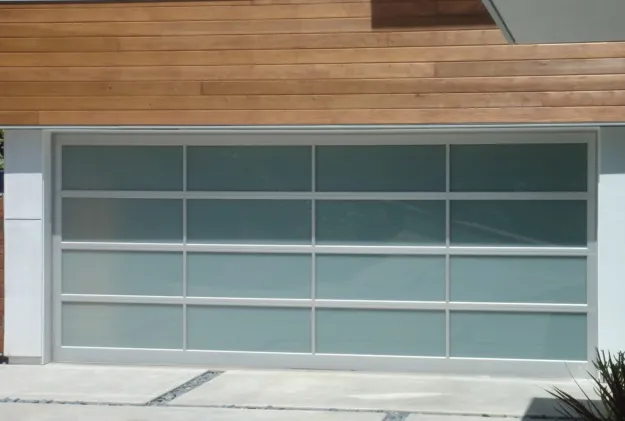
Tempered vs. Laminated Glass: Safety Standards and Structural Testing for Architectural Garage Door Systems

Explore Tempered vs. Laminated Glass Safety

Our core competencies
How Tempered Glass Performs in a Garage Door System
How Tempered Glass Performs in a Garage Door System

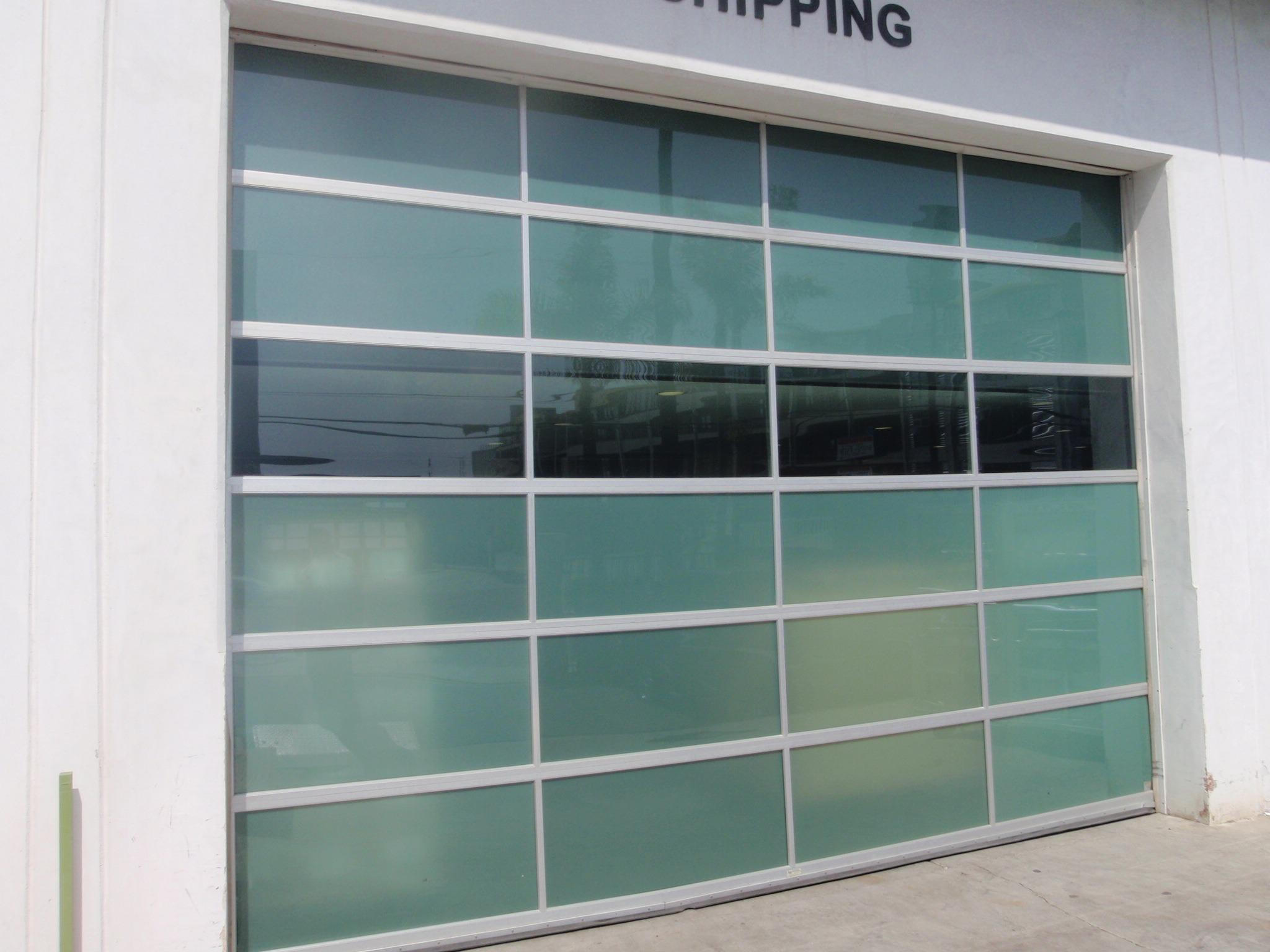
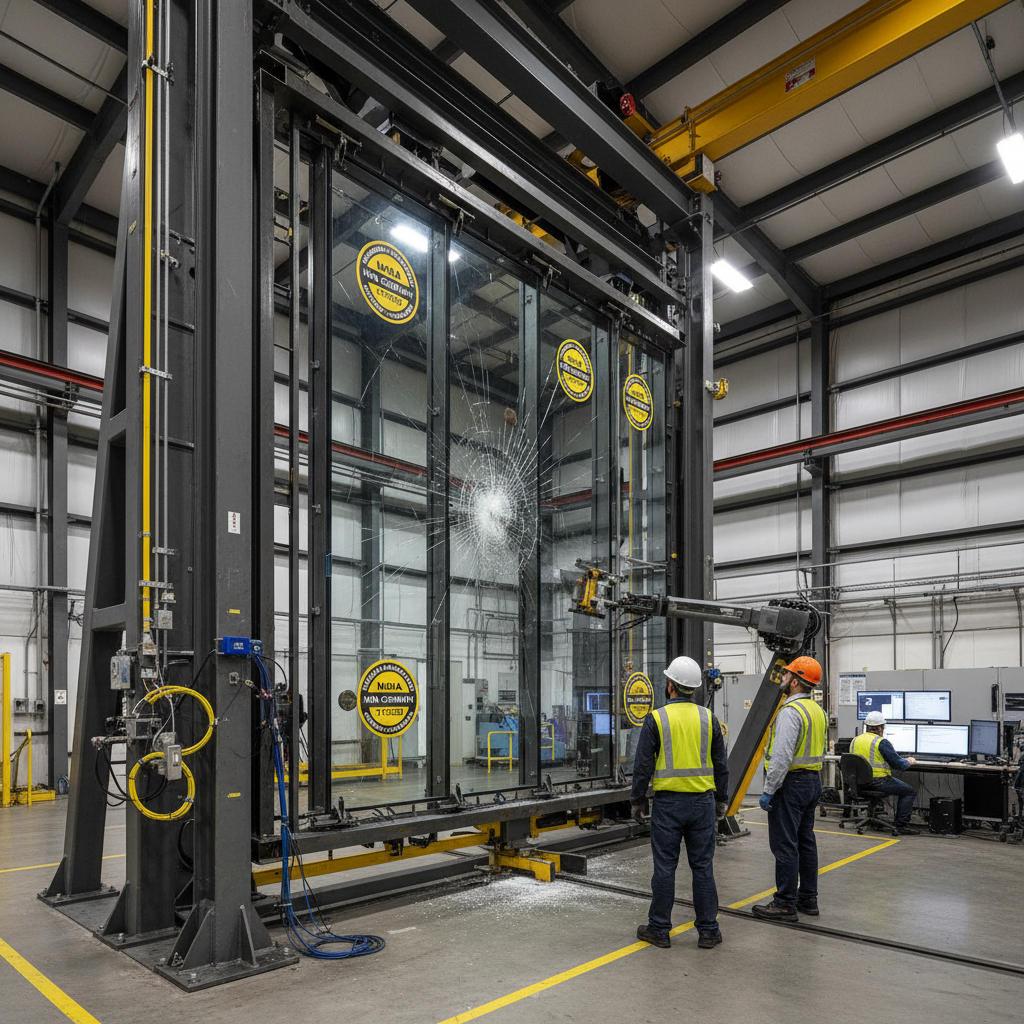
Tempered glass is produced through a controlled heating and rapid cooling process that puts the outer surfaces of the glass into compression while the interior remains in tension. That internal stress pattern is what gives tempered glass its increased resistance to breakage compared to standard annealed glass, and it also determines how the glass fails when it does break. When tempered glass is overstressed past its failure point, it fractures across its entire surface into small, granular, relatively blunt fragments rather than large, sharp shards. That failure mode is the basis for its classification as a safety glazing material: the goal is to reduce laceration risk at the moment of breakage, not to prevent the panel from failing.
Learn More →
How Laminated Glass Performs in a Garage Door System

How Laminated Glass Performs in a Garage Door System

Laminated glass is a different structural approach entirely. It's constructed from two or more layers of glass permanently bonded to an interlayer. When laminated glass is impacted hard enough to crack, the glass layers can fracture, but the interlayer holds the fragments in place rather than allowing them to separate from the frame. That retention property is why laminated glass is frequently specified where post-breakage performance matters as much as the initial impact resistance, the opening stays substantially intact rather than leaving a clear gap in the building envelope.
Learn More →
Testing Standards and Code Requirements That Apply to Both

Testing Standards and Code Requirements That Apply to Both

Both glass types are recognized safety glazing materials, but they're evaluated against different manufacturing standards. Tempered glass used in architectural applications is manufactured to the standard specification for heat-treated flat glass; laminated glass is manufactured to the standard specification for laminated architectural flat glass. Both are tested for safety glazing performance under safety standards, which govern impact resistance for glazing used in hazardous locations (a classification that includes garage doors under most building codes, including the International Building Code (IBC). For projects in high-wind or coastal-exposure regions, laminated glass is also frequently the construction specified to meet impact-resistance testing such as Miami-Dade NOA and Florida Building Code requirements, which is the standard bp's Hurricane Line is tested and approved against.
Learn More →

Common Questions

Both are recognized safety glazing materials, but they're engineered for different failure modes. Tempered glass is designed to break into small, blunt fragments that reduce laceration risk; laminated glass is designed to stay in place after impact due to its interlayer. Which is more appropriate depends on the application and the applicable code, not a general safety ranking.

It fractures across its full surface into small, granular fragments rather than large sharp shards. The panel no longer holds together, but the fragments are designed to be less hazardous than an ordinary annealed-glass break.

The glass layers can crack, but the interlayer holds the fragments bonded in place, so the panel largely remains intact in the frame rather than separating and leaving an open gap.

Yes. Garage doors are classified as hazardous locations under most building codes, including the IBC, which requires glazing in these locations to safety glazing standards, met by either tempered or laminated glass.

Yes. Glass type can be specified by panel or by product line depending on the structural, code, and performance requirements of the project. bp's product lines are engineered to apply tempered or laminated glass to the application rather than a single default across every door.

Find Us

Let's Build Something Great Together

We'd love to hear from you