Ready-to-Tailor ISO Documentation for Australian SMEs

Building an ISO management system from a blank page can consume significant time and create uncertainty about what documentation is actually needed.

IntegriSURE gives Australian SMEs a structured starting point with ready-to-tailor management system documents aligned to ISO 9001, ISO 14001 and ISO 45001.

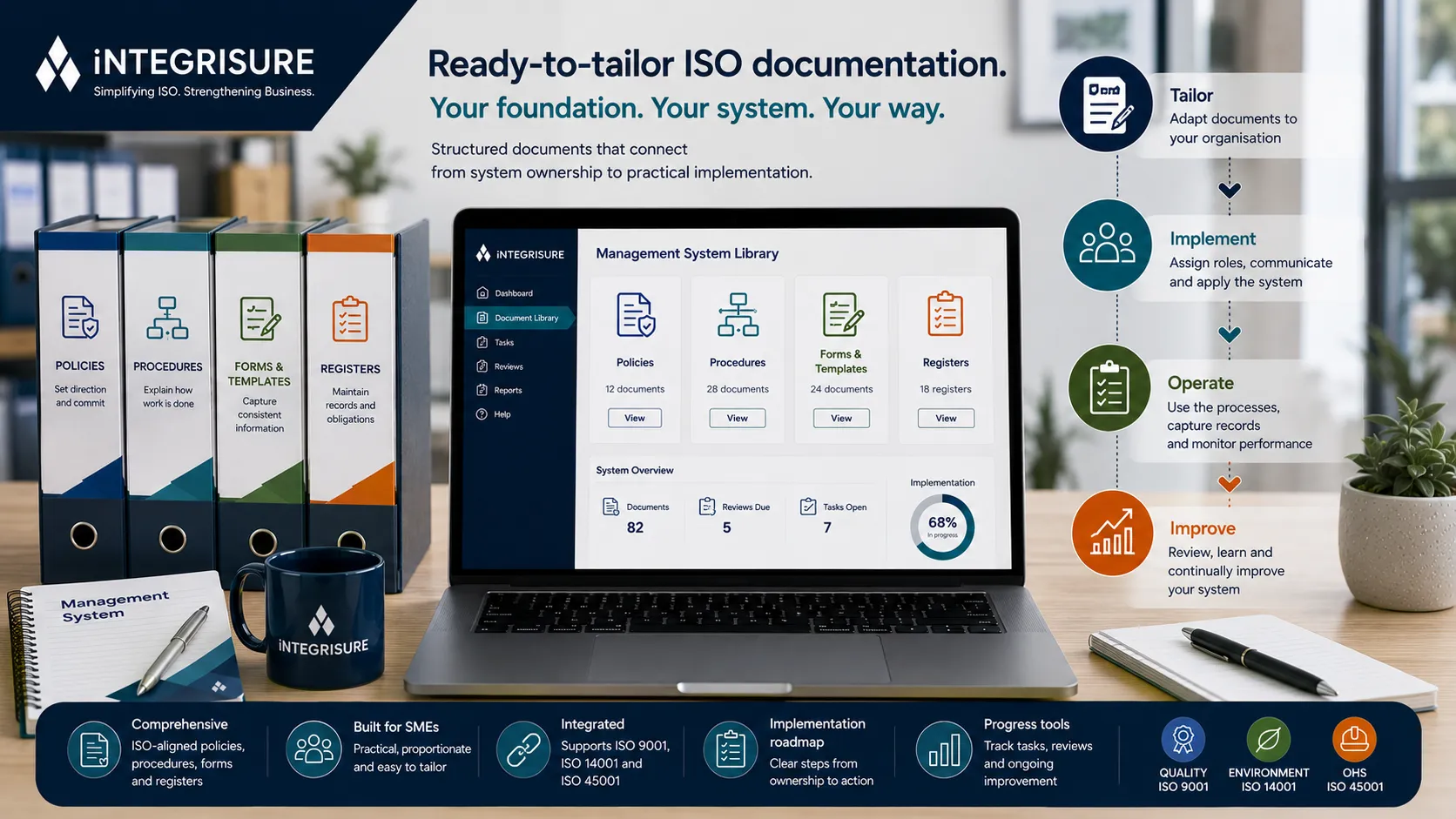
Depending on the applicable system, the document library includes policies, procedures, forms, registers and supporting tools that provide a practical foundation for your management system.

The documents are designed to be adapted to your organisation rather than used unchanged. Your team still needs to review responsibilities, terminology, processes, risks and operational requirements so the system reflects how your business actually works.

Once tailored, the management system must also be implemented and used in practice.

IntegriSURE supports this progression through staged implementation guidance, checklists, progress tools and additional support options, helping SMEs build internal capability and reduce unnecessary consultant dependency.

Ready-to-Tailor ISO Documents: A Practical Starting Point for Australian SMEs

Why Start with a Structured Document Set?

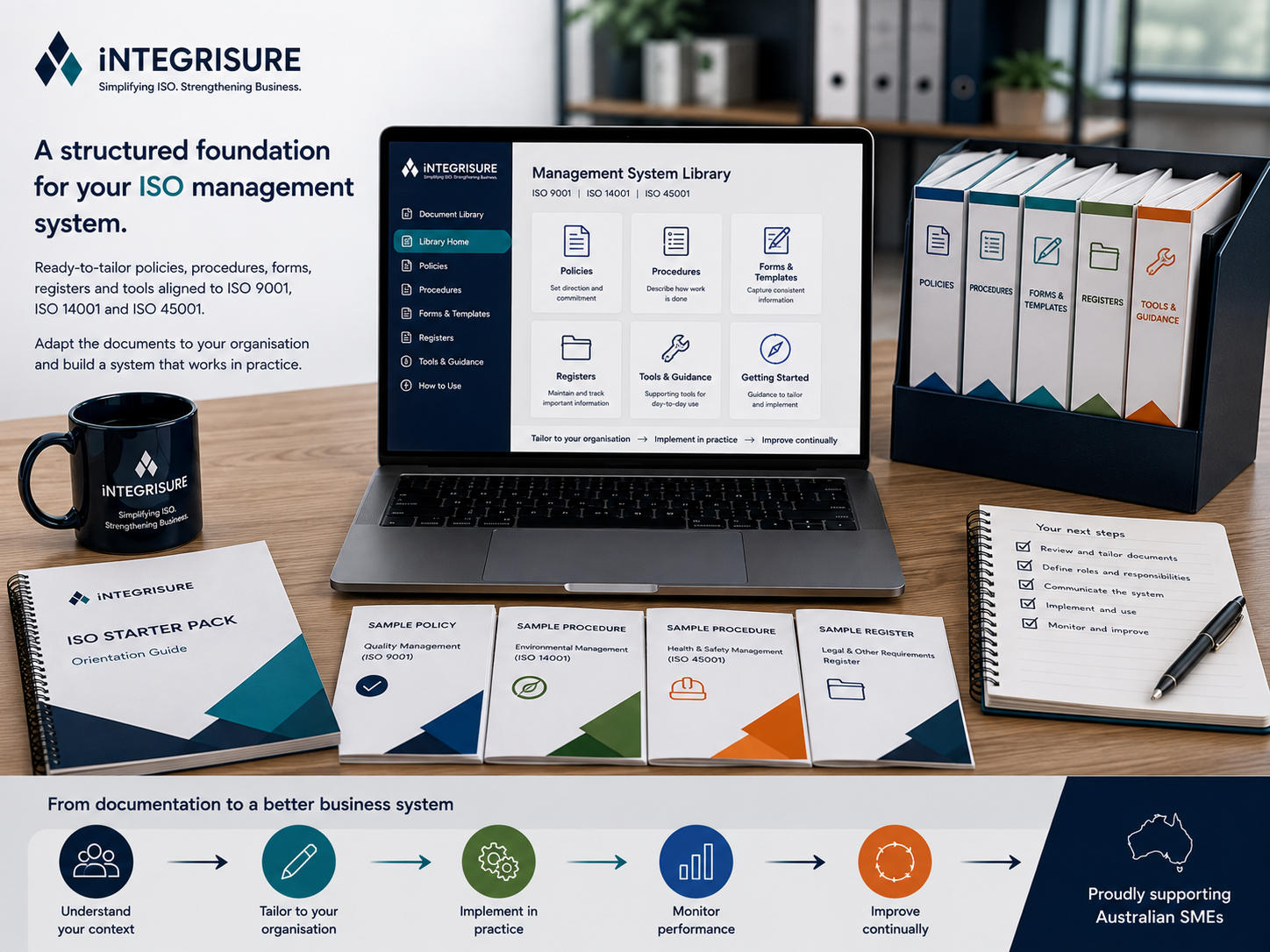
Creating an ISO management system from scratch can require significant time, particularly for SMEs that do not have dedicated compliance resources. Policies, procedures, forms, registers and supporting tools all need to work together as part of the broader management system. Ready-to-tailor documents can reduce that initial drafting burden. Instead of beginning with a blank page, your organisation starts with a structured foundation that reflects the broad requirements of ISO 9001, ISO 14001 and ISO 45001. This can help SMEs understand how different management system components fit together and provide a more consistent starting point for implementation. However, the documents are not the finished management system. Your organisation still needs to decide how responsibilities will be allocated, how processes will operate and what controls are appropriate for your business. IntegriSURE therefore positions documentation as the foundation of the ISO certification journey, not the end of it.
Why Start with a Structured Document Set?

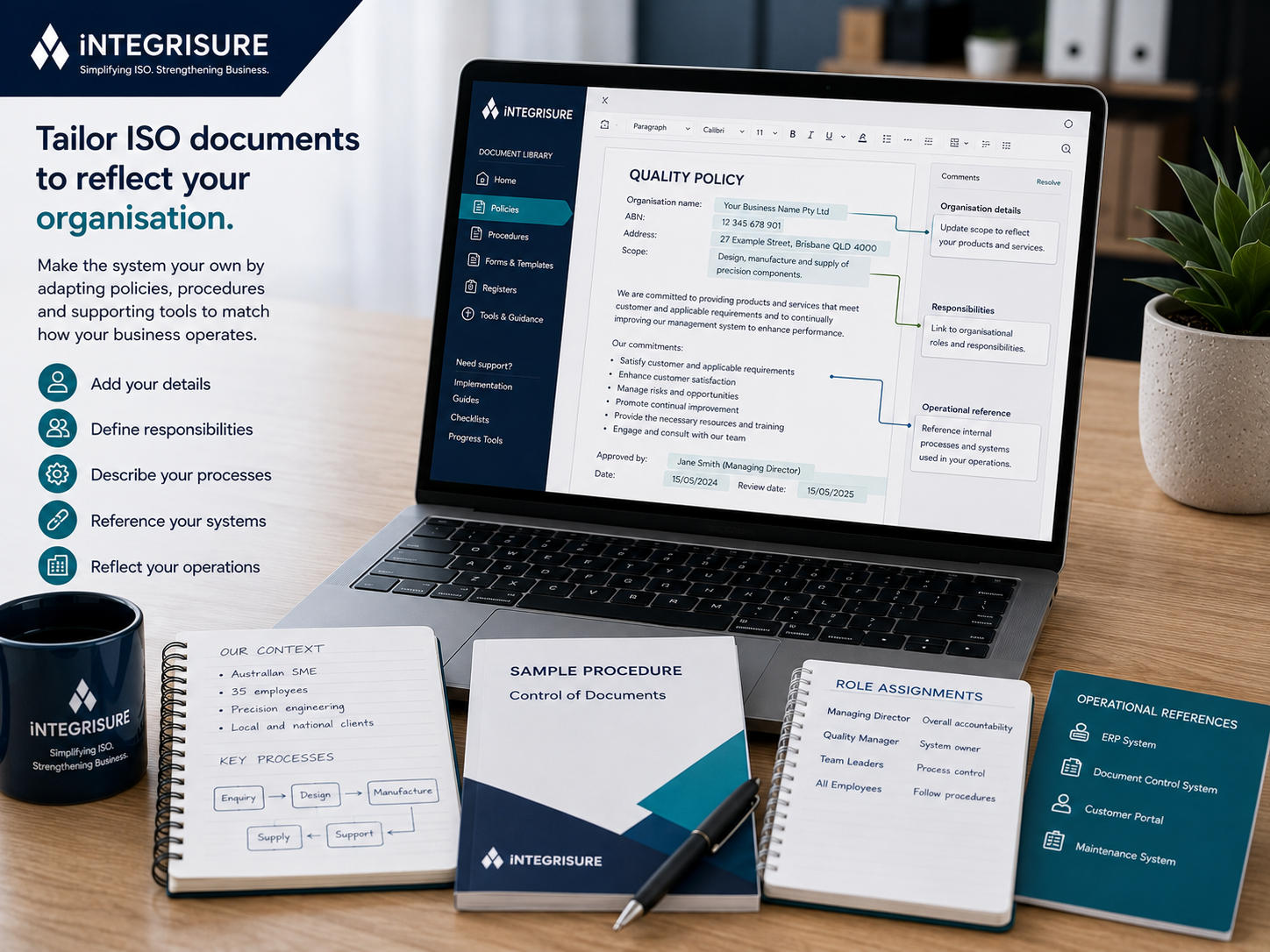
Templates Need to Reflect Your Organisation

A good ISO template should save time without forcing your organisation into someone else's operating model. That is why tailoring matters. A policy may need to reflect your organisation's commitments and objectives. A procedure needs to describe how work is actually performed. Responsibilities need to match real roles. Registers and forms need to capture information that is relevant to your operations. Other areas may also require organisation-specific consideration, including risks, environmental aspects, occupational health and safety hazards, interested parties, operational controls and legislative or contractual obligations. Using a template unchanged can create a disconnect between what the document says and what employees actually do. A stronger approach is to use the template as a controlled starting point and systematically tailor it to your context. This helps make the management system more usable while preserving the structure needed to address applicable ISO requirements.
Templates Need to Reflect Your Organisation

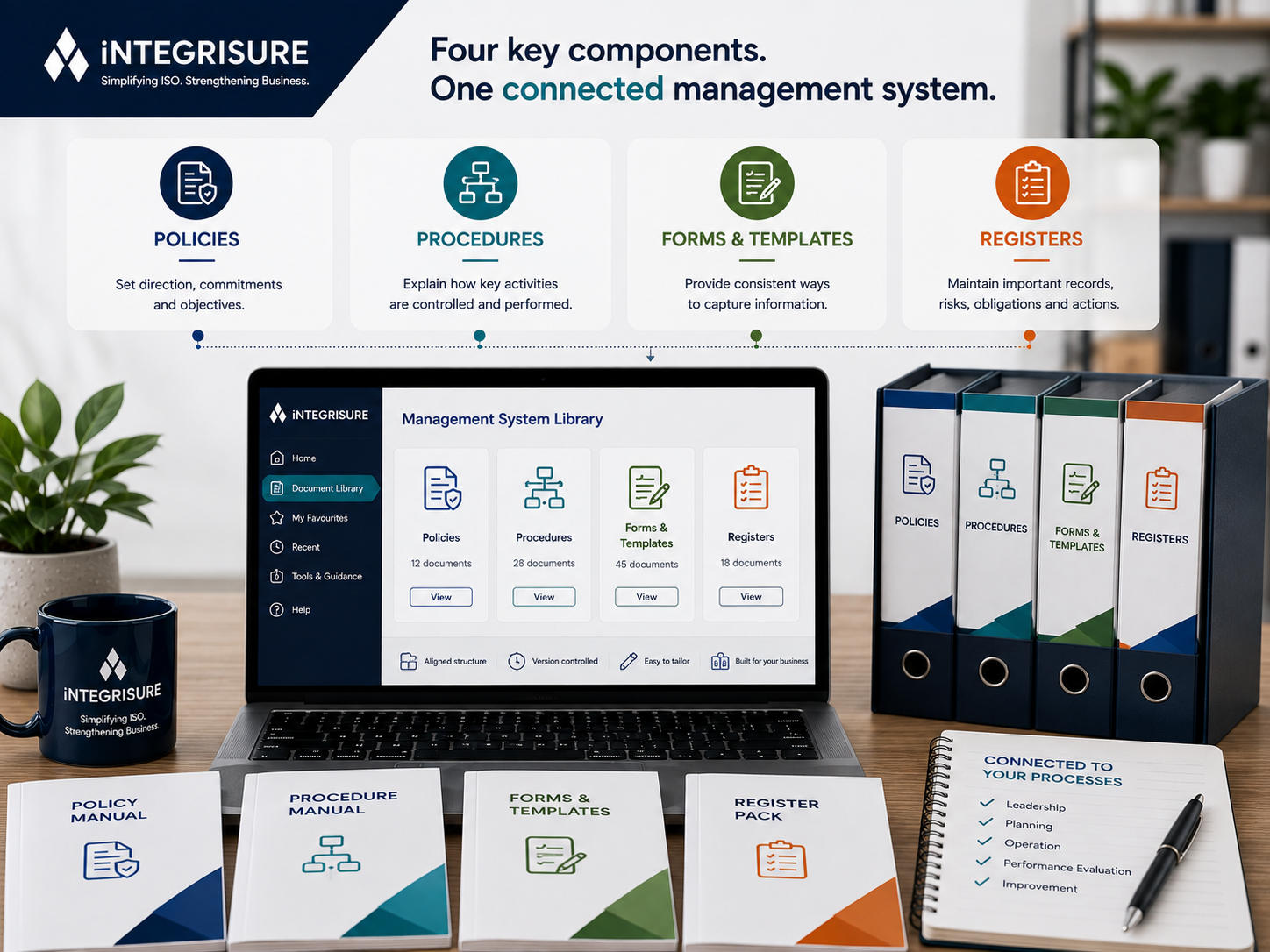
Policies, Procedures, Forms and Registers Have Different Jobs

A management system contains different types of documented information, and each serves a different purpose. Policies establish organisational commitments and direction. Procedures explain how important activities are controlled or performed. Forms and templates provide a consistent way to capture information. Registers help maintain ongoing records, risks, obligations, actions or other information that needs to be monitored. Supporting tools can also help teams plan, facilitate workshops or complete recurring management system activities. Understanding these differences is important because documentation should not exist simply to increase the size of the management system. Each document should support a genuine process, decision or record. IntegriSURE's structured document library is designed to provide these components within a coherent management system rather than as a collection of unrelated templates. This can make it easier for SMEs to understand what each document is intended to achieve and how it connects to later implementation activities.
Policies, Procedures, Forms and Registers Have Different Jobs

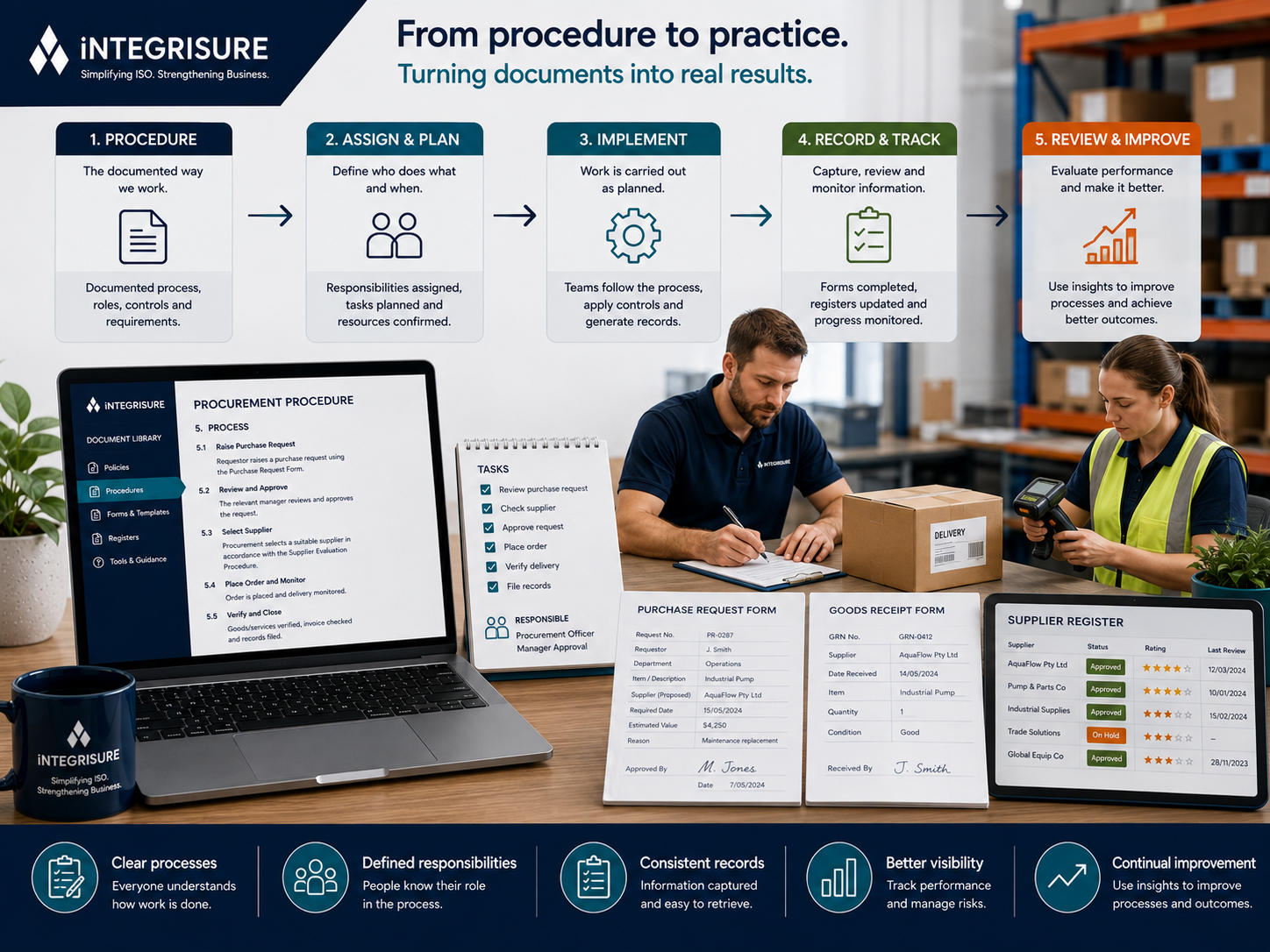
Documents Do Not Equal Implementation

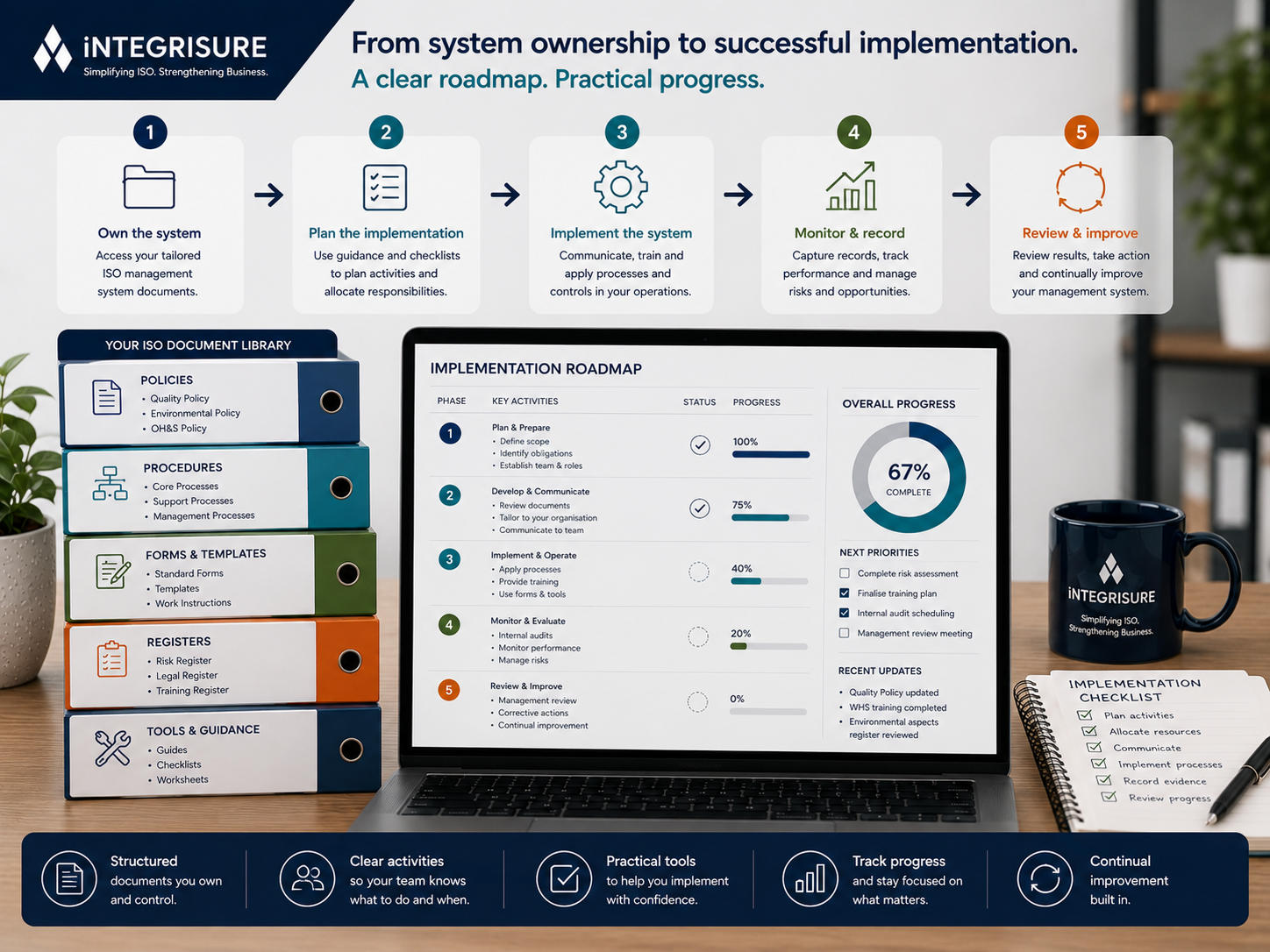
One of the most important distinctions in ISO is the difference between having documents and operating a management system. A procedure may describe how an activity should occur, but implementation requires people to actually follow that process. A register may exist, but it needs to be populated and maintained. A corrective action form provides a structure, but the organisation still needs to identify issues, investigate causes, take action and maintain relevant evidence. The same principle applies throughout the management system. For this reason, purchasing an ISO document library should be viewed as establishing the system foundation—not completing the certification journey. Once documents have been tailored, the next stage is to embed them within business operations. This includes assigning responsibilities, communicating requirements, using supporting tools and generating evidence that demonstrates the system is functioning. That is where structured implementation guidance can become valuable.
Documents Do Not Equal Implementation

Build One Coherent Management System

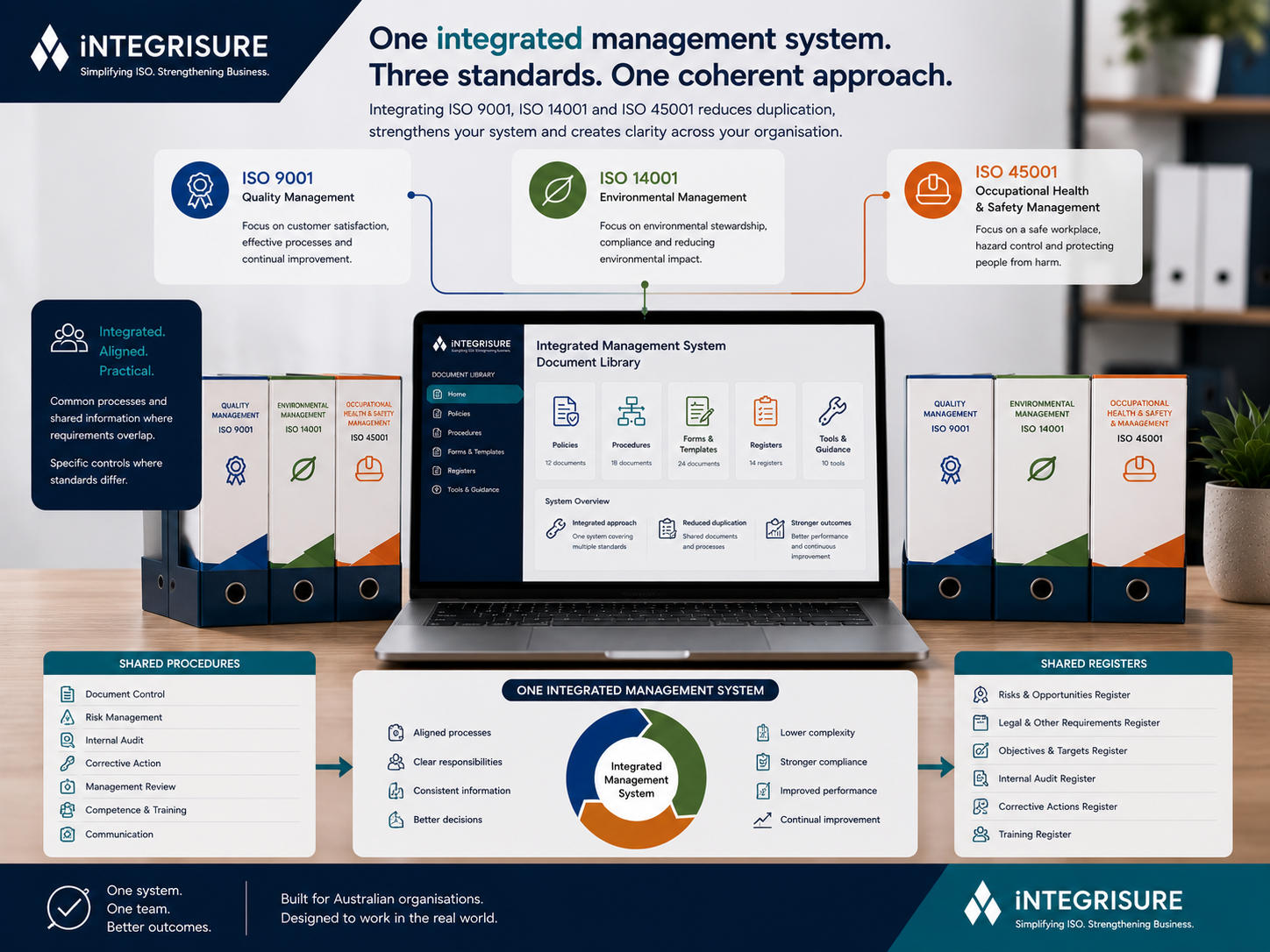
If your organisation is considering more than one ISO standard, documentation should ideally avoid unnecessary duplication. ISO 9001, ISO 14001 and ISO 45001 contain management system requirements that can often be addressed through common processes. For example, organisations may be able to integrate elements such as document control, risk management, internal audit, management review, corrective action and continual improvement. Standard-specific requirements still need to be addressed, but the organisation does not necessarily need three completely separate management systems. For SMEs, an integrated approach can make the system easier to understand and manage over time. IntegriSURE supports ISO 9001, ISO 14001 and ISO 45001 within a structured management system framework, providing documentation that can support an integrated management system where appropriate. The goal is not to produce the maximum number of documents. It is to establish a practical system that addresses the requirements relevant to your organisation.
Build One Coherent Management System

Add Implementation Guidance When You Need More Structure

Once the management system has been tailored, many SMEs reach the same practical question: What should we implement first? Owning the documents does not automatically provide the sequence needed to embed them effectively. Some organisations have sufficient internal capability to establish their own implementation plan. Others benefit from structured guidance that identifies dependencies, priorities and the order in which management system activities should be introduced. IntegriSURE's staged pathway allows organisations to begin with the management system itself and add further implementation support when required. Depending on the pathway selected, this can include implementation guidance, checklists, progress tools and broader certification journey support. Organisations that want to strengthen their internal understanding can also use the Demystifying ISO courses as part of their capability-building approach. This keeps the level of assistance proportionate. Rather than automatically paying for extensive consulting, SMEs can start with the structure they need and add support as implementation becomes more complex.
Add Implementation Guidance When You Need More Structure

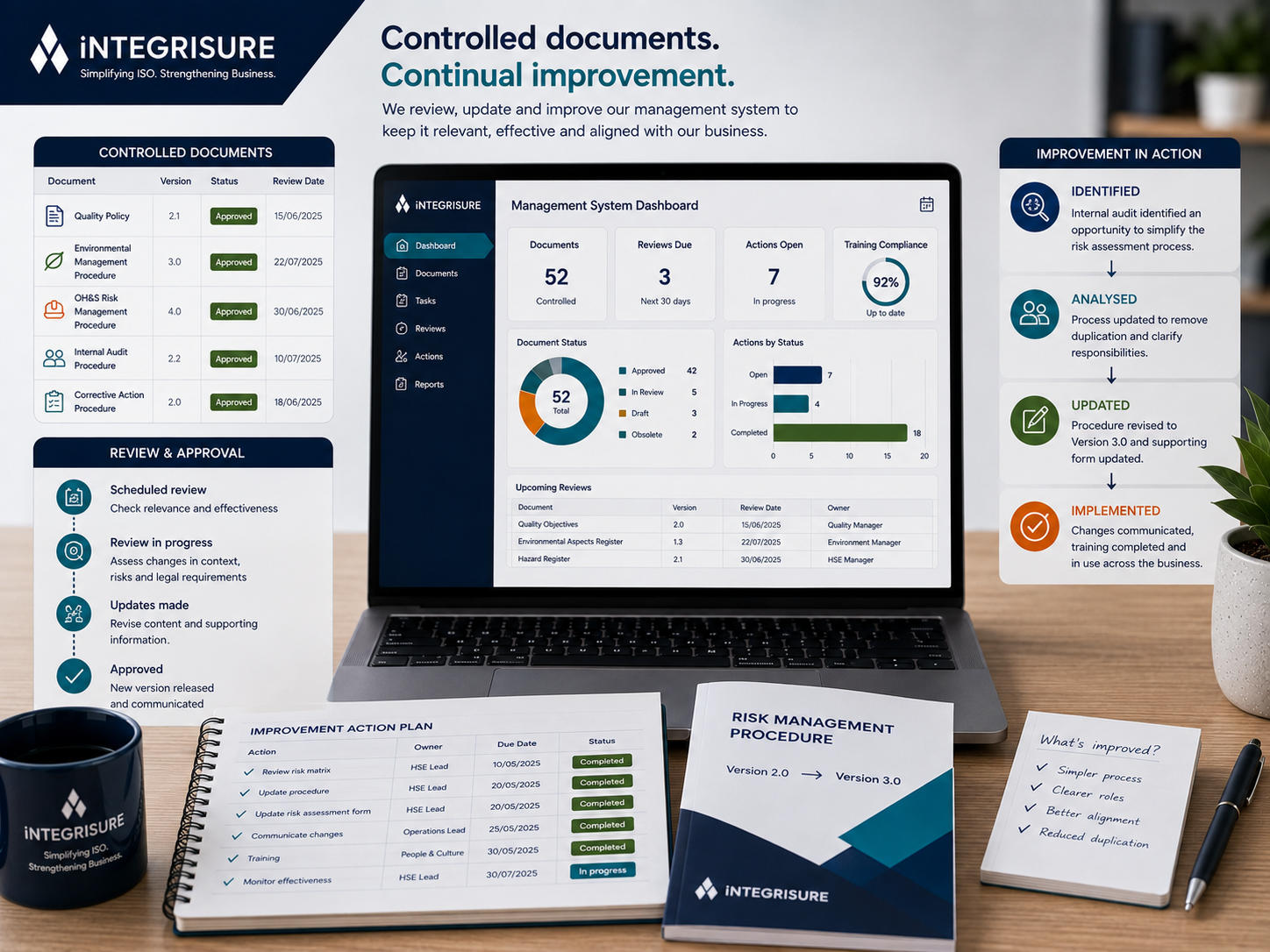
Maintain and Improve the Documents as the Business Changes

ISO management system documents should not become static files that are created once and forgotten. Your organisation will change over time. New employees, services, customers, equipment, locations, risks, regulatory obligations or operational processes can affect the management system. Documents should therefore be reviewed and updated when necessary so they continue to reflect how your organisation operates. Internal audits, management reviews, incidents, nonconformities, employee feedback and performance monitoring can also identify opportunities to improve processes or supporting documents. Appropriate document control helps ensure approved versions remain identifiable and available to the people who need them. This is part of the broader principle of continual improvement. IntegriSURE's document foundation is intended to support an ongoing management system—not simply provide files for the certification audit. The long-term value comes from tailoring, implementing, maintaining and improving the system over time.
Maintain and Improve the Documents as the Business Changes

Frequently Asked Questions

ISO documentation templates are pre-developed management system documents that provide a structured starting point for establishing processes aligned to an ISO management system standard. They may include policies, procedures, forms, registers and other supporting tools.

No document set should be treated as automatically compliant simply because it is based on ISO requirements. IntegriSURE documents are designed to provide an ISO-aligned foundation. They still need to be reviewed, tailored and implemented in the context of your organisation. You can learn more about the distinction between alignment, implementation and ISO compliance before beginning.

IntegriSURE supports management system documentation aligned to: ISO 9001 for quality management; ISO 14001 for environmental management; and ISO 45001 for occupational health and safety. The documents can also support an integrated management system where multiple standards apply.

Depending on your selected management system, resources may include policies, procedures, forms, registers, facilitation tools and other supporting documents. These components work together to provide structure for the management system.

ISO management systems need to reflect the organisation using them. Responsibilities, processes, terminology, risks, environmental aspects, hazards, objectives and operational controls can vary significantly between businesses. Tailoring helps ensure the documents accurately reflect how your organisation operates.

Yes. The full editable documents are designed to be tailored to your organisation. Changes should preserve the intent of applicable management system requirements while making the content practical and relevant to your operations.

No. Documentation is only one component of implementation. Your organisation needs to communicate requirements, assign responsibilities, apply processes and controls, maintain records, monitor performance and collect evidence that the management system operates in practice. The seven stages of certification provide useful context for understanding where documentation sits within the broader ISO journey.

IntegriSURE provides staged support options that can include implementation guidance, checklists, progress tools and additional journey-level support as the organisation moves toward later certification activities.