Practical ISO Implementation for Australian SMEs

Implementing an ISO management system does not need to mean choosing between doing everything alone or handing the process to a consultant.

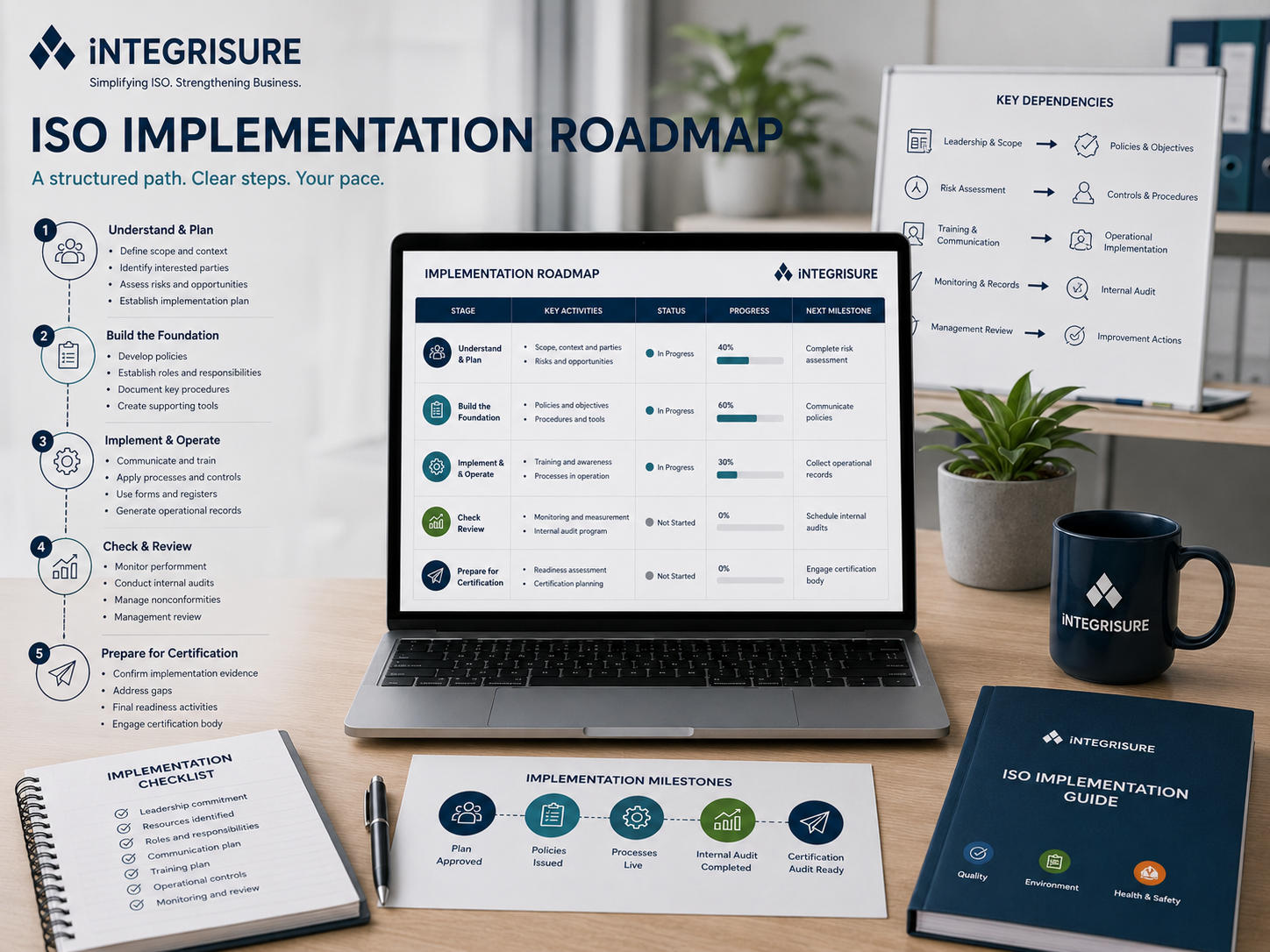
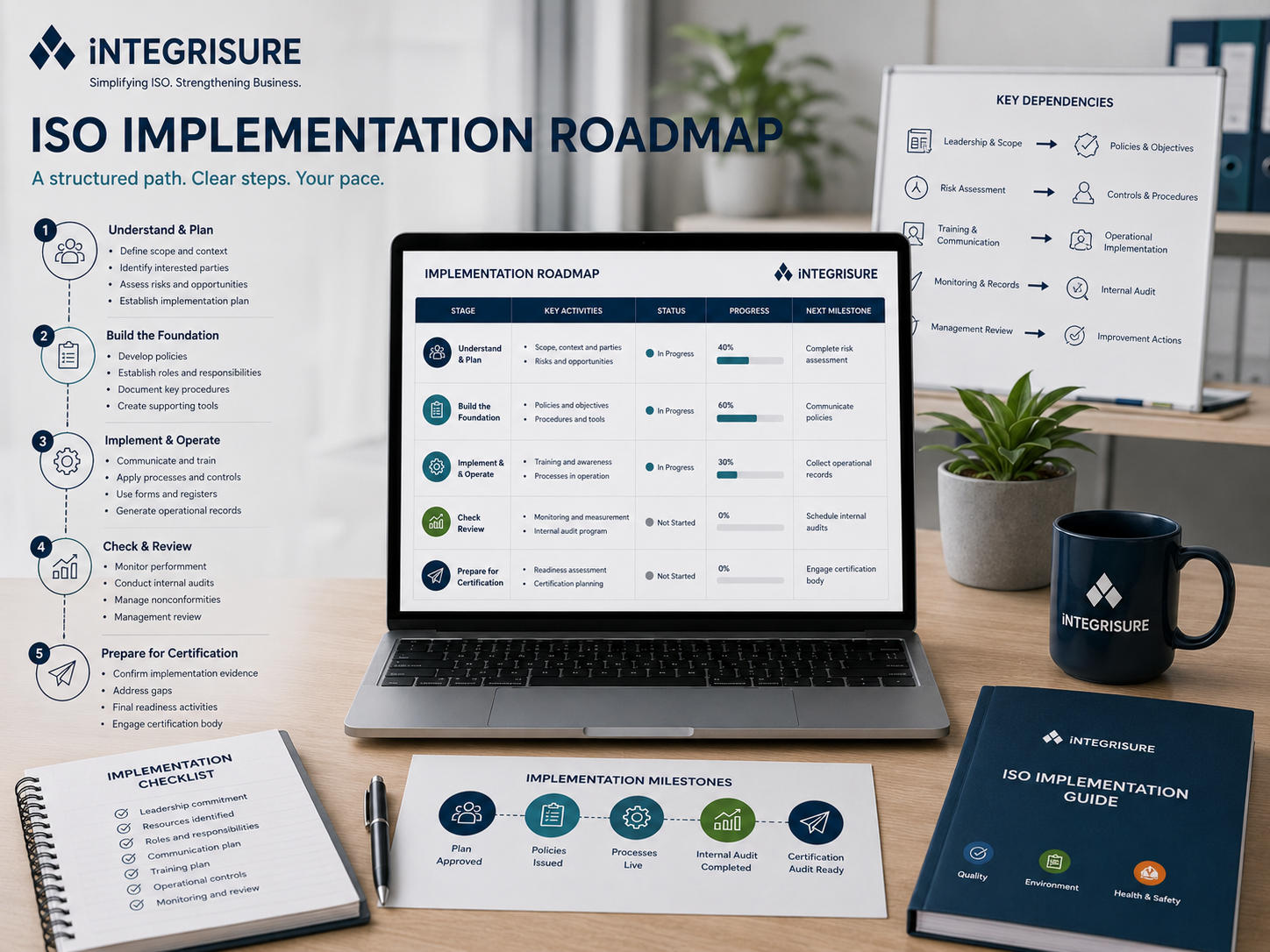
For Australian SMEs, a practical approach is to build the management system, tailor it to the organisation, implement processes in a logical sequence and collect evidence progressively as those processes begin operating.

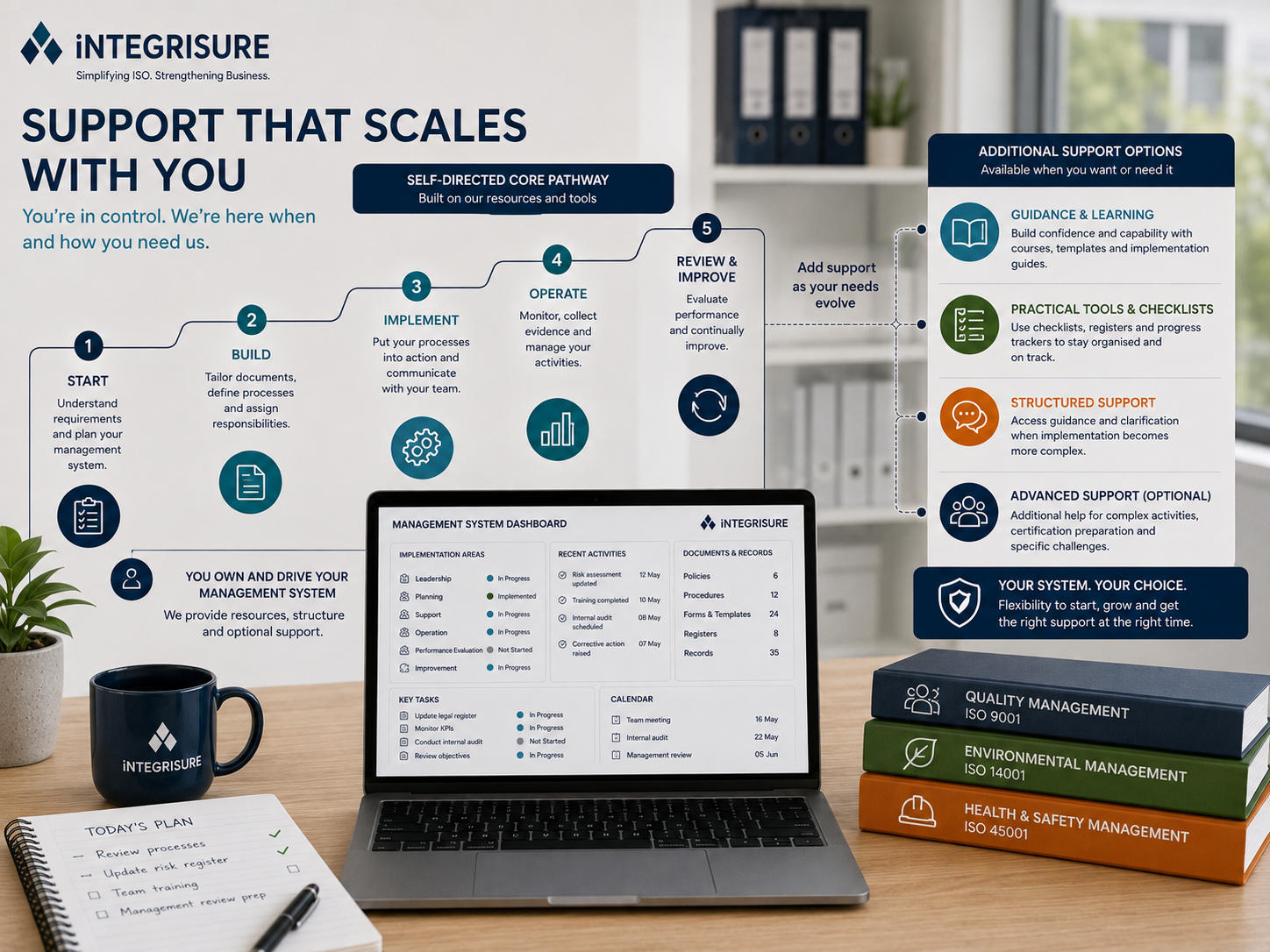
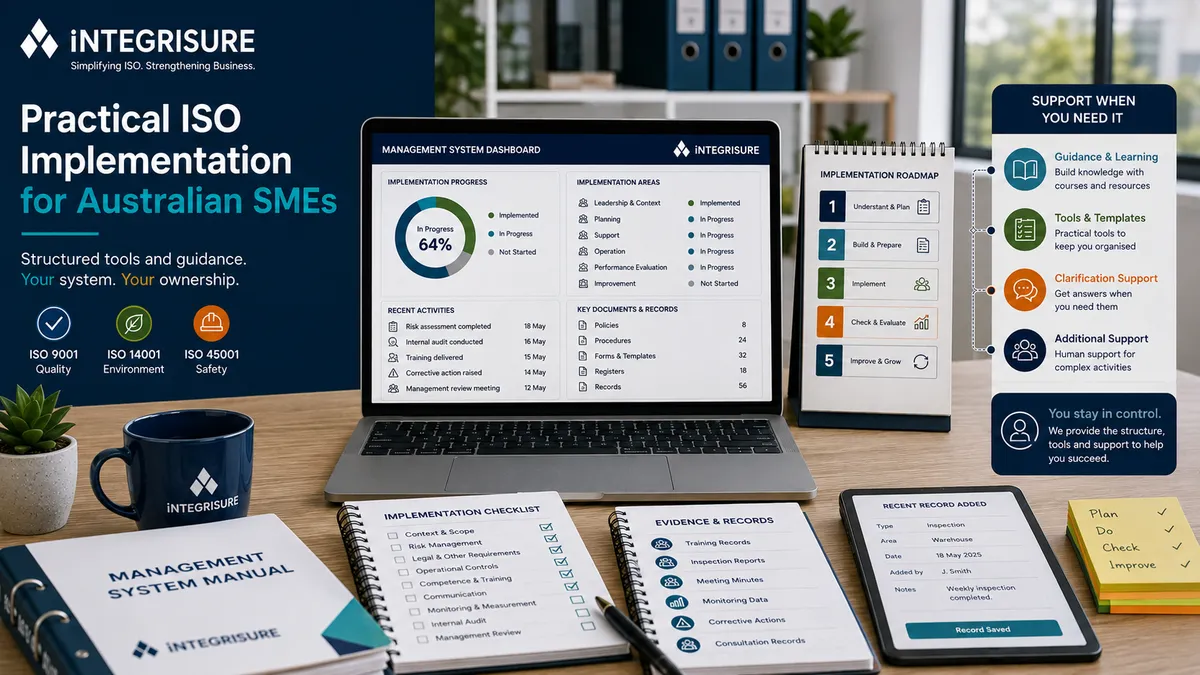
IntegriSURE supports this through a structured ISO pathway covering ISO 9001, ISO 14001 and ISO 45001. Ready-to-tailor management system documents provide the foundation, while implementation guidance, checklists, progress tools and staged support options help organisations move from documents into everyday operations.

The level of support can increase as the organisation’s needs become more complex. This helps SMEs retain management system ownership, build internal capability and reduce unnecessary consultant dependency while still having access to additional guidance when required.

Where certification is pursued, the organisation remains responsible for implementation and the final certification decision is made by an independent certification body.

How Australian SMEs Can Implement ISO with Structure and Control

ISO Implementation Is Where the Management System Becomes Real

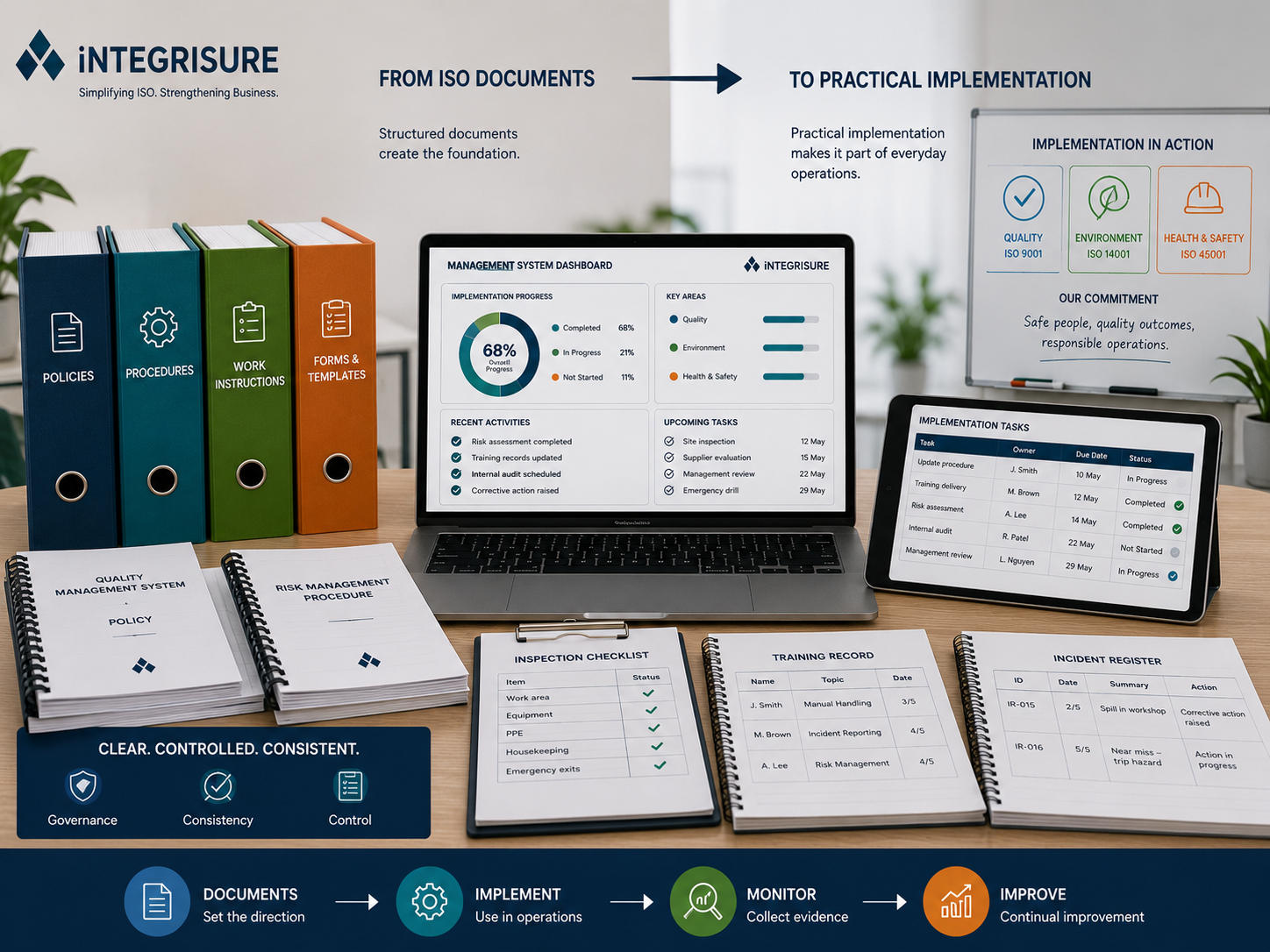
Buying or developing ISO-aligned documents is only the foundation of a management system. Implementation begins when your organisation starts using those documents and processes in everyday operations. Responsibilities need to be allocated, procedures need to reflect actual work practices, tools and registers need to be used and employees need to understand what is expected of them. For example, a risk management procedure is not implemented simply because it has been approved. Relevant risks must actually be identified, assessed, treated and reviewed. A training procedure must result in real competence and training records. A corrective action process must be used when issues arise. This is why practical implementation matters. For SMEs, the objective should be to establish processes that are proportionate to the organisation and usable in day-to-day operations—not to create additional bureaucracy purely for certification. IntegriSURE supports this transition by combining ready-to-tailor management system documents with structured implementation resources that help organisations move from documentation into operation.
ISO Implementation Is Where the Management System Becomes Real

Implement in the Right Order

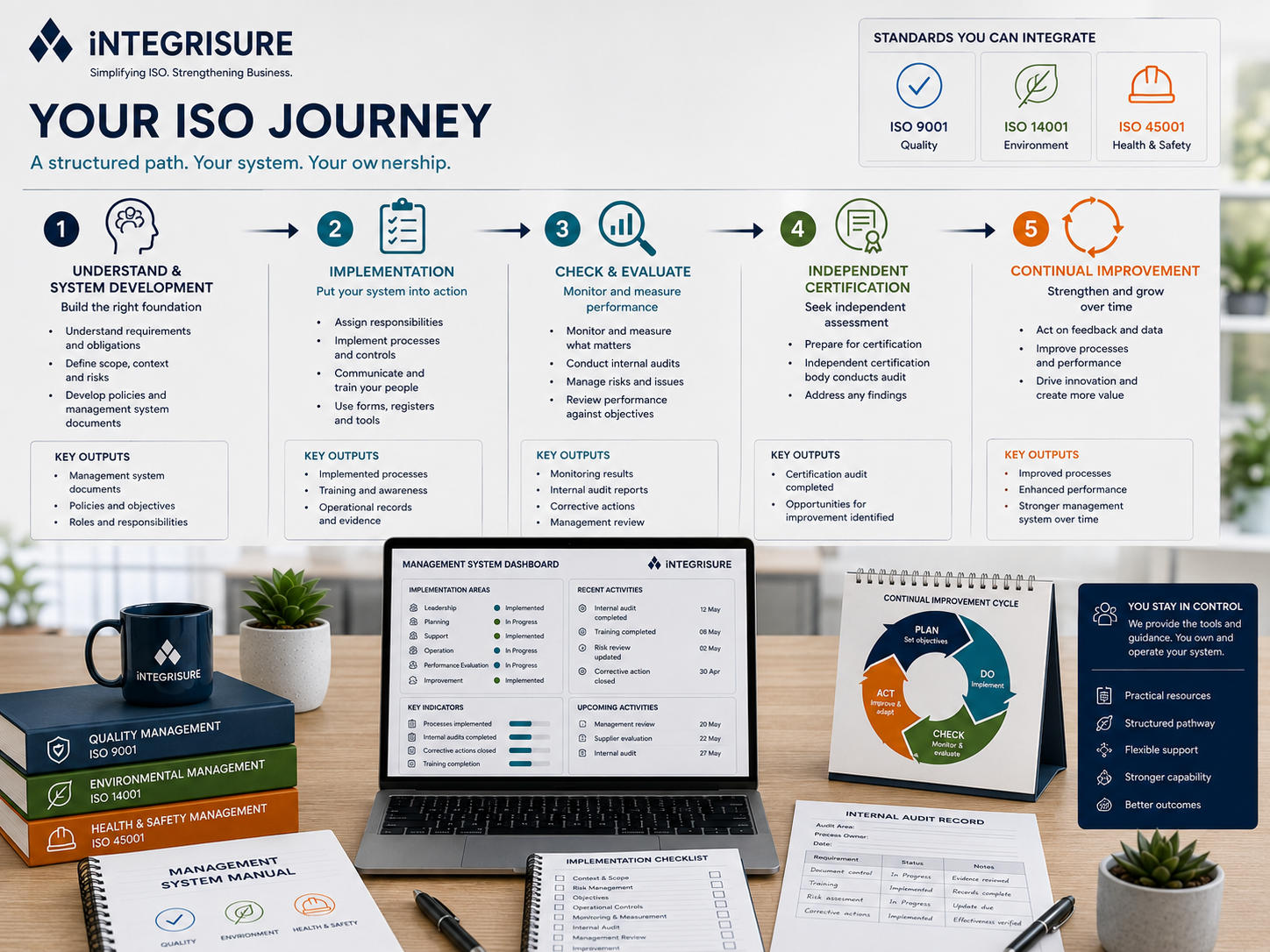
One of the challenges for SMEs is not necessarily understanding what needs to be done, but knowing what to do first, what comes next and what activities depend on earlier work. A structured implementation sequence can reduce unnecessary rework. Leadership commitment, organisational context and management system scope influence later planning. Policies establish direction, while procedures, controls and supporting tools translate that direction into operational activity. Internal audit and management review generally become meaningful only after the relevant parts of the system have been operating. Attempting to complete everything at once can create confusion or produce records that do not reflect how the organisation actually operates. A more practical approach is to establish the system progressively and allow each stage to build on earlier decisions. This sequencing is central to IntegriSURE’s implementation approach and aligns with the broader seven stages of certification. Depending on the selected pathway, organisations can access structured implementation roadmaps and supporting tools that help them understand what should be addressed now, next and later. The aim is to create momentum without transferring implementation responsibility away from the organisation.
Implement in the Right Order

Keep Ownership Inside the Organisation

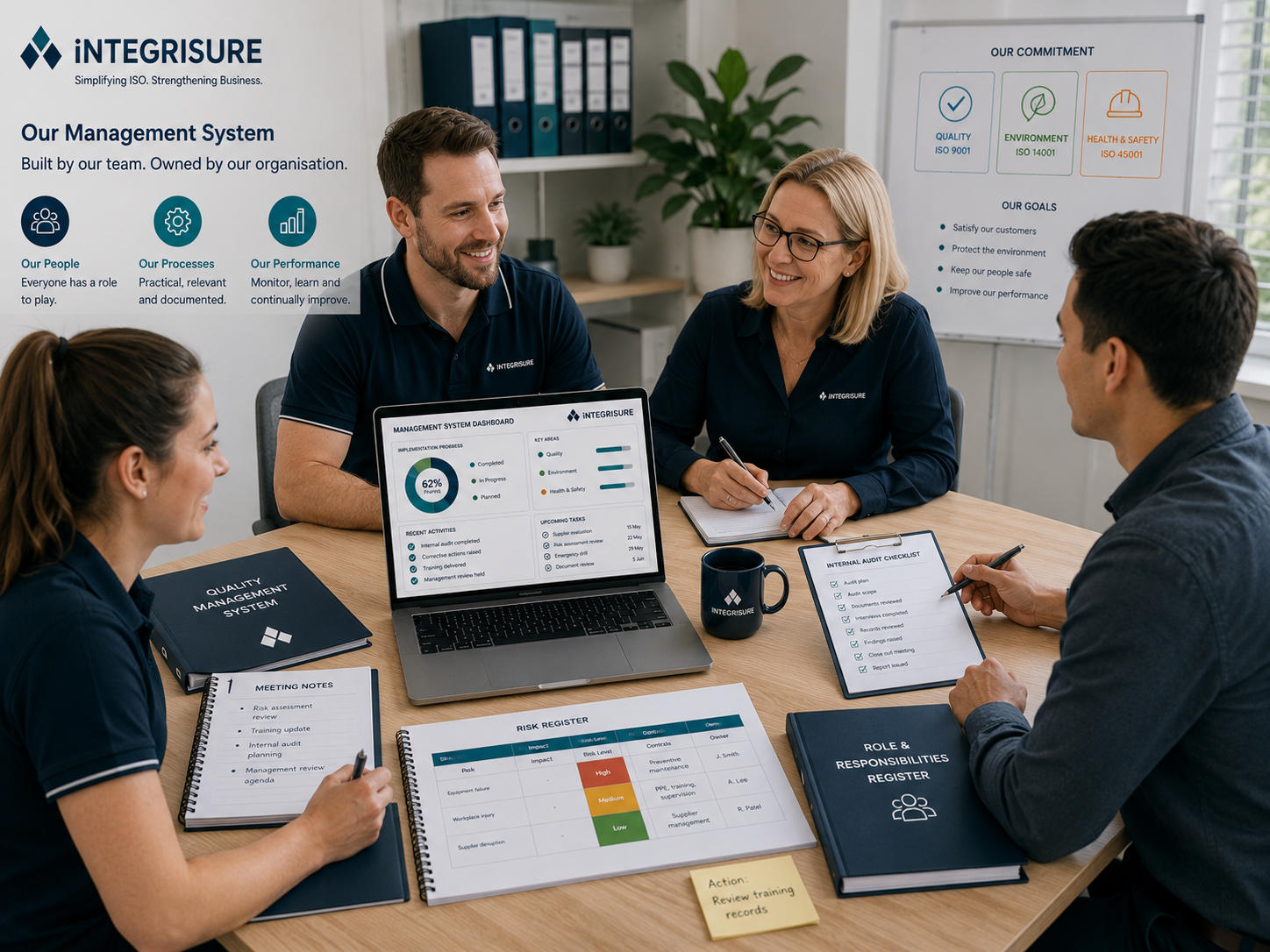
A management system is most useful when the organisation understands and owns it. External expertise can be valuable, but implementation should not result in a system that only an outside consultant understands or can maintain. SMEs should involve relevant employees in tailoring processes, defining responsibilities and determining how management system requirements fit existing operations. This builds internal knowledge and makes it easier for employees to use the system consistently after implementation. It also supports continual improvement because the people closest to the work are more capable of identifying where processes are effective and where changes may be needed. IntegriSURE is designed around this principle of management system ownership. Rather than assuming a consultant needs to perform every task, the organisation can begin with structured resources such as the ISO Starter Pack and implement internally. Guidance and additional support can then be added where the organisation encounters genuine capability gaps or wants additional assistance. This helps build internal capability while reducing unnecessary long-term consultant dependency.
Keep Ownership Inside the Organisation

Collect Evidence as the System Operates

Evidence should be generated through normal operation of the management system rather than created at the last minute before an audit. As processes are implemented, the organisation will naturally begin creating records. Depending on the applicable standard and activity, these might include completed risk assessments, training records, inspection results, meeting minutes, environmental monitoring, customer feedback, corrective actions, consultation records or performance data. Collecting this evidence progressively has two advantages. First, it demonstrates that processes are genuinely being used. Second, it reduces the pressure that can arise when organisations try to reconstruct months of activity immediately before a certification audit. The objective is not to accumulate paperwork for its own sake. Records should demonstrate meaningful activities that support the management system and the requirements relevant to your organisation. Structured implementation guidance can help SMEs understand when records should begin to be generated and what needs to be retained. This creates a stronger connection between implementation, evidence and later certification preparation.
Collect Evidence as the System Operates

Track Progress Without Confusing It with Compliance

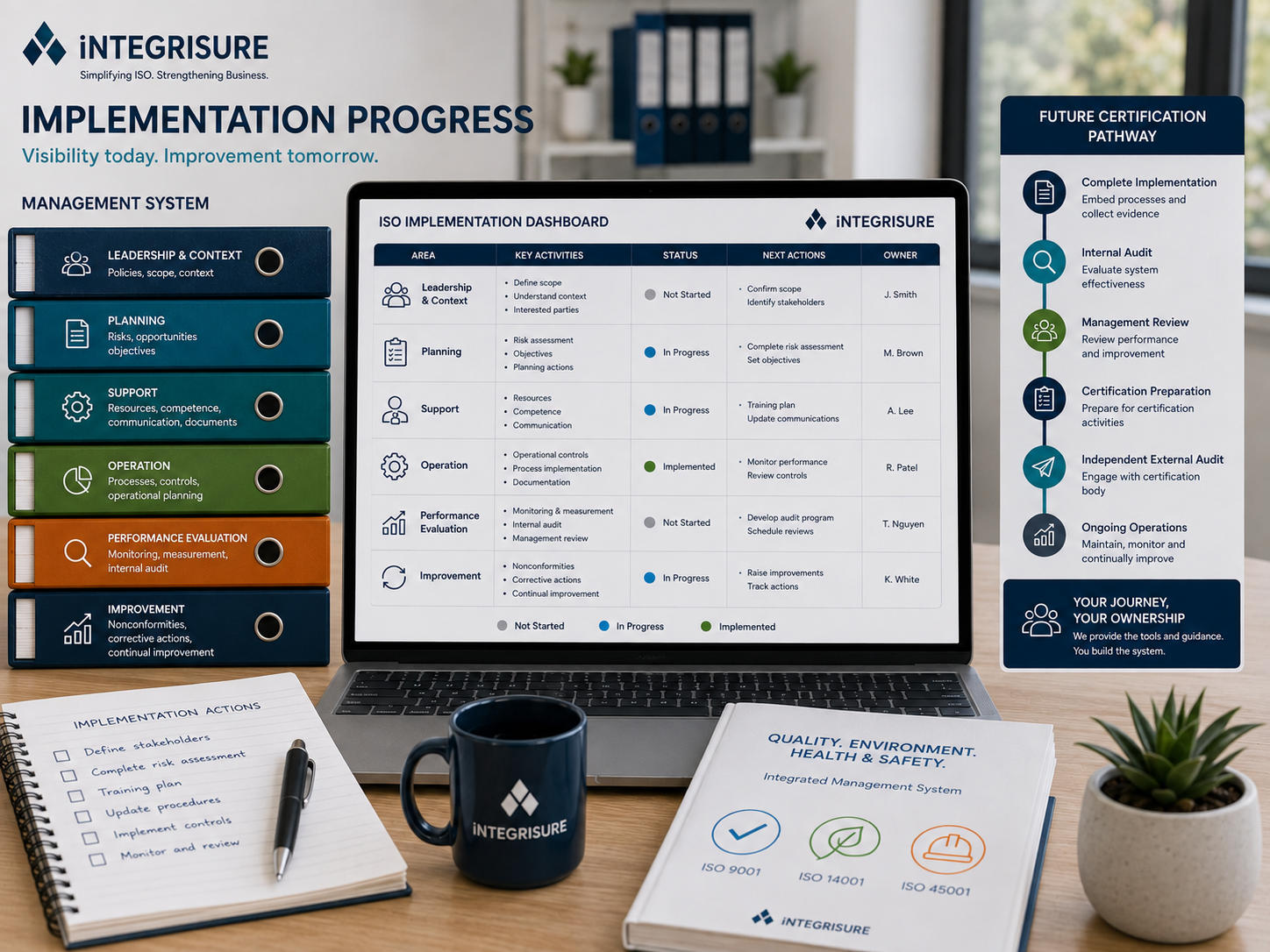
Tracking implementation progress can help SMEs maintain momentum and understand where effort is still required. Useful progress indicators might show whether management system activities are not started, in progress or implemented. This provides visibility across documents, clauses or implementation tasks and helps management coordinate the work. However, progress should not be confused with ISO compliance or certification readiness. Completing a checklist or marking a procedure as implemented does not automatically demonstrate that the management system conforms to all applicable requirements or that it will satisfy an independent certification audit. A progress tracker is a management tool—not a certification decision. This distinction is important within the IntegriSURE pathway. Progress tools are designed to support organisation, sequencing and visibility while keeping responsibility with the user. As the organisation moves further through implementation, later activities such as internal audit, management review and certification preparation provide additional opportunities to evaluate the system and identify gaps.
Track Progress Without Confusing It with Compliance

Add Support When the Need Becomes Real

Not every SME needs the same level of help. Some organisations have internal capability and simply need a structured sequence to follow. Others may reach a point where they want more guidance, reassurance or assistance with specific activities. That is why support should be staged rather than imposed from the beginning. A self-directed organisation may begin with management system documents and implementation guidance. Resources such as IntegriSURE’s Demystifying ISO courses can also help build internal understanding before more intensive support becomes necessary. As implementation progresses, the organisation may choose additional tools, journey-level support or structured human input where uncertainty or complexity increases. This approach avoids two extremes: struggling without enough structure or paying for a level of consulting that the organisation does not actually need. Within IntegriSURE, additional support becomes relevant as the organisation progresses through its certification journey. The intention is to allow SMEs to remain in control while accessing more support when the value of that support becomes clear. For organisations requiring deeper advisory or hands-on assistance, higher-touch services can be considered separately.
Add Support When the Need Becomes Real

Implementation Is One Stage of the Certification Journey

Implementation is important, but it is not the final stage of ISO certification. Once the relevant management system processes have been operating, organisations need to evaluate the system. This includes activities such as monitoring performance, completing internal audits, undertaking management review and addressing identified gaps or corrective actions. Only then does the organisation move into later certification preparation and the independent external audit process. After certification, the management system must continue to operate and improve. This broader journey matters because SMEs can otherwise focus too heavily on documents or implementation tasks and underestimate what occurs before and after the certification audit. IntegriSURE provides a structured pathway across this journey, allowing organisations to begin with understanding and system development, progress into implementation and then access further guidance as later certification activities become relevant. Organisations wanting to understand the overall pathway can review the seven stages of certification before progressing towards an independent external audit. Certification itself is undertaken independently. IntegriSURE supports the organisation’s preparation, but the external certification body conducts the certification audit and determines the certification outcome.
Implementation Is One Stage of the Certification Journey

Frequently Asked Questions

ISO implementation means putting the management system into operation within your organisation. This includes tailoring documents, assigning responsibilities, introducing relevant processes, communicating requirements, using forms and registers, maintaining records, monitoring performance and progressively collecting evidence that shows the system is operating.

Yes, depending on the organisation’s capability, resources and complexity. Many SMEs can complete significant portions of ISO implementation internally when they have appropriate structure, documents and guidance. Some organisations may still choose additional support for complex activities, reassurance or later certification preparation.

IntegriSURE provides ready-to-tailor management system documents and structured implementation resources. Depending on the pathway selected, organisations can access implementation guidance, checklists, progress tools, facilitation resources and additional support as their needs develop.

IntegriSURE supports management systems aligned to ISO 9001 for quality management, ISO 14001 for environmental management and ISO 45001 for occupational health and safety management. These standards can also be integrated where multiple requirements apply.

Implementation begins when the organisation moves beyond owning or tailoring documents and starts embedding the management system into operations. This includes assigning responsibilities, applying controls, conducting required activities and generating evidence through normal business processes.

No. Documents provide structure, but implementation requires the organisation to put those processes into practice. An auditor will look beyond written procedures and consider whether the management system is actually operating.

Yes. A staged approach allows an organisation to begin self-directed and add further guidance or support when implementation becomes more complex or when the organisation reaches later certification activities.

No. IntegriSURE supports management system development, implementation and certification preparation. Certification audits and certification decisions remain the responsibility of the independent certification body. You can learn more about the broader seven stages of certification before progressing towards an external audit.