Trusted by Industry Leaders

Organisational Diagnostics for Inclusion, Engagement and Psychological Safety

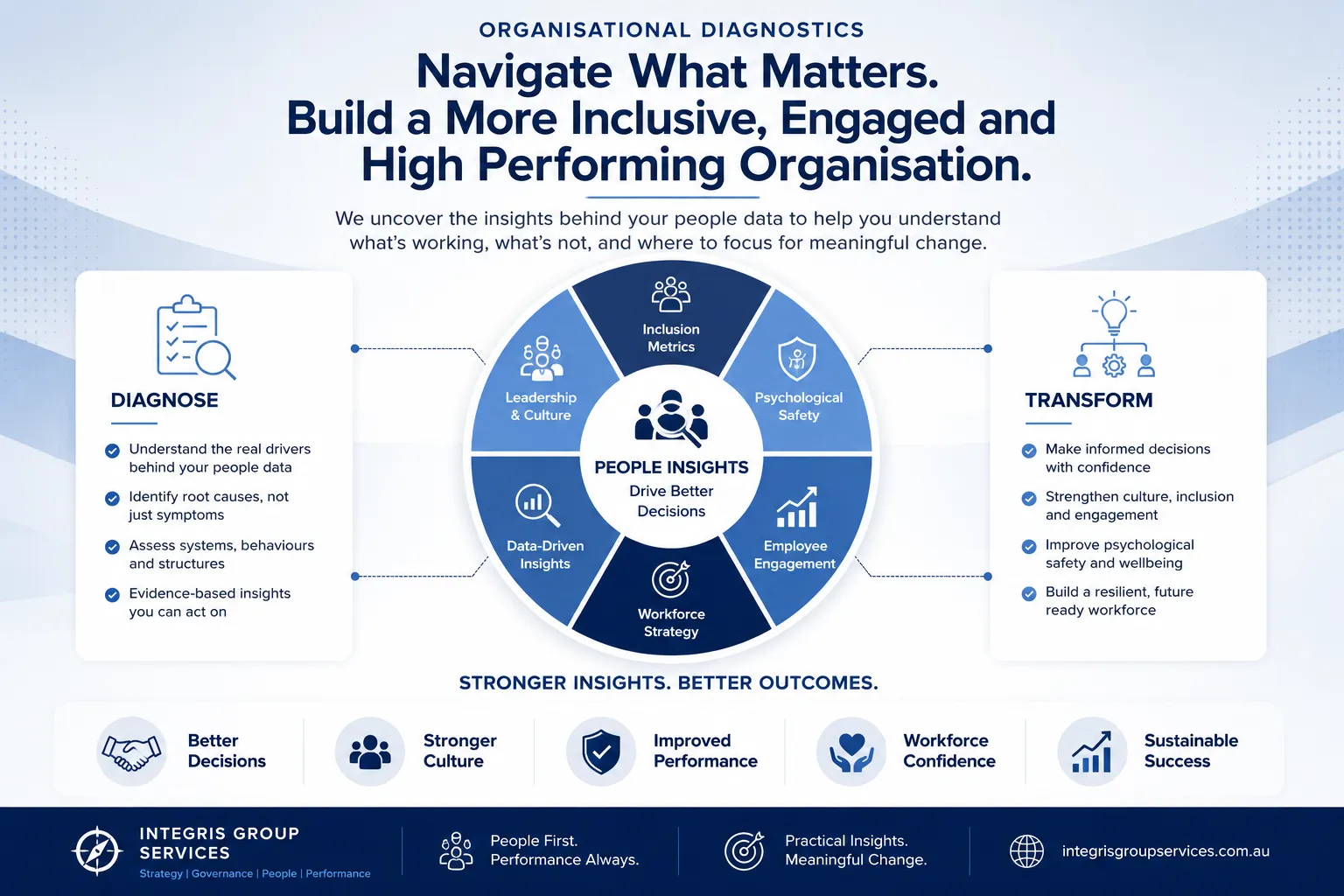
Organisational diagnostics help leaders understand what is really happening beneath workforce engagement, inclusion, culture and psychological safety results. While surveys and metrics can identify patterns, they often do not explain the organisational conditions driving those outcomes.

At Integris Group Services, we help organisations move beyond surface-level workforce data and identify the systems, behaviours and structures influencing employee experience. Our approach considers leadership behaviour, governance, role clarity, communication, workload design, inclusion practices, psychosocial risk and organisational decision-making.

Through practical diagnostic methods, we support organisations to understand why engagement scores, inclusion metrics or psychological safety indicators may be improving, declining or remaining static. This enables leaders to make informed decisions that strengthen workforce confidence, inclusion, accountability and performance.

Our diagnostic work connects strongly with Employee Engagement Services, organisational development, governance and management consulting. By identifying root causes rather than symptoms, organisations can move from reporting workforce issues to addressing the systems that shape them.
Organisational Diagnostics for Inclusion, Engagement and Psychological Safety

Organisational Diagnostics for Inclusion, Engagement and Psychological Safety

Our core competencies
Why Organisational Diagnostics Matter
Why Organisational Diagnostics Matter

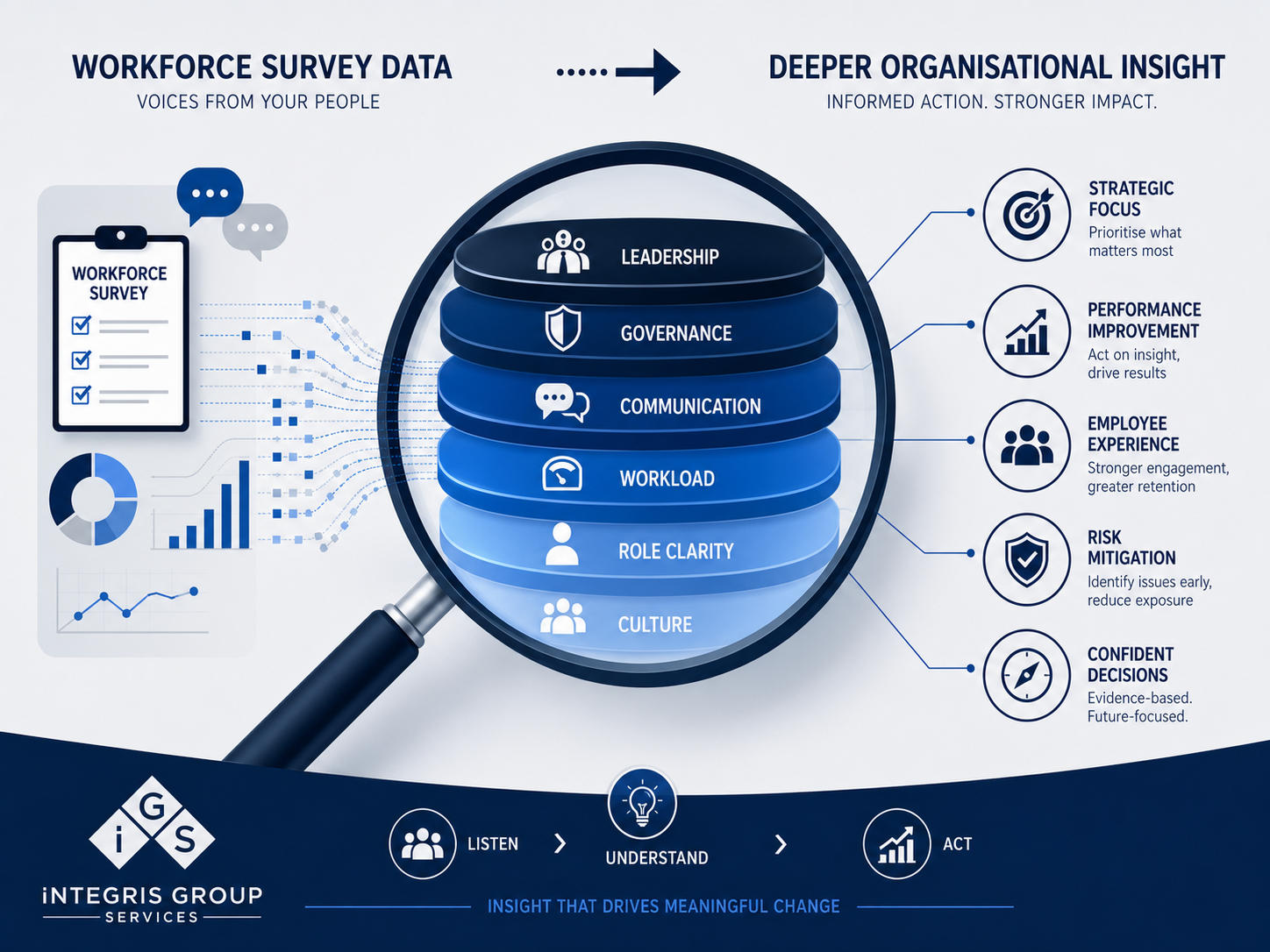
Organisations often rely on workforce surveys, engagement scores and culture metrics to understand how employees experience the workplace. These tools are useful, but they only provide part of the picture. A survey may show that engagement has declined. Inclusion metrics may suggest that certain employee groups feel less heard or supported. Psychological safety indicators may reveal that people are reluctant to speak up. These insights matter, but they do not always explain what is causing the result. This is where organisational diagnostics become valuable. Organisational diagnostics look beneath the surface of workforce data to identify the systems, structures and behaviours influencing employee experience. This may include leadership behaviour, governance arrangements, communication practices, workload design, role clarity, decision-making processes and organisational culture. At Integris Group Services, we help organisations move from measurement to understanding. Rather than treating engagement scores or inclusion metrics as isolated results, we examine the operating conditions that shape those outcomes. This approach is particularly useful for organisations experiencing recurring workforce concerns, poor engagement results, leadership inconsistency, cultural tension, change fatigue or uncertainty about how to prioritise improvement activity. Diagnostics help leaders answer more practical questions. What is really driving the data? Which issues are symptoms and which are causes? Where should effort be focused first? What systems need to change for improvement to be sustainable? Without this deeper understanding, organisations risk investing in initiatives that look responsive but do not solve the real problem. Training, workshops, wellbeing programs or communication campaigns may have value, but their impact is limited when underlying issues remain unaddressed. Effective diagnostics help organisations focus on the factors that matter most. By understanding root causes, leaders can make better decisions, strengthen workforce confidence and create improvement strategies that are grounded in evidence rather than assumption.
Learn More →
The Shift Towards Data-Driven Diagnostics
The Shift Towards Data-Driven Diagnostics

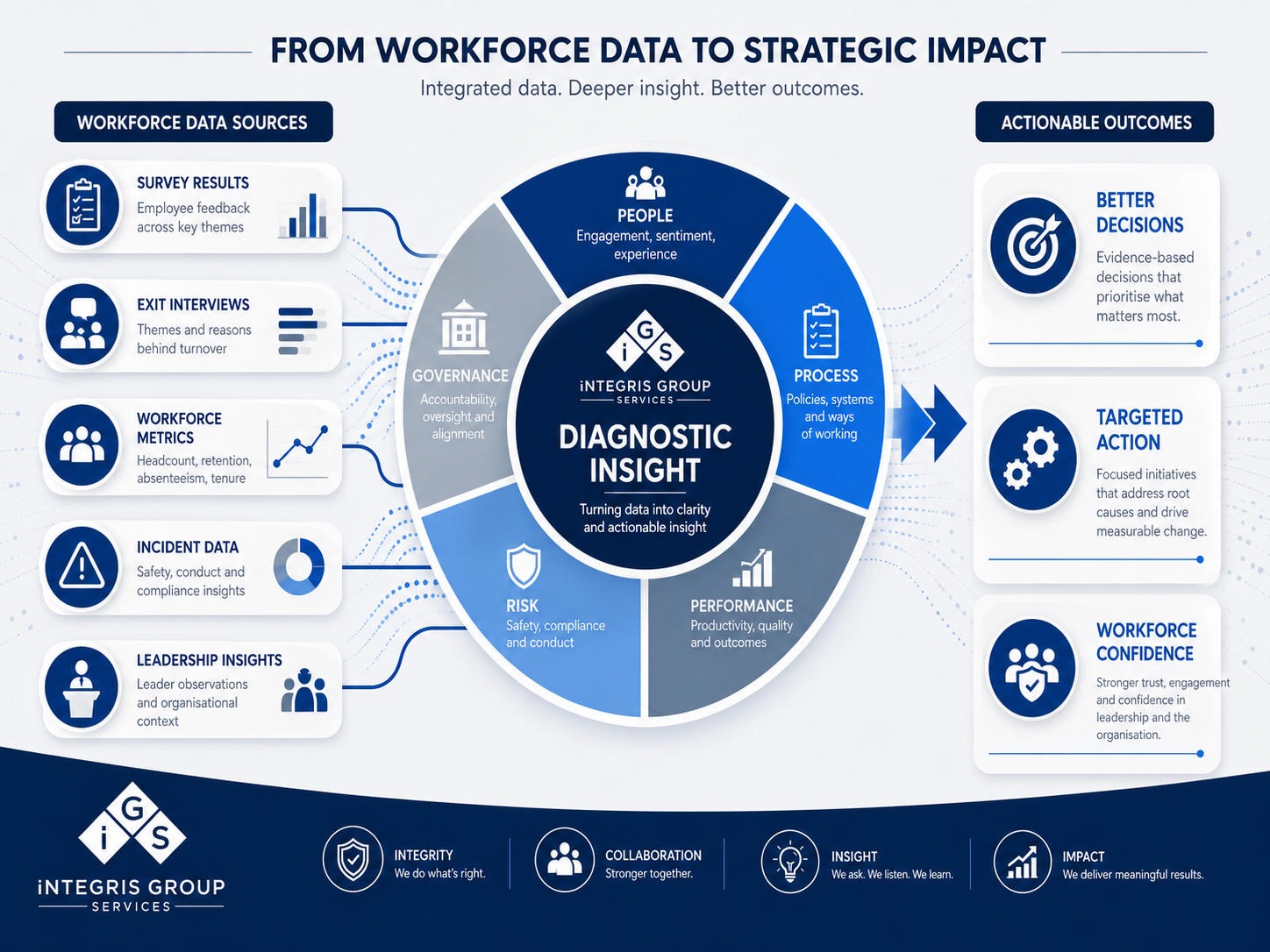
Workforce data has become increasingly accessible. Organisations now collect information through engagement surveys, pulse checks, exit interviews, performance data, wellbeing indicators, complaints, incident reports and workforce analytics. The challenge is not usually a lack of data. The challenge is knowing what the data means. Data-driven diagnostics help organisations interpret workforce information in context. Rather than reviewing each data point separately, diagnostics connect patterns across multiple sources to identify the organisational factors influencing performance, engagement and inclusion. For example, declining engagement scores may be connected to increased workload, recent organisational change, unclear decision-making or inconsistent management behaviour. Higher turnover in one team may reflect a local leadership issue, role design problem or lack of career development. Low psychological safety results may point to communication barriers, fear of consequences or weak feedback mechanisms. Data becomes more valuable when it is connected to organisational reality. This is why diagnostics should not be limited to spreadsheets and dashboards. Effective diagnostic work combines quantitative data with qualitative insight. Interviews, focus groups, leadership discussions and document reviews can help explain the story behind the numbers. For organisations using Employee Engagement Services, this approach helps ensure survey results lead to practical improvement rather than generic action plans. The aim is not to collect more information for its own sake. The aim is to generate insight that supports better decisions. Data-driven diagnostics allow leaders to identify priorities, test assumptions, understand risks and focus resources where they will have the greatest impact. This is especially important when workforce issues are complex or when different parts of the organisation are experiencing different challenges. The organisations that benefit most from diagnostics are those willing to ask not only what the data says, but why it says it.
Learn More →
Making Inclusion Metrics Go Beyond Diversity Numbers
Making Inclusion Metrics Go Beyond Diversity Numbers

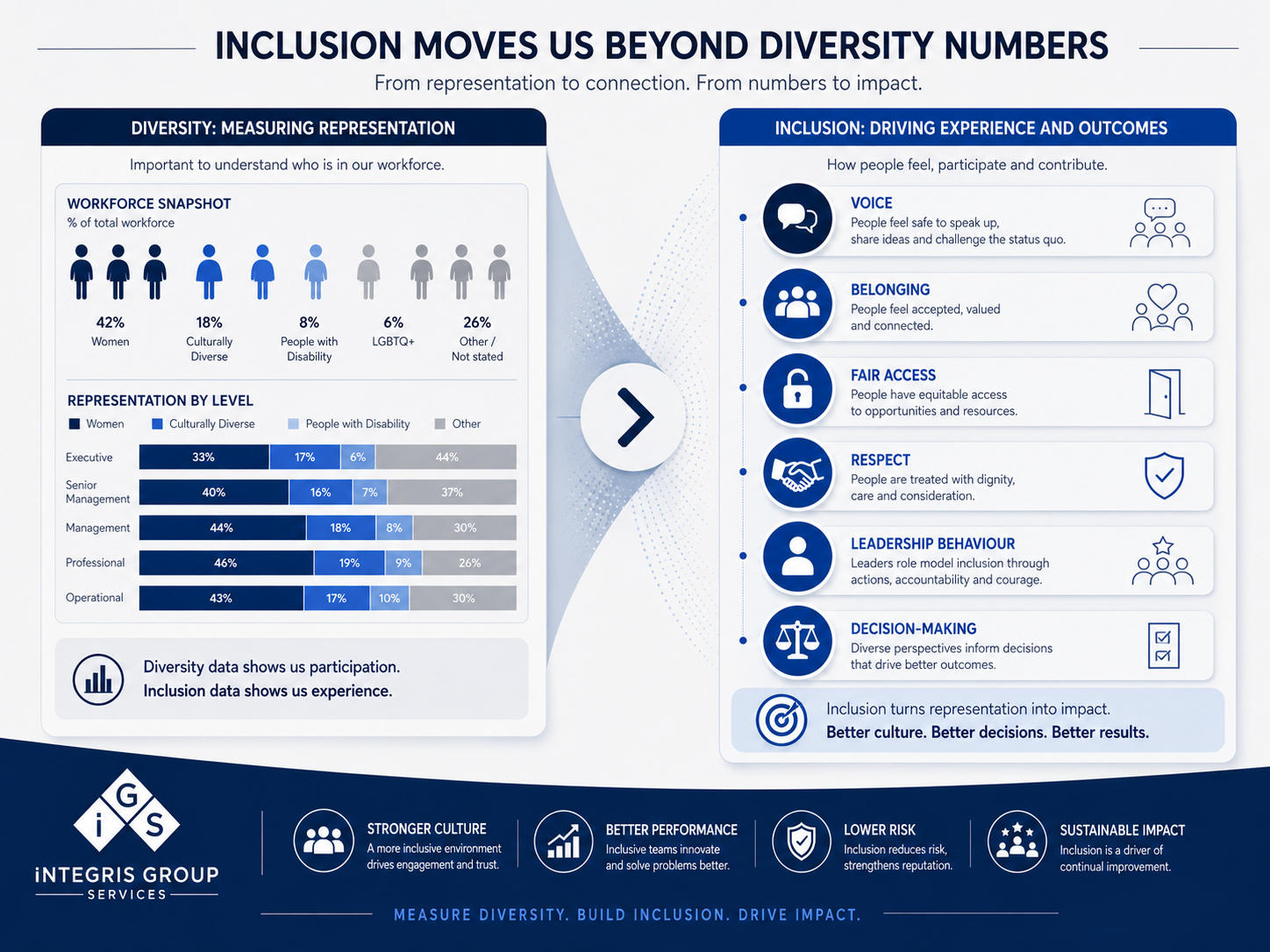
Inclusion is often measured through representation, participation rates or survey questions about belonging and respect. These indicators are important, but they do not always explain whether inclusion is genuinely embedded in the organisation’s systems and behaviours. Diversity tells an organisation who is present. Inclusion helps explain whether people feel heard, respected, valued and able to contribute. Organisational diagnostics help leaders understand the difference. An organisation may have strong diversity data but still experience barriers to inclusion. Employees may feel reluctant to speak up, excluded from informal networks, overlooked in decision-making or uncertain about whether concerns will be taken seriously. These issues are rarely solved by metrics alone. They require deeper assessment of leadership behaviour, communication systems, accountability, decision-making, team norms and organisational culture. Inclusion diagnostics may examine questions such as: Who has influence? Whose voices are heard? Are decisions transparent? Do employees feel safe raising concerns? Are development opportunities distributed fairly? Are leaders equipped to manage diverse teams effectively? This approach helps organisations move beyond compliance or representation-based reporting and towards practical inclusion. At Integris Group Services, inclusion is viewed as an organisational system issue, not simply a values statement. Inclusive workplaces are created through consistent behaviours, clear expectations, accessible processes and leaders who actively support participation. Where appropriate, inclusion diagnostics should link with broader employee engagement, leadership development and organisational improvement activity. This ensures inclusion is not treated as a standalone initiative, but as part of how the organisation operates. Strong inclusion supports trust, innovation, retention and performance. It also strengthens psychological safety because employees are more likely to contribute honestly when they believe their views will be respected. The goal is not simply to measure inclusion. The goal is to understand what helps or prevents people from participating fully in the workplace.
Learn More →
The Role of Psychological Safety in Engagement and Performance
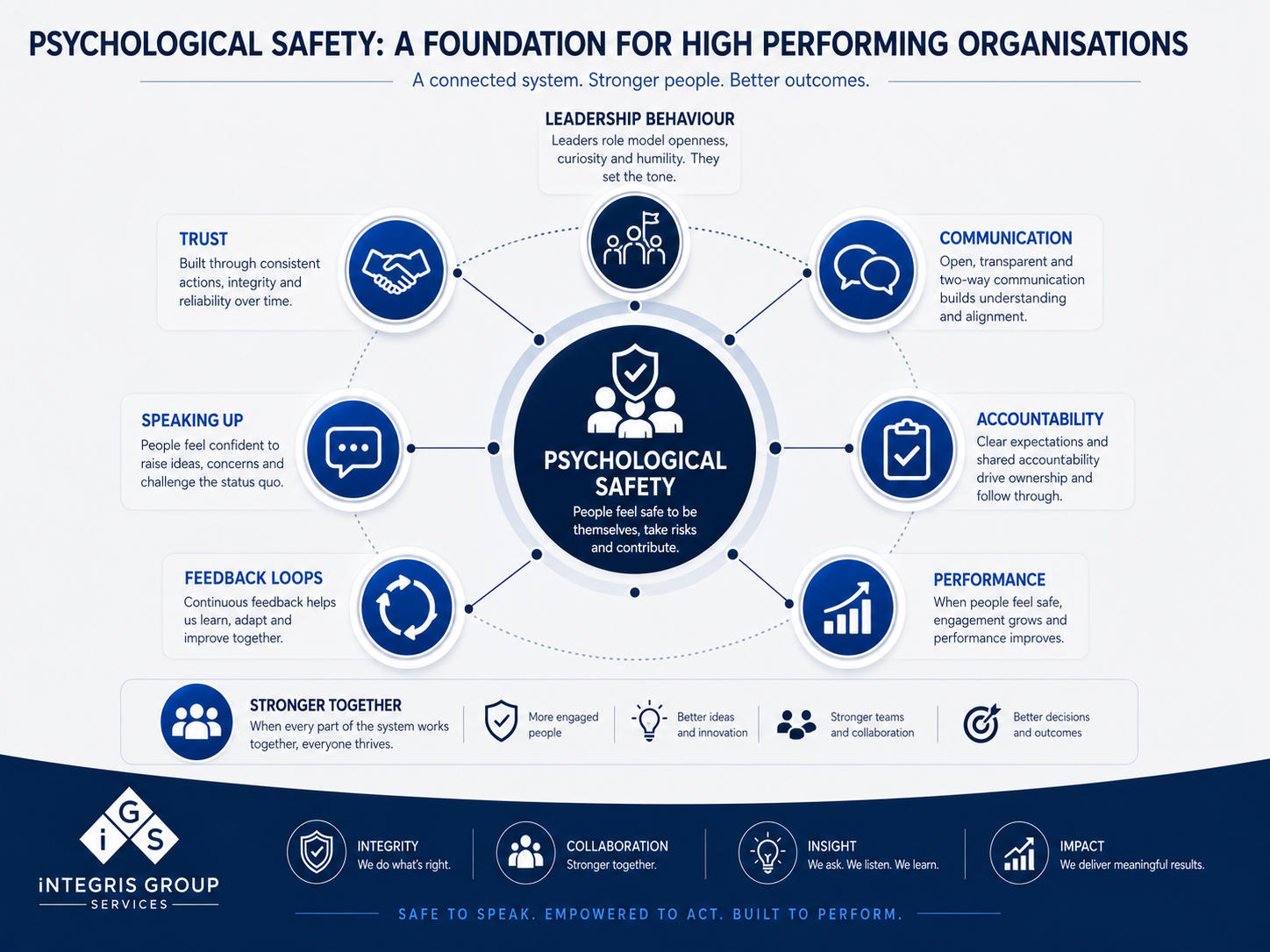
The Role of Psychological Safety in Engagement and Performance

Psychological safety is often described as the ability to speak up, ask questions, raise concerns and contribute ideas without fear of negative consequences. It is a critical factor in employee engagement, organisational learning and performance. When psychological safety is strong, employees are more likely to identify risks early, share ideas, challenge assumptions and participate honestly in improvement conversations. When it is weak, employees may stay silent, avoid difficult conversations or comply outwardly while disengaging internally. For this reason, psychological safety is closely connected to organisational diagnostics. Low engagement scores may indicate more than dissatisfaction. They may suggest that employees do not feel safe raising issues or influencing decisions. Poor inclusion results may indicate that certain groups feel less able to contribute openly. High turnover or conflict may reflect deeper trust and communication issues. Psychological safety is not created through slogans or workshops alone. It is shaped by leadership behaviour, team routines, accountability, communication, governance and how the organisation responds when concerns are raised. Diagnostics can help identify whether organisational systems are supporting or undermining psychological safety. This may include reviewing reporting channels, consultation processes, leadership practices, escalation pathways, meeting behaviours, workload pressures and feedback mechanisms. When psychological safety is understood as part of the broader operating system, organisations are better able to identify practical improvement opportunities. For example, if employees do not raise concerns because previous feedback was ignored, the solution is not simply to encourage people to speak up. The organisation may need to improve feedback loops, leadership accountability and response processes. Psychological safety matters because it influences both wellbeing and performance. Employees who feel safe to contribute can help organisations identify risks, improve services, innovate and respond more effectively to change. A psychologically safe workplace is not one where everyone agrees. It is one where people can participate constructively and trust that their contribution will be handled with respect.
Learn More →
Understanding the Systems Behind Employee Engagement
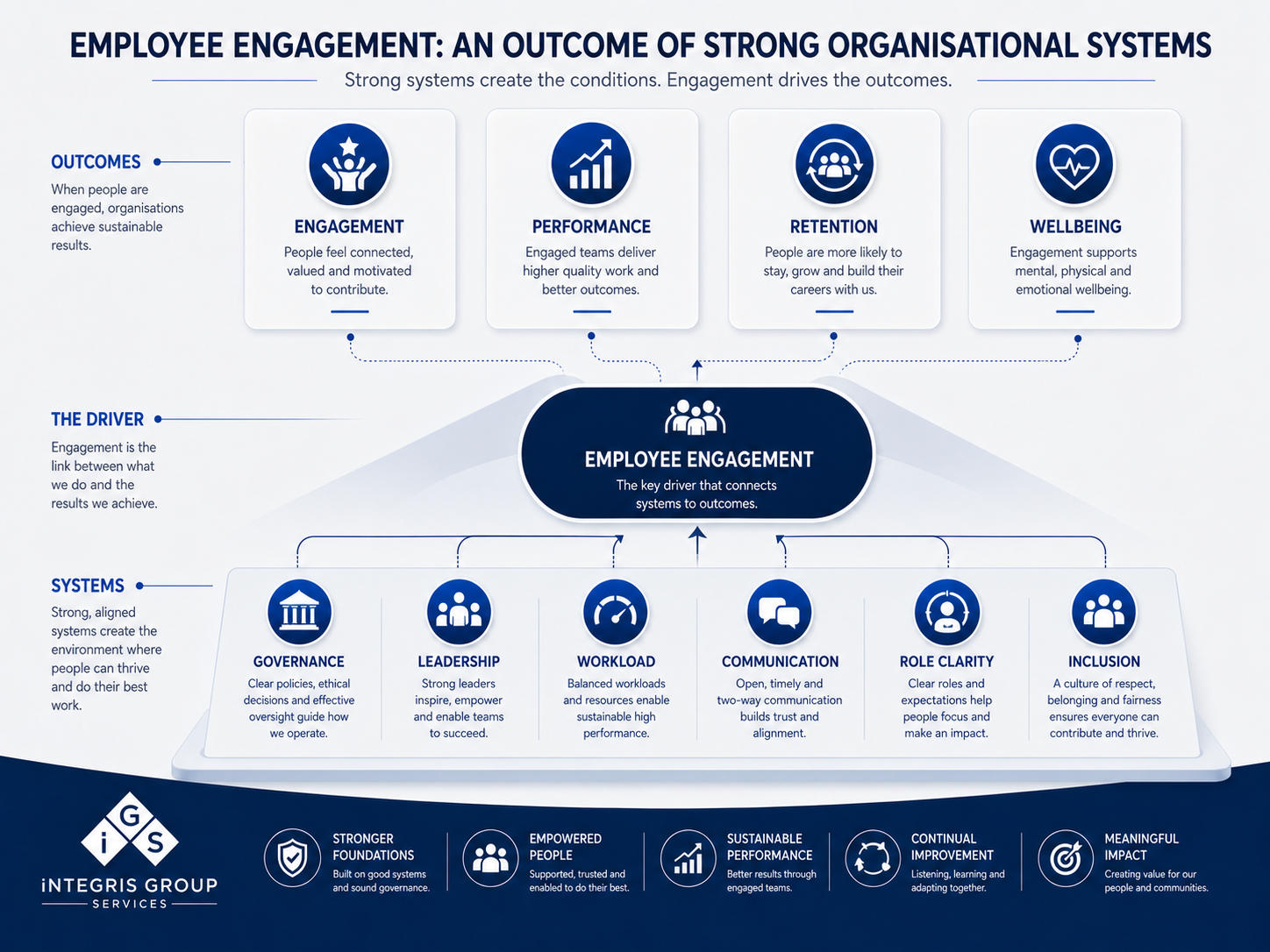
Understanding the Systems Behind Employee Engagement

Employee engagement is often discussed as a measure of motivation, satisfaction or commitment. While these factors matter, engagement is strongly influenced by the systems that shape everyday work. Employees are more likely to be engaged when they understand their role, trust leadership, receive useful communication, have manageable workloads and believe their contribution matters. They are less likely to be engaged when priorities are unclear, decisions feel inconsistent, communication is poor or leaders fail to address known issues. Organisational diagnostics help leaders examine these underlying conditions. Rather than asking only whether employees are engaged, diagnostics ask what is helping or preventing engagement. This creates a more useful foundation for action. Common system drivers include governance, leadership behaviour, role clarity, workload, communication, recognition, inclusion, organisational design and change management. These factors are often interconnected. For example, poor communication may be linked to unclear governance. Workload pressure may be linked to resource planning. Low trust may be linked to inconsistent leadership responses. Through Employee Engagement Services, Integris Group Services helps organisations interpret engagement results through a systems lens. This supports improvement strategies that are more targeted and sustainable. The strongest engagement strategies do not simply aim to lift survey scores. They strengthen the organisational conditions that allow people to perform well and feel connected to their work. When engagement is understood as an outcome of systems, leaders are better positioned to create meaningful change.
Learn More →
From Workforce Data to Workforce Strategy
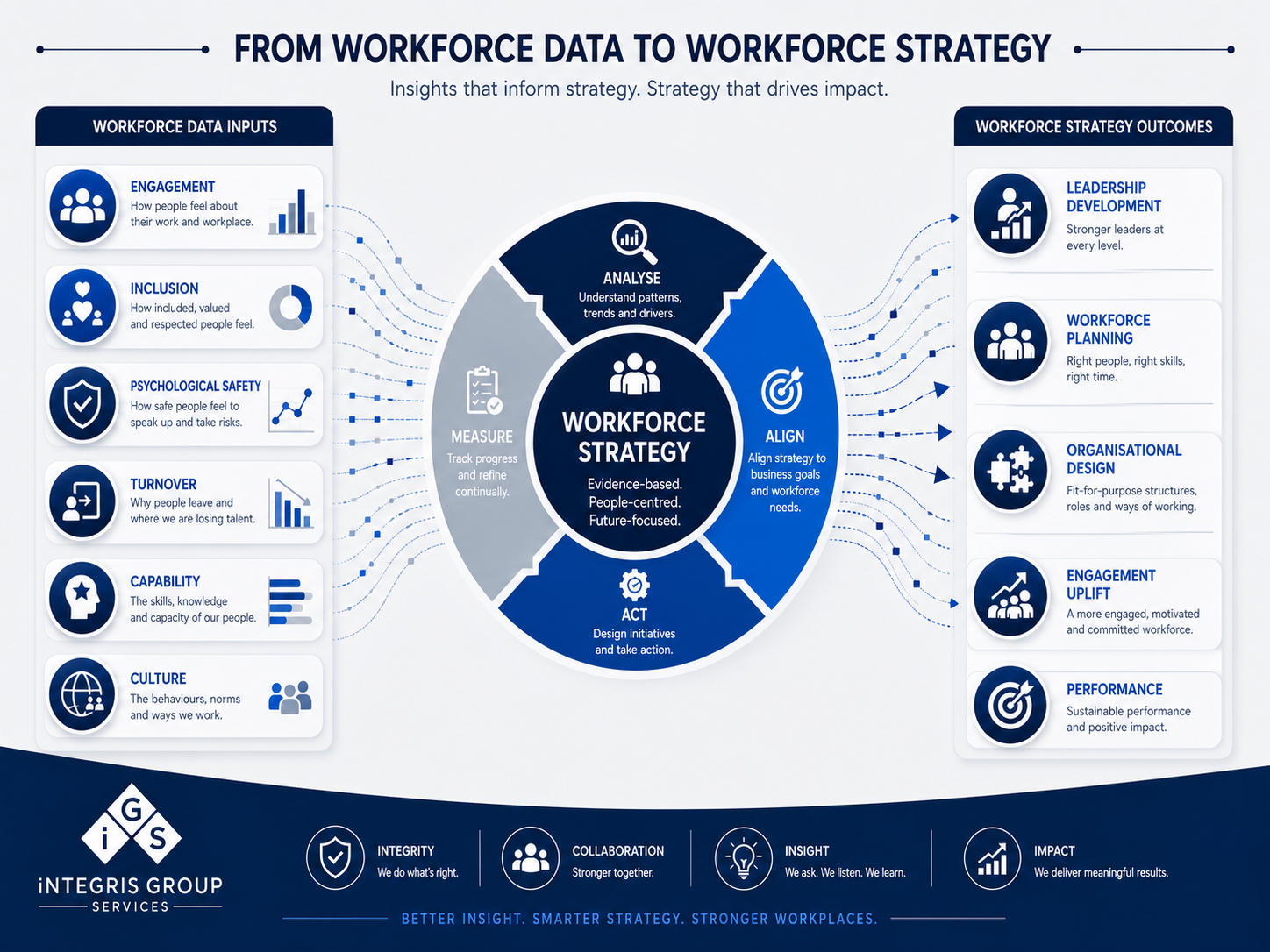
From Workforce Data to Workforce Strategy

Workforce data becomes most valuable when it informs strategy. Many organisations collect engagement results, inclusion metrics or workforce indicators but struggle to translate that information into clear priorities. Reports are reviewed, actions are discussed, and improvement plans are created, but the connection to broader organisational strategy is often weak. Organisational diagnostics help bridge this gap. By identifying the underlying drivers of workforce outcomes, diagnostics allow leaders to make more informed decisions about capability, structure, leadership, culture and performance. This is particularly important when organisations are experiencing growth, transformation, workforce shortages, service redesign or increasing compliance expectations. Workforce issues are rarely isolated from broader strategic pressures. For example, low engagement may indicate that employees do not understand the organisation’s direction. Inclusion concerns may reflect leadership capability gaps. Psychological safety issues may signal weak escalation processes or poor communication during change. When these insights are connected to workforce strategy, organisations can prioritise the right actions. Workforce strategy may include leadership development, operating model review, capability planning, engagement uplift, inclusion improvement, communication redesign or targeted organisational development activity. This is where links to Employee Engagement and Development and Management Consulting become useful. Diagnostics provide the evidence base. Development and consulting support help translate that evidence into practical change. The goal is not simply to understand the workforce. The goal is to build a workforce environment that supports organisational objectives and sustainable performance.
Learn More →
How Diagnostics Support Leadership and Management Consulting
How Diagnostics Support Leadership and Management Consulting

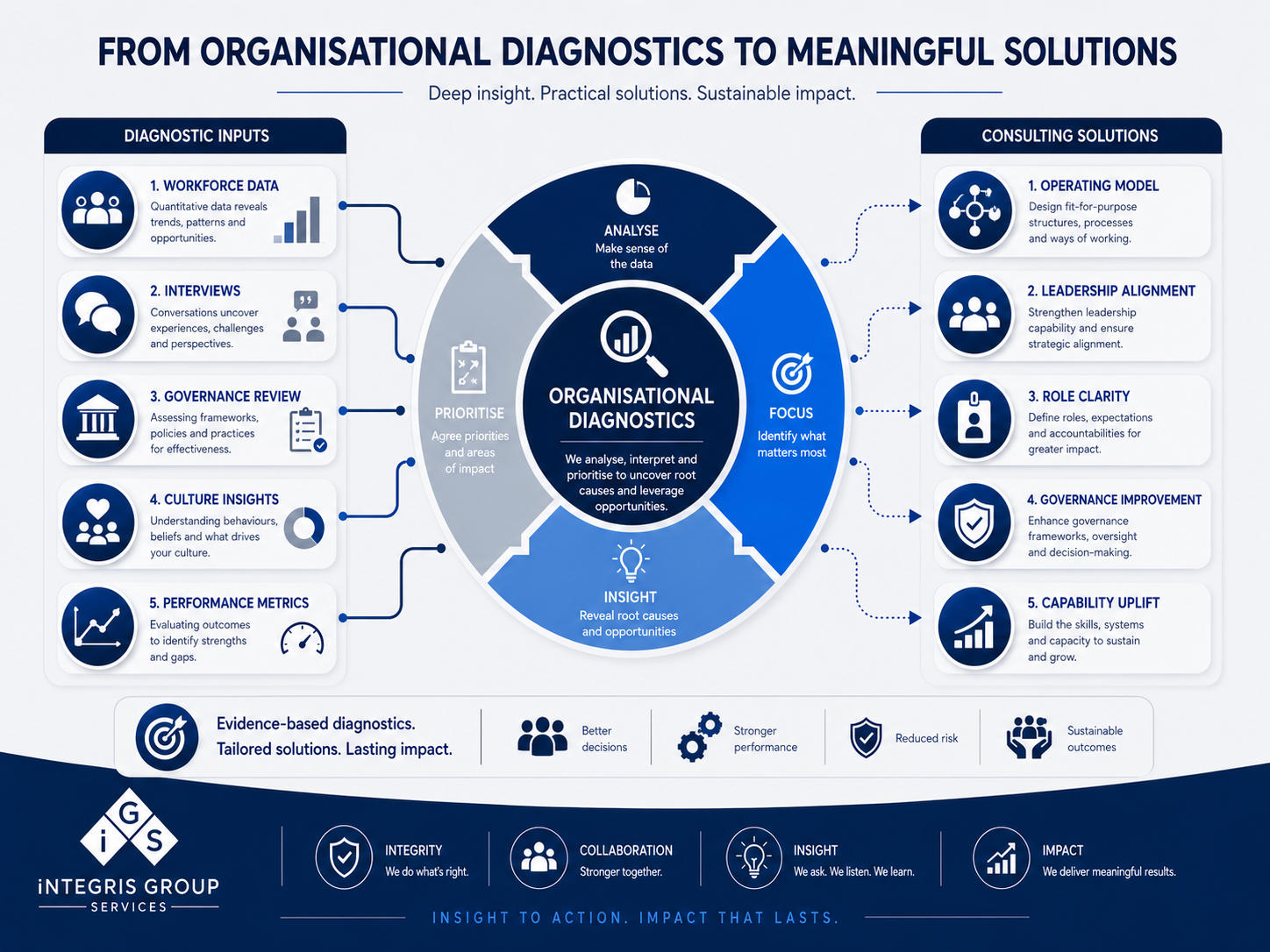
Many workforce issues are actually management system issues. When employees report low engagement, poor communication or lack of inclusion, the underlying causes often relate to leadership behaviour, decision-making, role design, team structures or governance. This is why organisational diagnostics are a powerful foundation for management consulting. Before organisations redesign services, restructure teams or invest in major workforce initiatives, they need to understand what is driving current outcomes. Diagnostics provide that insight. They help leaders distinguish between symptoms and causes. A communication issue may actually be a governance issue. A morale issue may reflect workload design. A retention problem may be linked to unclear career pathways or inconsistent management capability. Management consulting informed by diagnostics is more targeted because it starts with evidence. Rather than recommending generic improvements, diagnostic insight allows consultants and leaders to focus on the areas most likely to improve organisational performance. This may include operating model improvement, leadership alignment, role clarification, governance review, performance system redesign or workforce capability uplift. Where a Management Consulting Services page exists, this article should link directly to it because the content naturally positions diagnostics as a gateway to broader organisational improvement. At Integris Group Services, this approach aligns with our practical consulting style. We help organisations understand what is happening, why it is happening and what needs to change for improvement to be sustained. Organisational diagnostics are not just a reporting exercise. They are a foundation for better management decisions.
Learn More →
Turning Organisational Insight into Action

Turning Organisational Insight into Action

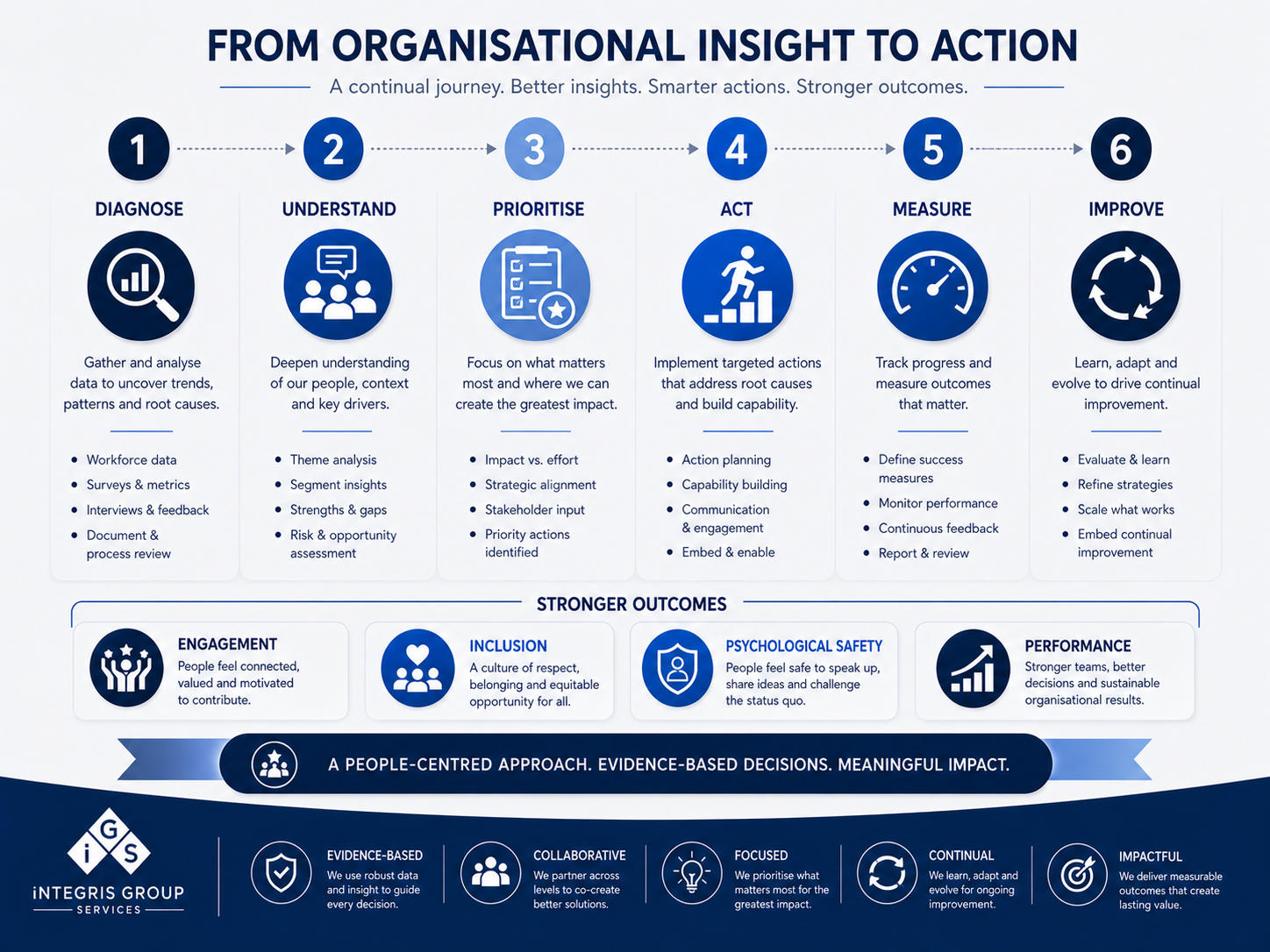
The value of organisational diagnostics is not in the report. The value is in what leaders do with the insight. Many organisations complete surveys, reviews or assessments and then struggle to convert findings into practical action. This often happens when recommendations are too broad, ownership is unclear or improvement activity is not connected to business priorities. Effective diagnostics should lead to clear, prioritised and manageable action. This means identifying what needs to change, who is responsible, what resources are required and how progress will be monitored. Not every issue can be solved at once. Leaders need to understand which actions will have the greatest impact and which risks require immediate attention. A strong diagnostic process should therefore produce: clear findings, root cause analysis, practical recommendations, prioritised actions, accountable owners, implementation timeframes, and review mechanisms. This connects diagnostics with continual improvement. Workforce and culture challenges are rarely solved through one-off activity. They require ongoing attention, leadership reinforcement and practical system improvements. At Integris Group Services, our focus is on helping organisations move from insight to implementation. We support leaders to use diagnostic findings to improve engagement, inclusion, psychological safety and organisational performance. The strongest organisations do not simply collect workforce insights. They act on them with discipline, clarity and purpose. When insight becomes action, diagnostics move from being an assessment tool to a strategic improvement capability.
Learn More →

Common Questions

Organisational diagnostics involve assessing the systems, structures, behaviours and operating conditions that influence workforce performance, culture, engagement and inclusion.

Diagnostics help organisations understand the underlying causes behind engagement results, including leadership behaviour, role clarity, communication, workload, governance and employee experience.

Inclusion metrics can show whether employees feel valued, respected or included, but they do not always explain why those experiences exist. Diagnostics help identify the organisational drivers behind the data.

Psychological safety is influenced by leadership, trust, communication, decision-making and accountability. Organisational diagnostics help identify whether workplace systems support or undermine psychological safety.

Integris Group Services helps organisations interpret workforce data, identify root causes, assess organisational systems and develop practical improvement strategies.

Organisational diagnostics are useful for not-for-profits, public sector organisations, regulated entities, professional services firms and businesses experiencing workforce, culture, leadership or engagement challenges.

Find Us

Let's Build Something Great Together

We'd love to hear from you