LTO Lithium Battery Solutions for Car Audio
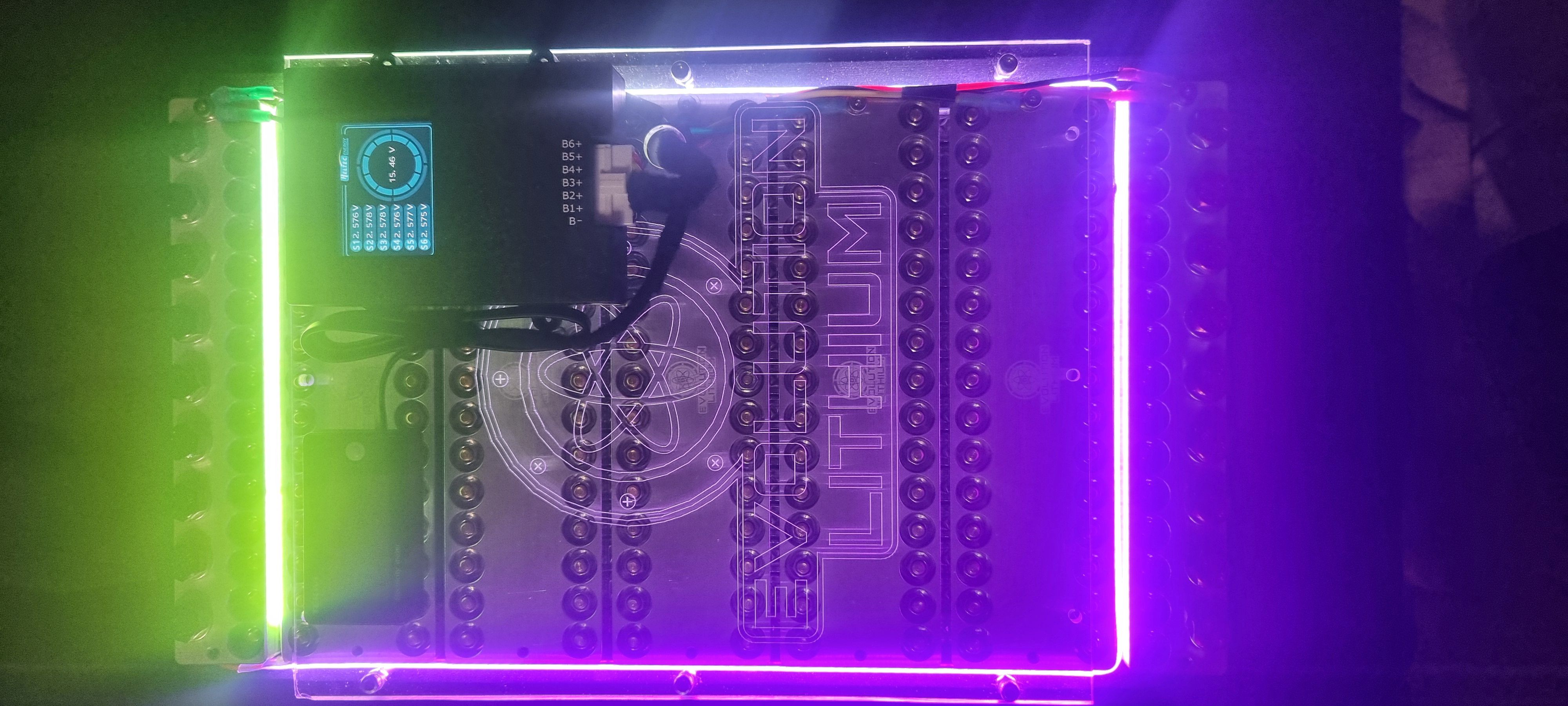
At Evolution Lithium, we focus on LTO lithium battery banks crafted explicitly for car audio aficionados. Our premium LTO battery offerings enhance voltage stability, making sure you can enjoy your sound system with utmost safety and performance. Built with robust materials and exceptional efficiency, our batteries serve not merely as an enhancement but as a critical element for serious audio environments. Whether you're using your vehicle for daily trips or engaging in SPL competitions, Evolution Lithium equips you to elevate and transform your in-car audio experience.
Article
Boosting Voltage Stability with LTO Batteries

Selecting the Ideal Lithium Battery for Your Setup

Optimizing Performance and Safety in Audio Systems
Frequently Asked Questions
SCiB LTO batteries serve a crucial role in car audio systems by providing fast access to high currents while preserving stable voltage when significant load is applied. They're especially valuable in setups where traditional lead-acid batteries struggle with larger amplifiers during intense usage or prolonged demo sessions. In high-end car audio, it’s essential that the amplifier receives both stored power and a steady, rapid current supply. Should the electrical system fail to deliver adequate current, voltage levels will dip, making the output inconsistent and leaving the overall sound quality lacking during high outputs. A correctly sized SCiB LTO battery bank bolsters the amplifier's performance by mitigating voltage drops, enhancing bass response recovery, and maintaining a consistent reserve for the alternator. This quality is why they’re favored in SPL builds, promotional vehicles, or everyday high-powered applications where voltage reliability is key. These batteries are not a fix for inadequate wiring or an undersourced alternator. They are best used alongside a properly configured electrical system encompassing appropriate cable sizes, correct fuse ratings, solid grounding, adequate charging voltages, and comprehensive alternator capacity to supply the necessary power.
Choosing the perfect lithium battery centers on your amplifier’s true power output, real current needs, charging voltages, the alternator's performance, intended usage, and the space you have for installation. Vehicles used for simple daily driving, those set up for loud street displays, and high-end SPL builds all require unique battery profiles. Start your assessment with the amplifier's RMS power ratings, as these present an accurate reflection of the current requirements. From there, consider amplifier efficiency, load impedance, how you'll use the system, and the intensity of performance when deciding on the required capacity. Systems intended for brief demonstrations often have different battery needs than those they use frequently at loud volumes over extended periods. The output capability of the alternator is as vital as battery size. While a lithium bank can store and release power, the alternator's role in recharging and supporting the vehicle features while the audio system operates cannot be overlooked. If the alternator isn’t powerful enough, an added battery might provide momentary voltage stability but won't remedy the foundational current supply issues. Available installation space is crucial too; some vehicles can accommodate expansive battery banks, while others need more compact designs. The optimal selection should harmonize power capacity, voltage handling, recharging compatibility, safety, weight consideration, and physical adequacy before purchasing. For most car audio applications, the ideal strategy involves sizing the battery per the amplifier's genuine RMS demands first, followed by verifying if the alternator and wiring can sustain that load. This careful consideration helps you avoid unnecessary expenditures on unsuitable batteries while also safeguarding against a fabricating electrical setup liable to suffer voltage drops.
At Evolution Lithium, we provide both 12V and 15V lithium battery variants tailored for car audio use. Deciding on the appropriate voltage hinges on considerations of your amplifier choice, alternator performance, car electronics, and your specific system aspirations. A 12V lithium battery generally suits most vehicles needing a traditional charge range compatible with standard car audio equipment. It's appropriate for daily systems, moderate-powered amplifiers, or setups where the charging system doesn't push into the elevated voltage range. Conversely, a 15V lithium solution is geared towards car audio systems positioned to take advantage of more intense charging voltages and equipped for enhanced amplifier performance. Numerous serious car audio configurations choose higher voltages to consume less current while attaining the same power levels, effectively boosting voltage reliability under demanding conditions. This is particularly advantageous for robust monoblock amplifier setups, SPL systems, and potent promotional configurations. Selecting the right voltage should never be thoughtlessly managed. Certain amplifiers readily accommodate heightened charging voltages, whereas others do not benefit significantly. Vehicle electronics coupled with alternator regulation and charging systems must carefully align before opting for a 15V battery set-up. For those uncertain about which path to take, it’s safest to align battery voltage directly with your amplifier specifications along with your charging setup. It’s better to find an accurately configured 12V solution than to select a mismatched 15V alternative.
An LTO battery enhances your car audio system's performance by maintaining voltage consistently, even under significant loads. When compared to conventional lead-acid batteries, LTO batteries provide higher current output with quicker recovery between demands, preserving robust voltage for bass-rich playback. Lead-acid batteries are extensively used as they are affordable and well-recognized; however, they are far from ideal for systems with high current demands. Heavy loads tend to drain lead-acid batteries swiftly, causing voltage dips that reduce amplifier support, lower output, heighten strain on the amplifier, and create a lack of control in sound quality during higher volumes. LTO batteries are designed for regular high-current usage, which translates to deliverable, stable voltages during power-packed musical elements, rapid recovery times amidst bass notes, and overall more cohesive amplifier playback. While they don't magically improve sound quality on their own, this battery type establishes an electrical environment that optimizes amplifier functions. It's imperative to adopt a realistic view. An LTO battery is ineffective against poor tuning, unfronted speaker arrangements, inefficient grounding, inadequate cabling, accessorizing errors, or imaginary power limits. Nevertheless, discounting the exceptional benefits that an LTO battery imparts on voltage containment and overall dependability fosters better performance when the broader system is rigorously constructed.
Yes, SCiB LTO batteries can indeed be installed in vehicle audio systems, provided the proper installation techniques, charging processes, fuse implementations, and placement standards are adhered to; ensuring efficiency and safety is dependent on both battery chemistry and installation quality. The SCiB LTO composition guarantees impressive thermal stability, extensive cycle longevity, and the ability to deliver extensive current. These attributes make them exceptionally compatible with rigorous car audio applications. However, like any robust battery, they deserve careful handling. This orientation on current batteries resolves the concern of potentially large currents delivered; hence, sturdy fusing connections, appropriately sized cables, secure installations, terminal guard plating, and applied short-circuit safeguards are critical... For automotive suites, the best practices suggest securing the battery firmly within the trunk or at the back seat area, away from overheating engine compartments. Lithium battery constructions should never accommodate placements in engine bays. While temperature, vibration, moisture exposure, and flawed cable management raise installation hazards. An optimum car audio lithium setup consists of compatible-rated fuses closer to the battery, high-grade cabling, protected terminals, solid connections, and when necessary, an active balancing module. The chosen voltage must reflect the battery framework. Issues such as over-charging, incorrectly configured alternators, precarious connections, or minimally protected wiring produce dangers—even with superior batteries in play. If installed correctly, a SCiB LTO battery can prove to be a secure enhancement for high-end car audio setups. Thus, it isn’t simply a matter of selecting the correct battery, but funding a meticulously orchestrated electrical framework around it as well.
Ready to Get Started?
We'd love to hear from you