
Start Preparing During Implementation—not Before the Auditor Arrives
Effective ISO certification audit preparation begins well before an external certification audit is booked.
A common mistake is to think of audit preparation as a final exercise: organise the documents, gather records and make sure everyone knows an auditor is coming. A stronger approach is to build preparation into the implementation of your management system from the beginning.
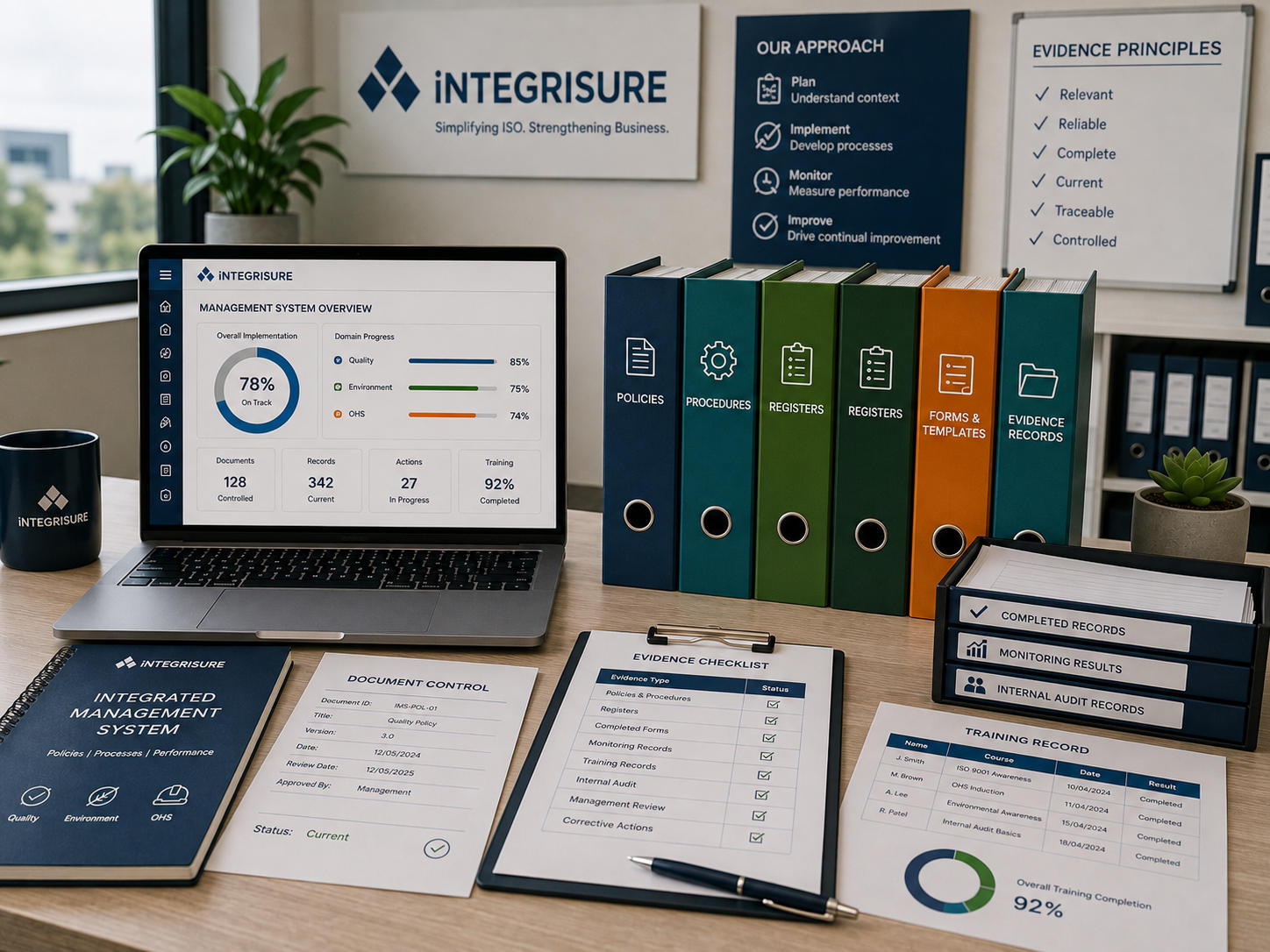
As policies and procedures are introduced, your organisation should progressively establish the records and evidence that naturally result from operating those processes. This might include completed registers, meeting records, monitoring results, training records, corrective actions and evidence that objectives are being reviewed.
This distinction matters because an auditor is not simply checking whether you possess ISO-aligned documentation. The audit considers whether the management system has been implemented and how applicable requirements operate within your organisation.
IntegriSURE's structured certification pathway supports this progressive approach. Rather than leaving everything until certification approaches, SMEs can work through management system implementation systematically and build evidence as part of normal operations.






 Frequently Asked Questions