ISO 9001 vs ISO 14001 vs ISO 45001: Which Standard Does Your SME Need?

For Australian SMEs exploring ISO certification, one of the first questions is often: which standard should we start with?

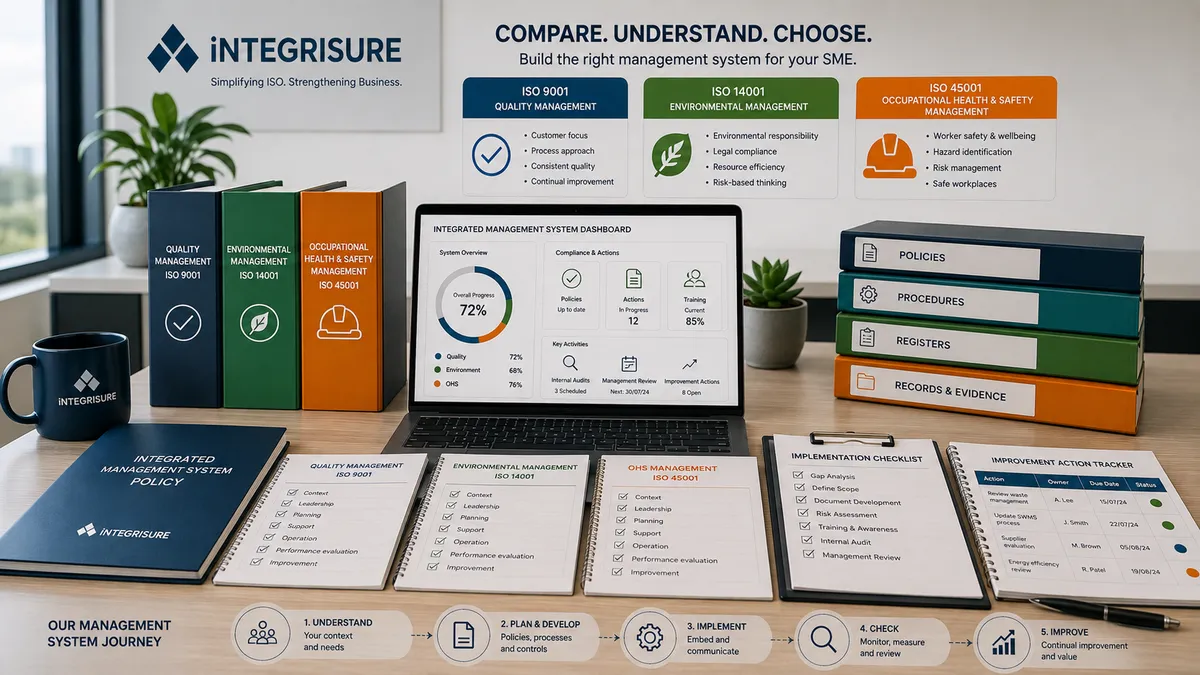
ISO 9001, ISO 14001 and ISO 45001 address different management priorities. ISO 9001 focuses on quality and consistent delivery, ISO 14001 on environmental management, and ISO 45001 on occupational health and safety. Depending on your operations, customer expectations, tender requirements and business risks, you may need one standard or an integrated management system covering several.

IntegriSURE helps Australian SMEs turn that decision into a structured pathway. Our ready-to-tailor management system documents, implementation guidance, progress tools and staged support options help you build internal capability, implement your system and collect evidence progressively.

You can begin self-directed and add support as your needs become more complex, helping reduce unnecessary consultant dependency while keeping management system ownership within your organisation.

Where certification is pursued, the final certification decision remains with an independent certification body.

ISO 9001, ISO 14001 or ISO 45001? A Practical Guide for Australian SMEs

Start With the Business Need, Not the Standard Number

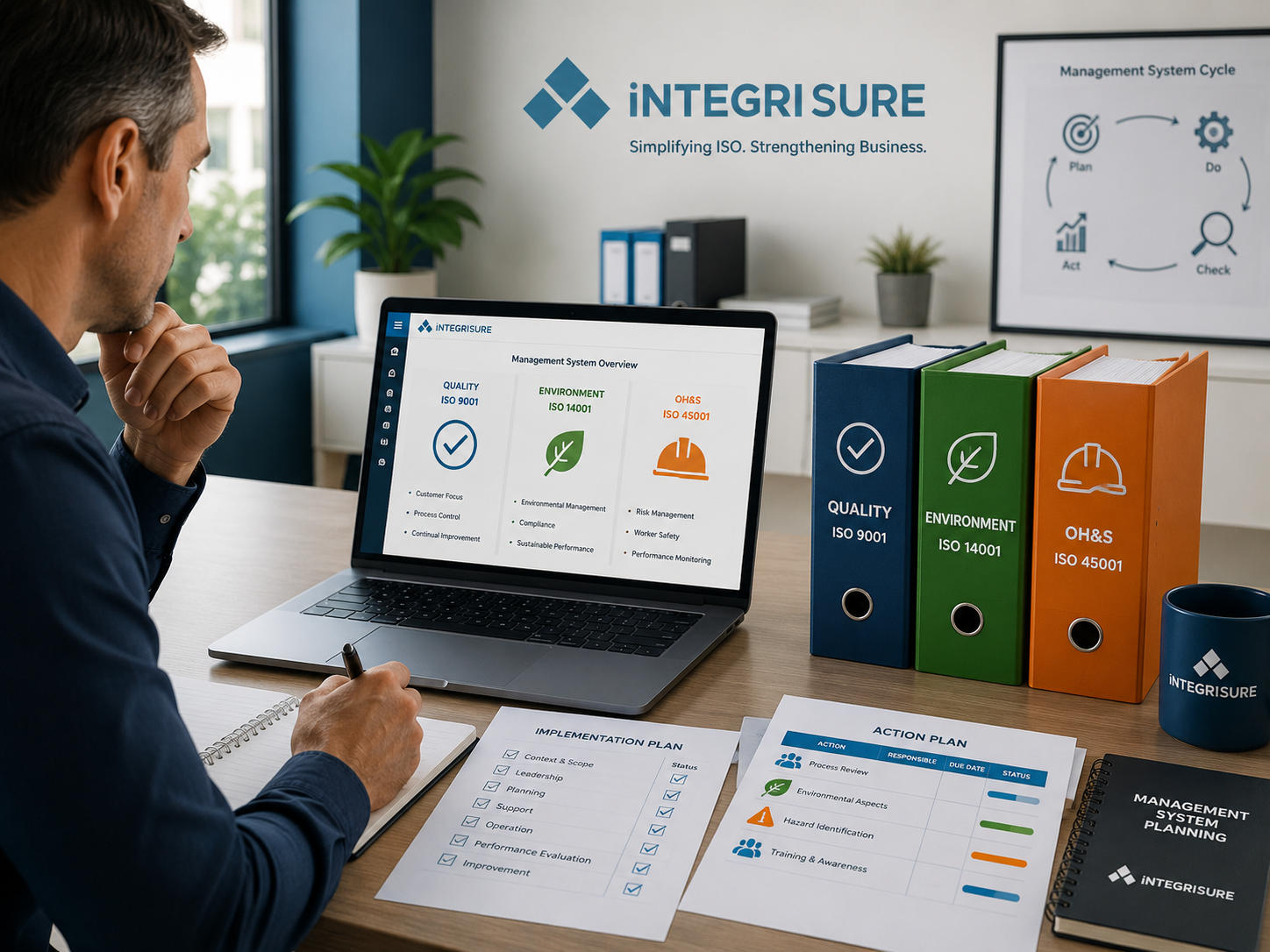
For an SME, choosing an ISO standard should begin with a practical question: what business requirement are we trying to address? ISO certification may be considered because of customer expectations, tender or supply-chain requirements, operational growth, quality concerns, environmental responsibilities or occupational health and safety risks. Understanding that driver helps determine which management system standard should receive priority. ISO 9001 is centred on quality management. ISO 14001 provides a framework for managing environmental aspects and impacts. ISO 45001 addresses occupational health and safety risks and opportunities. Some organisations will have a clear priority. Others may discover that two or all three standards are relevant. Before committing resources, confirm the requirements of your customers, tender documentation or other interested parties and consider your organisation's operational risks and strategic priorities. This provides a stronger basis for deciding whether to implement one standard first or establish an integrated management system.
Start With the Business Need, Not the Standard Number

ISO 9001: Building Quality and Consistency

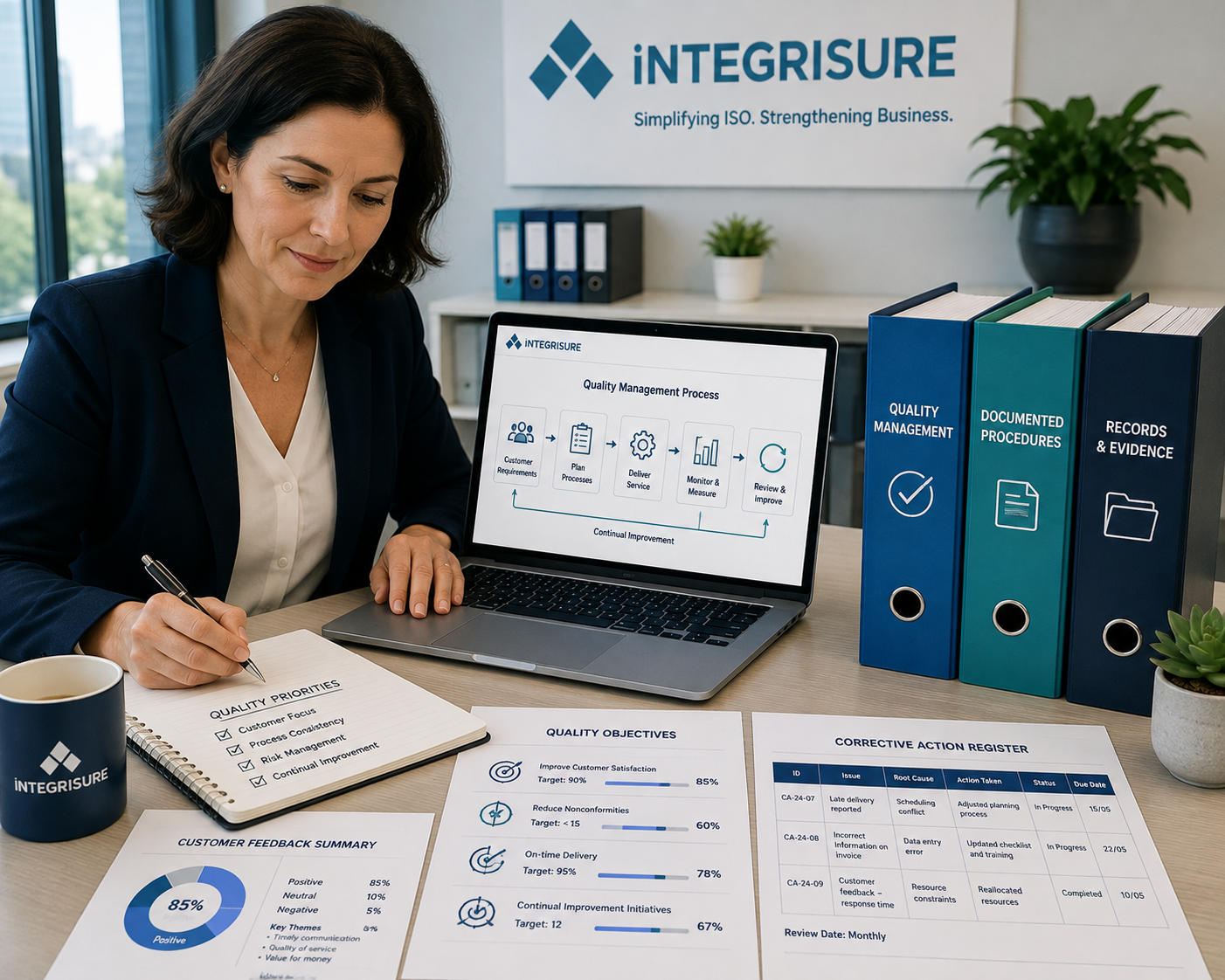
ISO 9001 provides requirements for a quality management system (QMS). Its focus extends beyond checking the quality of a final product or service. It requires organisations to establish processes that help them consistently meet applicable customer and organisational requirements while evaluating performance and identifying opportunities for improvement. For an SME, ISO 9001 may be relevant where the organisation wants greater consistency across its operations, clearer processes and responsibilities, stronger control of nonconformities and corrective actions, or a more structured approach to customer feedback and performance objectives. A practical ISO 9001 implementation should therefore connect documentation with how work actually happens. Policies and procedures provide structure, but they need to be tailored and embedded into everyday operations. IntegriSURE provides ready-to-tailor management system documents and, depending on the selected pathway, implementation guidance and supporting tools that help SMEs progressively establish their QMS while maintaining internal ownership. SMEs that are still developing their understanding of ISO can also use the ISO Starter Pack or Demystifying ISO courses as an entry point.
ISO 9001: Building Quality and Consistency

ISO 14001: Managing Environmental Responsibilities

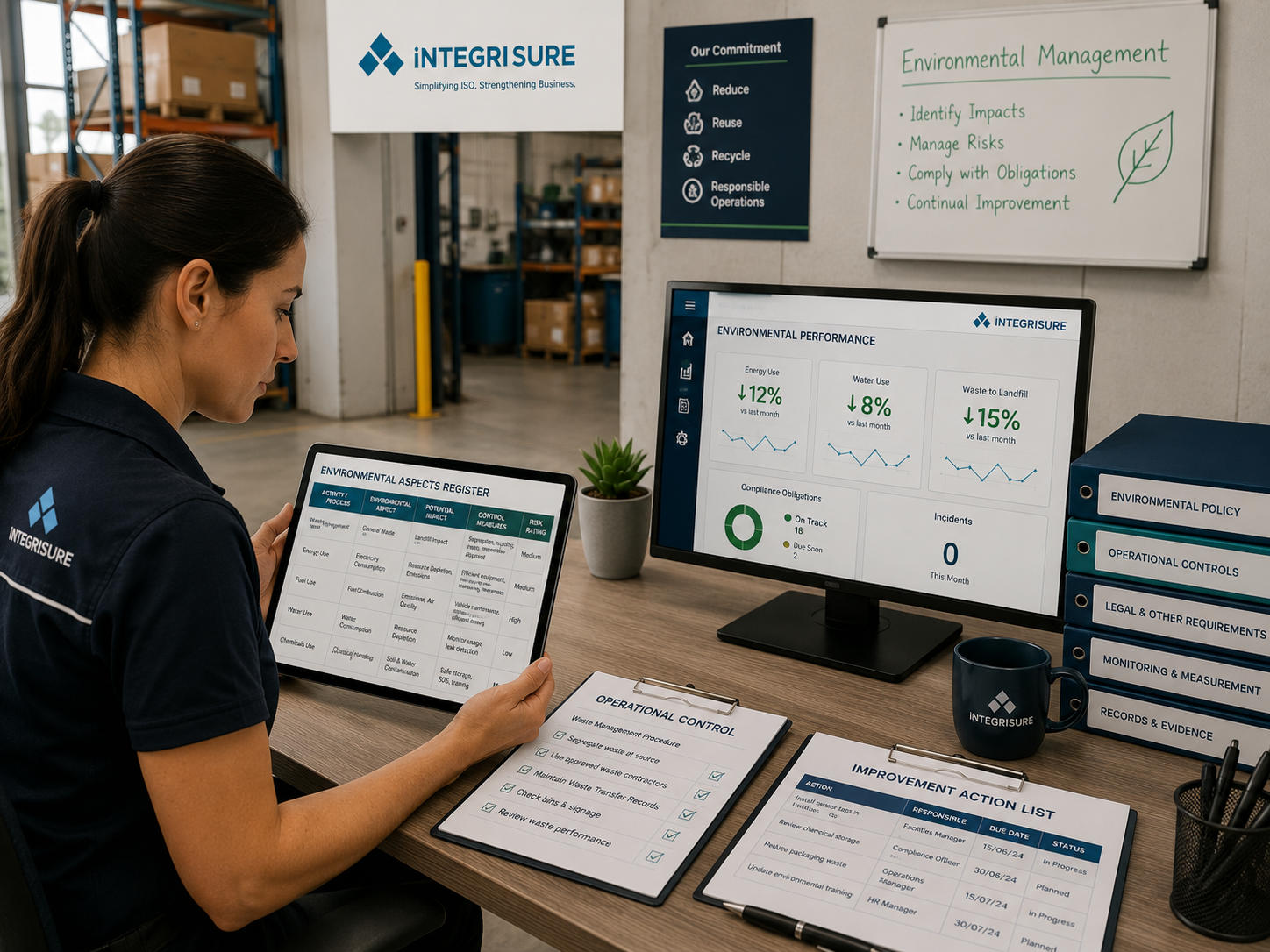
ISO 14001 provides requirements for an environmental management system (EMS) that helps organisations systematically identify and manage environmental aspects, compliance obligations, risks and opportunities. For an Australian SME, environmental considerations will differ considerably depending on its activities. Relevant issues might include waste, energy or resource use, emissions, procurement, storage, transport or other environmental interactions associated with its operations. The objective is not simply to create an environmental policy. An effective EMS establishes responsibilities and controls, monitors relevant performance and provides a structured basis for responding to changing circumstances and pursuing continual improvement. For SMEs considering ISO 14001, understanding the organisation's context and environmental aspects is therefore an important part of establishing an appropriate system. IntegriSURE supports this process with ISO-aligned documents and structured implementation resources that can be tailored to the organisation rather than treated as generic environmental paperwork.
ISO 14001: Managing Environmental Responsibilities

ISO 45001: Structuring Occupational Health and Safety Management

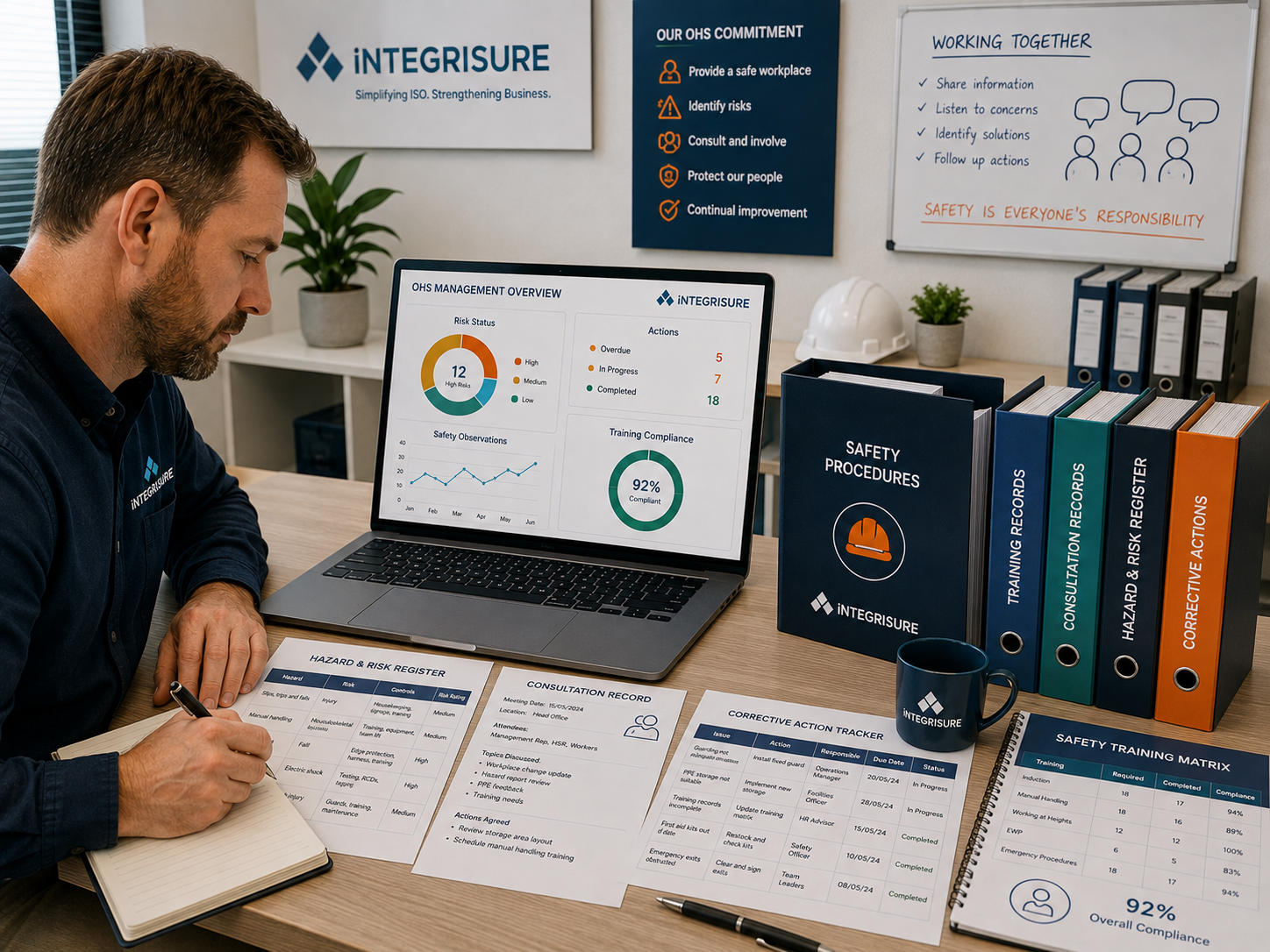
ISO 45001 provides requirements for an occupational health and safety management system (OHSMS). It helps organisations establish a systematic approach to identifying hazards, managing OH&S risks and opportunities, consulting and involving workers, and monitoring OH&S performance. For SMEs, ISO 45001 can provide structure around responsibilities and processes that may otherwise be handled inconsistently. This can include hazard and risk management, worker consultation, incident management, operational controls, competence and training, corrective actions and performance monitoring. The management system must reflect the organisation's actual work environment and risks. Generic documents alone cannot demonstrate that hazards are being effectively managed in practice. IntegriSURE provides ready-to-tailor documentation and structured implementation resources that help organisations establish the framework and progressively embed their processes. This supports SMEs in building internal capability while retaining responsibility for their own OH&S management.
ISO 45001: Structuring Occupational Health and Safety Management

When an Integrated Management System Makes Sense

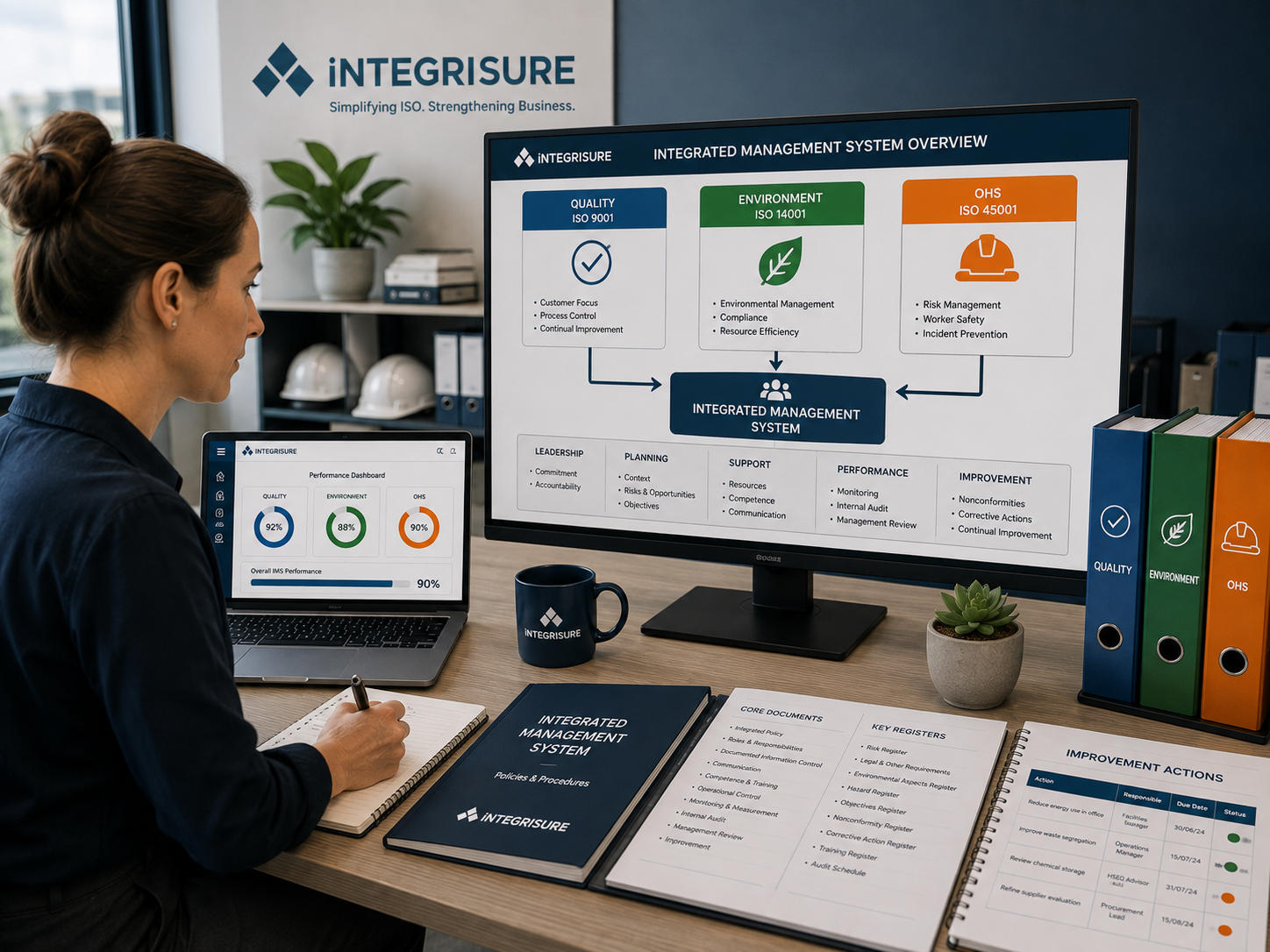
Choosing one standard today does not mean your organisation must build separate systems if another standard becomes relevant later. ISO 9001, ISO 14001 and ISO 45001 share a number of common management system concepts. These can include organisational context, leadership, planning, support, operational control, performance evaluation and improvement. An integrated management system (IMS) can bring these common requirements together while maintaining the specific controls required for quality, environmental management and occupational health and safety. For SMEs, this can provide a more coherent way to manage responsibilities and processes than maintaining disconnected systems. Integration, however, should be deliberate. It does not mean treating the requirements of each standard as interchangeable. The appropriate approach depends on your organisation's needs. You may establish one management system first and expand it later, or plan for multiple standards from the outset where the business case is clear. IntegriSURE supports ISO 9001, ISO 14001 and ISO 45001 within a structured management system approach, allowing organisations to build their system progressively. For more practical guidance, organisations can also explore implementing integrated management systems.
When an Integrated Management System Makes Sense

Choosing the Standard Is Only the Beginning

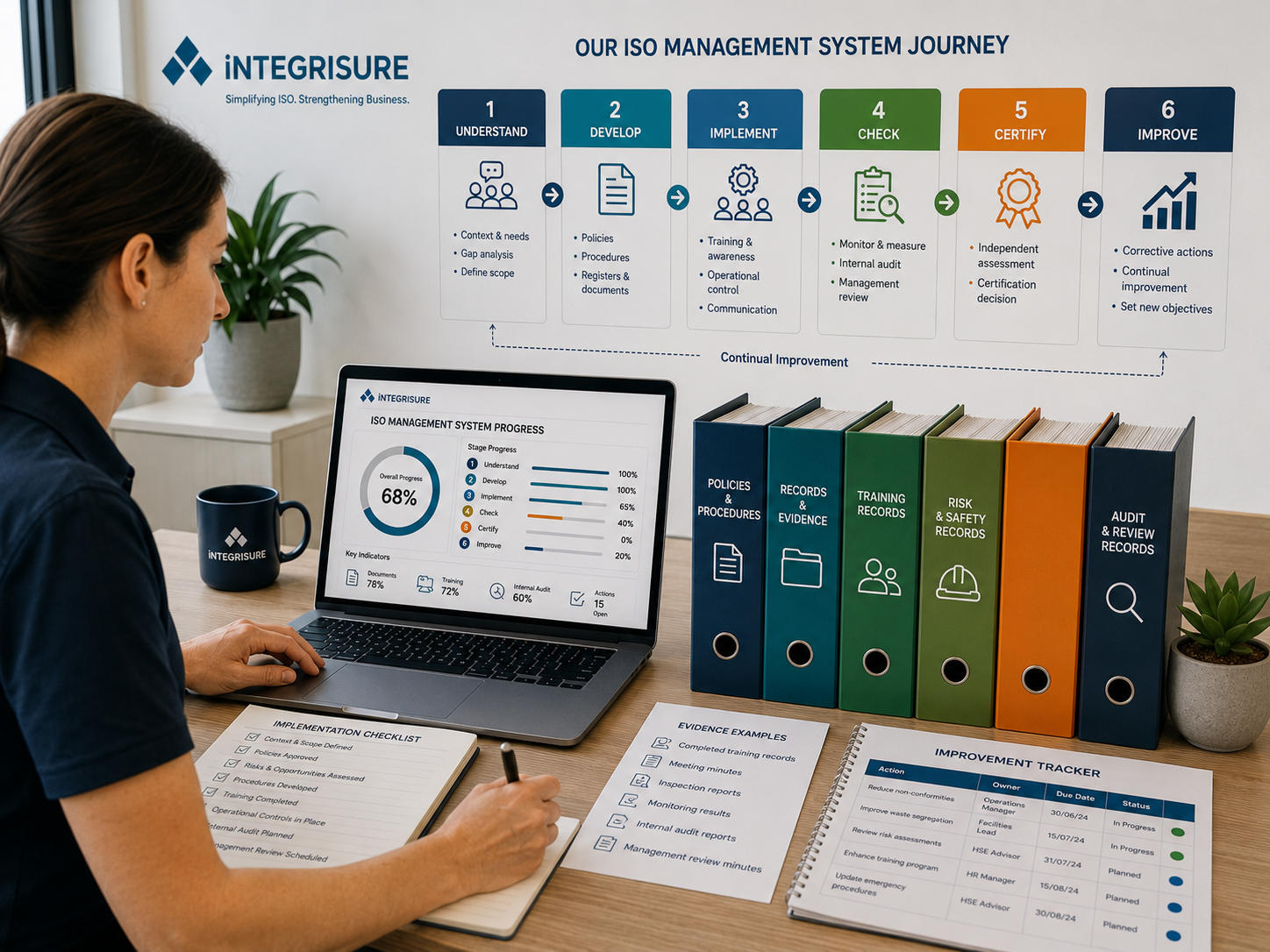
Selecting ISO 9001, ISO 14001 or ISO 45001 is an important decision, but certification requires more than choosing a standard or purchasing a set of documents. Your organisation needs to establish the scope and framework of its management system, tailor the system to its context, implement relevant processes, assign responsibilities, collect evidence, evaluate performance and address identified gaps. Before certification, organisations also need to undertake activities such as internal audit and management review. An independent certification body then conducts the external certification audit and determines whether certification will be granted. Understanding the seven stages of certification can help SMEs understand how preparation, implementation, review and certification fit together. After certification, the system must continue to operate and improve. IntegriSURE is designed around this broader journey. Australian SMEs can start by understanding what ISO involves, establish their management system and progressively access implementation guidance and additional support as their needs develop. For organisations at an early stage, the ISO Starter Pack provides a practical entry point. The Demystifying ISO courses can also help teams build foundational knowledge before progressing further into implementation. The objective is not to take ownership away from your business. It is to provide enough structure for your team to prepare with clarity and control, build internal capability and add support when it is genuinely needed.
Choosing the Standard Is Only the Beginning

Frequently Asked Questions

The standards address different organisational priorities. ISO 9001 establishes requirements for a quality management system, ISO 14001 focuses on environmental management, and ISO 45001 focuses on occupational health and safety management. They share common management system concepts, which can also make it practical to integrate multiple standards within one management system.

Start with the business need driving your ISO journey. If customers are asking for stronger quality controls or consistent service delivery, ISO 9001 may be the logical starting point. If environmental impacts or supply-chain expectations are the priority, consider ISO 14001. If worker health and safety risks are significant, ISO 45001 may take priority. If several requirements apply, consider whether an integrated management system would be more practical than implementing separate systems.

Yes. Organisations can integrate quality, environmental and occupational health and safety requirements into a single integrated management system. An integrated approach can reduce duplicated processes and documentation where the standards have common requirements. The system still needs to address the specific requirements relevant to each standard. Organisations wanting to understand this approach in more detail can also review implementing integrated management systems.

IntegriSURE is designed to help your organisation retain ownership of its management system. Depending on the support level selected, you can access ready-to-tailor documents, implementation guidance, checklists, progress tools and additional support. The objective is to give your team structure and build internal capability rather than automatically transferring responsibility to an external consultant.

A consultant is not inherently required simply because an organisation wants ISO certification. However, the amount of external support an SME needs depends on its internal capability, available time and the complexity of its operations. IntegriSURE provides a structured, self-directed pathway and allows additional support to be added when it is genuinely needed. SMEs that are still exploring the process can also begin with the ISO Starter Pack or use the Demystifying ISO courses to build their understanding.

No. Documents provide a foundation, but your management system needs to be tailored, implemented and used within your organisation. Processes must operate in practice, responsibilities need to be understood and appropriate evidence needs to be retained. This distinction between having documents and operating a management system is fundamental to meaningful ISO implementation. It is also important to understand the difference between ISO compliance and formal certification.

No. IntegriSURE helps organisations build, implement and prepare their management systems for certification. Certification audits and certification decisions are undertaken by independent certification bodies. Your outcome will depend on your organisation's implementation and the findings of the certification body.

Certification is not the end of the management system journey. Your organisation needs to continue operating, monitoring, reviewing and improving its management system. Activities such as internal audits, management reviews, corrective actions and continual improvement help keep the system useful and support ongoing certification requirements. Understanding the seven stages of certification can also help organisations understand where certification sits within the broader management system journey.