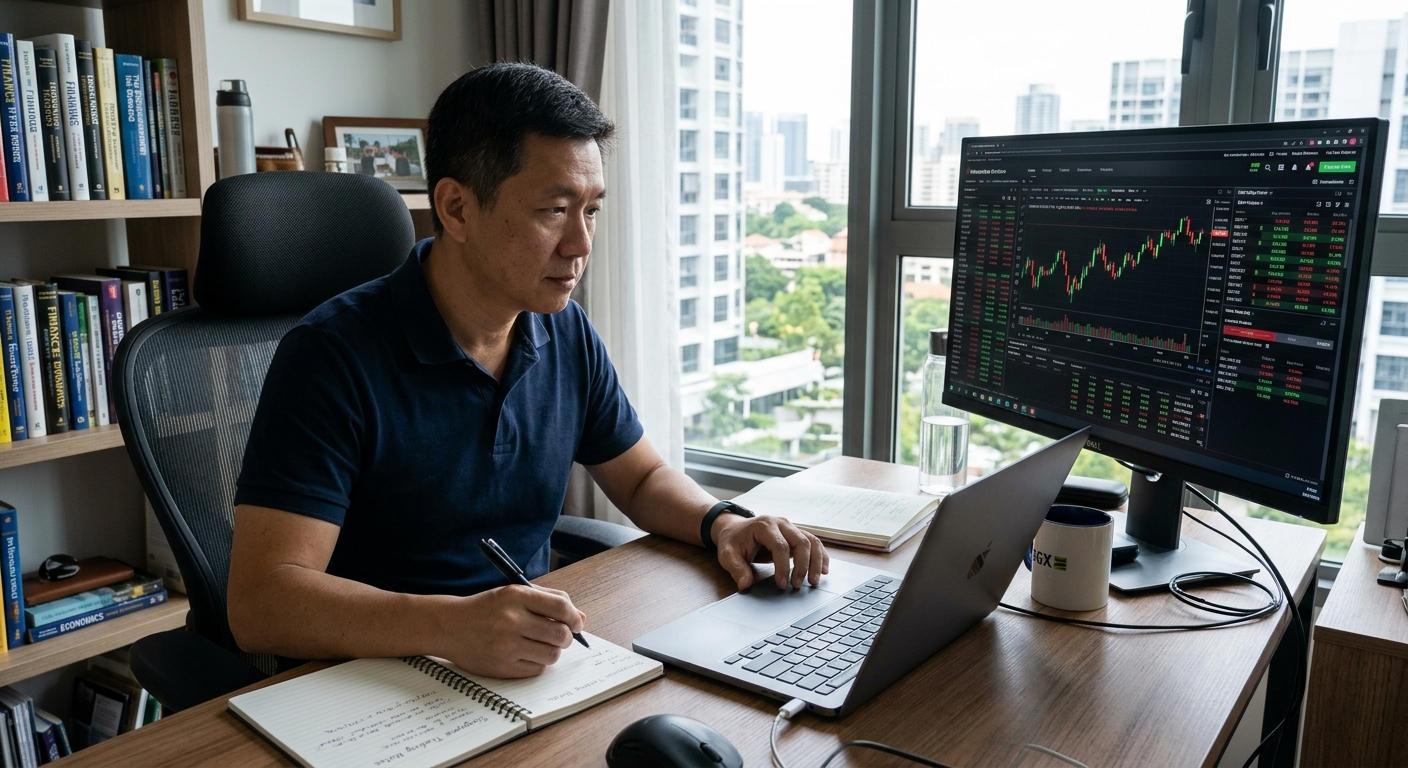
How Singapore Traders Use VPS for Faster Execution

For traders operating out of Singapore, deploying a virtual private server is a foundational move toward achieving reliable, around-the-clock order execution. Unlike running a platform from your personal computer, a remote server stays online regardless of local power outages, internet disruptions, or hardware failures. Before selecting a hosting plan, it pays to understand the factors that influence how quickly your orders reach your broker. CheapForexVPS in SINGAPORE offers clear, detailed explanations of the technical relationship between your server and your broker's infrastructure. The time it takes for an order to travel from your server to a broker's matching engine and return as a confirmation is known as broker latency. Even a difference of a few milliseconds can shift the price at which a trade is filled. Singapore-based traders frequently seek servers positioned near their broker's data center to cut down on that round-trip delay. Having a realistic sense of what latency figures to expect allows you to evaluate hosting options more effectively and avoid surprises once you go live.

How Singapore Traders Use VPS for Faster Execution

Understanding Broker Latency and Its Impact

Broker latency describes the full round-trip duration — from the moment your server dispatches an order to the instant your broker's system sends back a confirmation. Measured in milliseconds, this figure is shaped by three main factors: the physical gap between your server and the broker's data center, the efficiency of the network route connecting them, and current load on both systems. A hosting node in Singapore linking to a broker whose engine resides in Tokyo or Sydney will naturally post tighter numbers than one routed across continents. Standard command-line ping utilities or dedicated trading diagnostics tools can help you measure these values directly. Knowing where your latency stands lets you read execution reports accurately and determine whether any slowdown originates from the network or from the platform itself. For a thorough breakdown of what these numbers look like in practice, reviewing guidance on professional forex vps hosting in SINGAPORE provides useful context on typical ranges traders encounter.

Understanding Broker Latency and Its Impact

Selecting and Setting Up the Right Trading Server

Picking the right virtual private server for forex trading comes down to four primary considerations: where the data center is located, how much RAM is allocated, the processing power available, and the guaranteed network uptime. Traders in Singapore benefit most from choosing a data center within Singapore itself or elsewhere across the Asia-Pacific region, since that keeps the connection path between the trading platform and regional brokers as short as possible. Once your server is provisioned, you install the trading platform of your choice — MetaTrader 4 or 5 are common picks — and configure it to run continuously in the background without manual intervention. Setting up remote desktop access is equally important, as it lets you check in, adjust settings, or troubleshoot issues from any device without physical access to the machine. Before going live, address basic security hygiene: replace default login credentials with strong alternatives and activate a firewall. These preparatory steps create a stable foundation for uninterrupted automated or manual trading.
Selecting and Setting Up the Right Trading Server

Actionable Ways to Cut Execution Delays

Cutting execution delays begins by positioning your server as close as possible to your broker's infrastructure. Ask your broker directly which data center houses their matching engine, then compare that location against the server regions your VPS provider offers. Keeping both your trading platform and the server's operating system fully updated removes unnecessary processing overhead that quietly adds to local execution time. Trim background applications down to only what is essential, since idle processes still consume CPU cycles and memory that your trading software depends on. At the network level, choosing a provider with direct peering arrangements across the Asia-Pacific region can noticeably shorten the route your data travels. Regularly monitoring broker latency after any configuration change confirms whether those adjustments are delivering real improvements or whether the delay originates further upstream in the connection chain.
Actionable Ways to Cut Execution Delays

Frequently Asked Questions

Broker latency is the time gap between dispatching an order from your server and receiving an acknowledgment from your broker's system. Tighter latency translates to faster order processing, which can lead to improved fill prices and a reduced chance of slippage during volatile market conditions.

The simplest method is a ping test run from your VPS command line directed at your broker's server address. For greater precision, many trading platforms record execution timestamps in their trade logs, giving you the actual round-trip time for every order that was submitted.

The best choice depends on your broker's data center, but Singapore, Tokyo, and Sydney are the most commonly recommended options for Asia-Pacific traders. Placing your server near the broker's matching engine reduces the number of network hops involved, directly lowering your measured latency.

A single MetaTrader instance running a reasonable number of charts and automated strategies typically needs a minimum of 1 GB of RAM alongside one dedicated CPU core. If you plan to run several platform instances at the same time, allocate additional resources proportionally to keep performance stable.

Yes, though the latency will be considerably higher than it would be with a server positioned near your broker. You can explore realistic connection time estimates and compare regional server options by visiting visit cheapforexvps.com and consulting their broker latency documentation.