Technical Overview of Container Ground Anchoring Across Australian Sites

Turnbuckle Tensioning, Load Ratings, and Tie-Down Hardware Engineering

Soil Classification, Pull-Testing, and AS/NZS Compliance for Anchored Containers


Australia's wind regions — particularly the cyclonic zones along northern and coastal areas — generate uplift and lateral forces powerful enough to overturn or shift unsecured containers. Correctly rated ground anchors prevent structural movement, protect adjacent property, and fulfil site safety obligations required under Australian Standards.
The anchor blade is driven to the required depth, then rotated 90 degrees so it bears laterally against undisturbed soil. Resistance to withdrawal relies on the soil's bearing capacity, so in soft or sandy conditions the required embedment depth is increased to compensate for the lower soil density and achieve the specified holding load.
The necessary capacity varies based on container dimensions, wind region classification, and the exposure category determined under AS/NZS 1170.2. In cyclonic region D installations, verified proof loads commonly exceed 40 kN per anchor leg. AncorLoc provides certified load data sheets to support your structural engineer's design calculations.
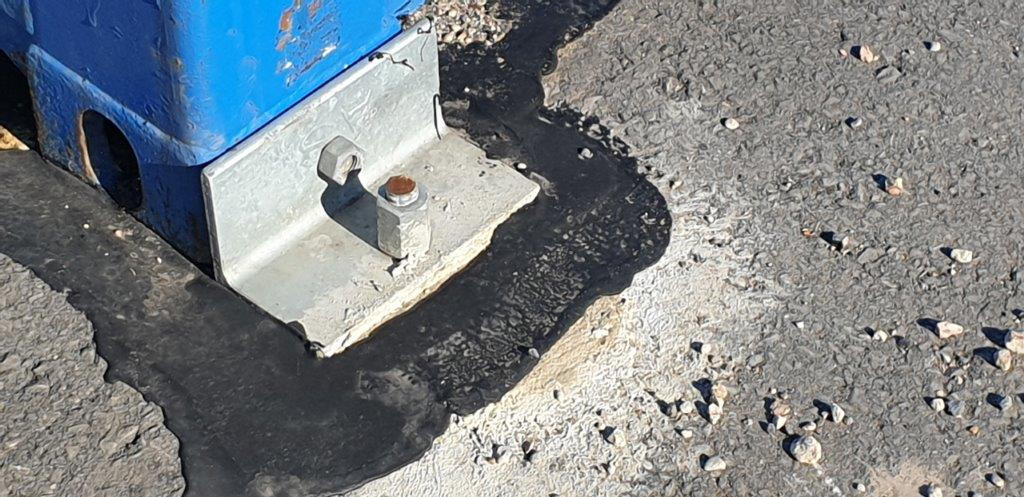
Forged twist-lock couplings or rated shackle-and-chain assemblies engage directly with the apertures in the ISO corner castings. A turnbuckle is incorporated in-line to enable accurate pre-tensioning of each restraint leg. This connection effectively transfers both uplift and lateral wind-induced loads from the container structure into the embedded anchor system.
A site soil classification assessment is strongly advisable and is frequently mandated by certifying engineers. Soil conditions govern the required embedment depth and the anticipated holding capacity. AncorLoc provides guidance on pull-testing protocols that can confirm in-situ capacity when comprehensive geotechnical reporting is unavailable.