Cedar City Water Damage Restoration Guide for Homeowners

Unexpected flooding or a burst pipe can compromise the structural integrity of your home and create serious health hazards within just a few hours. For Cedar City residents dealing with sudden water intrusion, a swift and well-organized response is essential to minimizing long-term damage. Ally1 Disaster Solutions in Cedar City dispatches certified technicians trained in industry-standard restoration protocols from the moment they receive your call. The sooner you act, the better your chances of protecting both your property and the people inside it. Effective water damage restoration goes far beyond removing visible standing water from your floors. Hidden moisture trapped inside wall cavities, beneath flooring, and within insulation must be identified and eliminated before the drying process can be considered complete. Without the right tools and expertise, residual dampness encourages mold growth in as little as 24 to 48 hours. Knowing what professional restoration involves empowers Cedar City homeowners to make confident, well-informed choices during one of the most stressful situations they may face.

A Step-by-Step Look at Professional Water Damage Restoration

Moisture Mapping and Emergency Water Extraction

The very first action certified technicians take upon arriving at a Cedar City residence is a comprehensive moisture evaluation using thermal imaging cameras and calibrated moisture meters. These specialized instruments reveal water migration behind drywall, beneath subfloors, and inside structural cavities that would otherwise go undetected. With a complete picture of the affected zones, crews deploy industrial submersible pumps and truck-mounted water extractors to eliminate standing water as rapidly as possible. Reducing the time that building materials remain saturated directly limits how extensively moisture spreads through the structure. Every moisture reading and damaged area is documented by technicians to establish a reliable baseline that informs all subsequent work. Cutting corners during this initial phase is among the leading causes of secondary water damage in residential properties.
Moisture Mapping and Emergency Water Extraction

Drying Water Damaged Walls and Structural Components

Once standing water has been removed, technicians introduce high-capacity air movers and commercial-grade dehumidifiers positioned throughout every affected room to begin the structural drying phase. Properly drying water-damaged walls demands that airflow be directed along wall surfaces to draw moisture simultaneously out of drywall panels, wooden framing, and insulation layers. Crews from professional water damage restoration in Cedar City return daily to track temperature, relative humidity, and moisture content, reconfiguring equipment placement as conditions evolve. When surface drying alone is insufficient, small access openings are cut near baseboards or within wall sections to deliver airflow into enclosed cavities. This methodical drying approach generally spans three to five days, depending on the depth of material saturation and the prevailing environmental conditions. Completing structural drying thoroughly is the most reliable safeguard against mold colonization and deterioration of load-bearing elements.
Drying Water Damaged Walls and Structural Components

Comprehensive Flooded Basement Cleanup

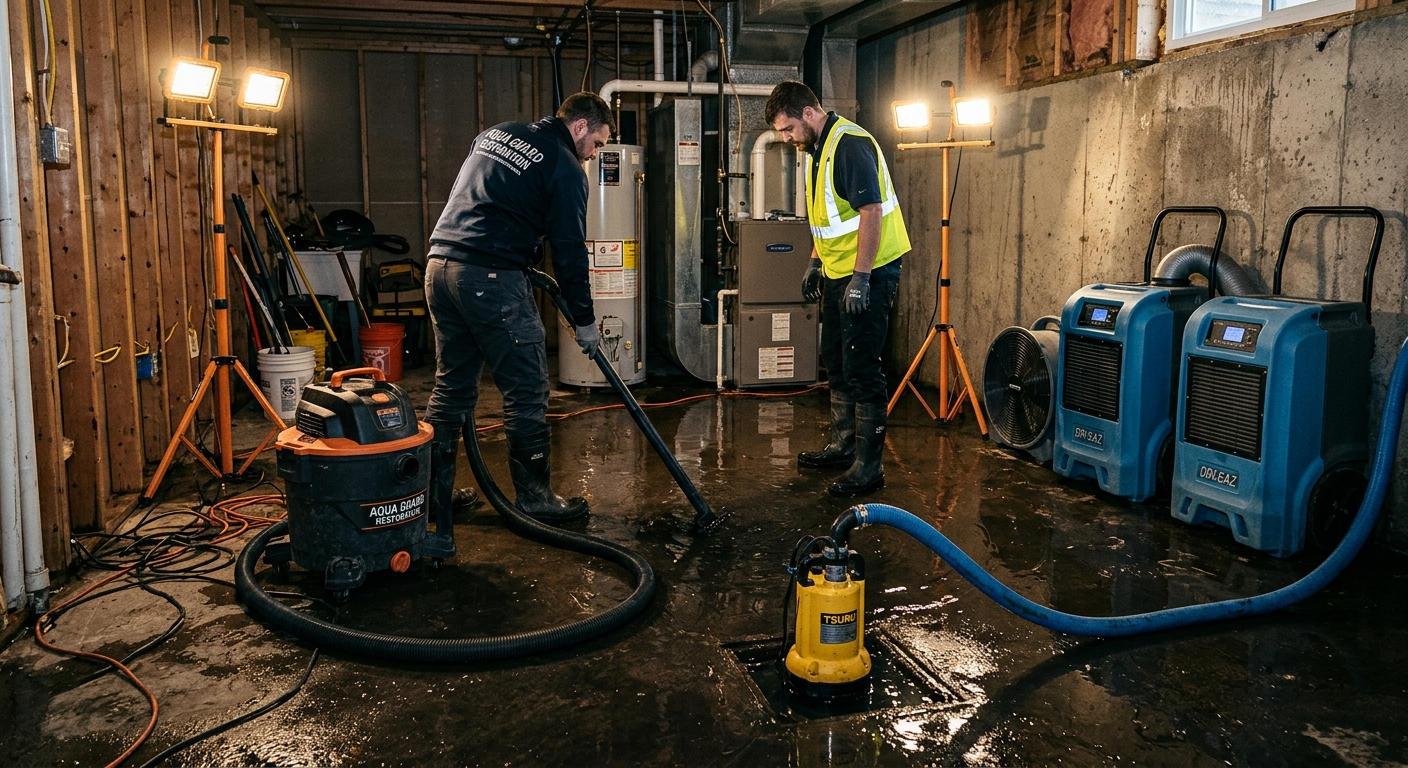
Basement flooding in Cedar City properties is frequently triggered by heavy storms, irrigation system failures, or broken plumbing lines, and the enclosed below-grade environment makes the cleanup process considerably more complex. Ally1 Disaster Solutions's Cedar City page deploys experienced restoration teams fully equipped to manage contaminated water, concrete slab subfloors, and finished basement materials that may require careful evaluation before salvage or disposal decisions are made. The full cleanup sequence involves water extraction, removal of waterlogged insulation and drywall below the flood line, application of EPA-registered antimicrobial treatments to all affected surfaces, and installation of a drying system calibrated specifically for below-grade environments. Because basements typically retain cooler temperatures and restrict natural airflow, drying timelines in these spaces tend to run longer than in above-grade areas of the home. Technicians also evaluate sump pump function, perimeter drainage performance, and foundation wall condition to pinpoint the source of the intrusion and reduce the likelihood of future flooding events. Thorough documentation from start to finish strengthens any insurance claims the homeowner needs to submit.
Comprehensive Flooded Basement Cleanup

Frequently Asked Questions

You should reach out immediately, preferably within the first hour of discovering the problem. Mold can begin forming within 24 to 48 hours, and building materials absorb additional moisture with every hour that passes, which significantly increases both repair complexity and overall cost.

In most situations, yes, though technicians will provide guidance based on the scope of the damage. If sewage contamination or major structural instability is identified, temporary relocation may be advised to protect your household's health and safety.

Certified technicians rely on industrial-grade air movers, commercial dehumidifiers, and precision moisture meters. Thermal imaging cameras are also used to pinpoint hidden moisture pockets inside wall assemblies, allowing equipment to be positioned for maximum drying efficiency.

The structural drying phase alone generally requires three to five days. Complete restoration, which includes repairing or replacing drywall, flooring, and insulation, may take one to two weeks in total depending on how severe the damage is and which materials are involved.

Whether coverage applies depends on the details of your individual policy. Damage caused by sudden plumbing failures is often covered, whereas gradual leaks or groundwater intrusion may be excluded. Record all damage carefully and notify your insurer as soon as the problem is discovered.