Beyond Employee Engagement: Understanding the Systems That Drive Workforce Performance
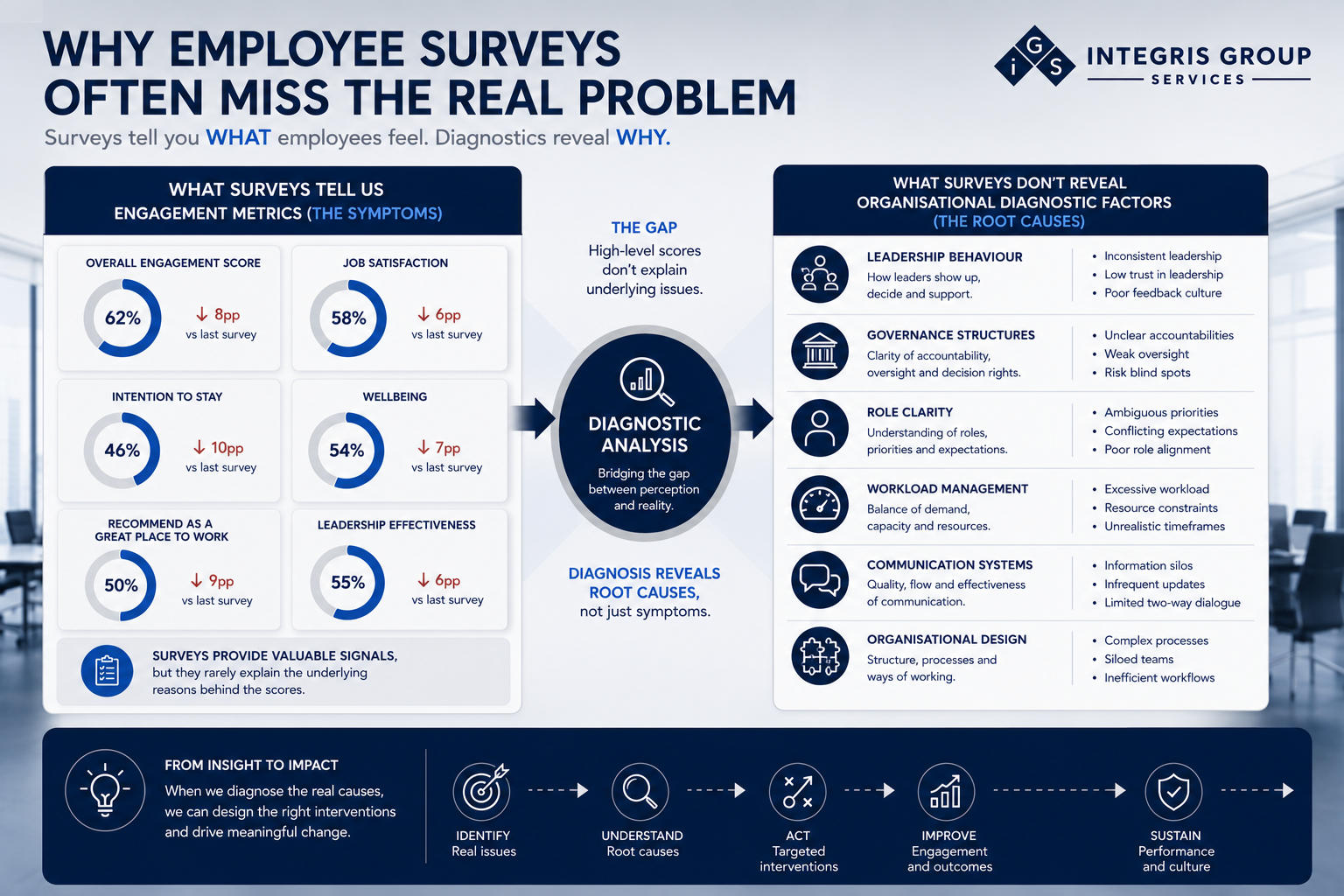
Employee engagement surveys have become a common tool for understanding workforce sentiment, yet many organisations struggle to translate survey results into meaningful action. While engagement scores can provide useful indicators of workforce experience, they often reveal symptoms rather than the underlying causes affecting organisational performance.
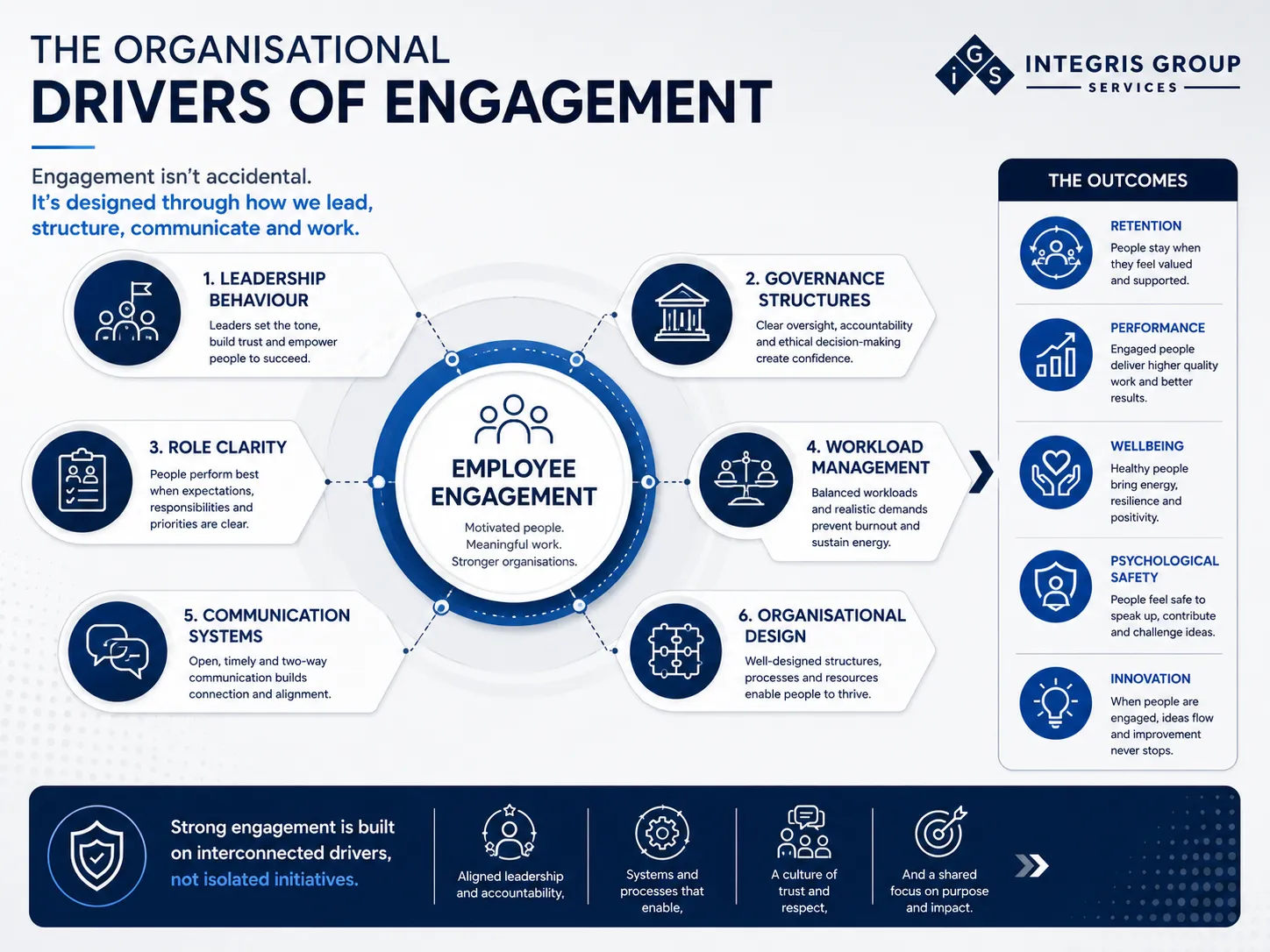
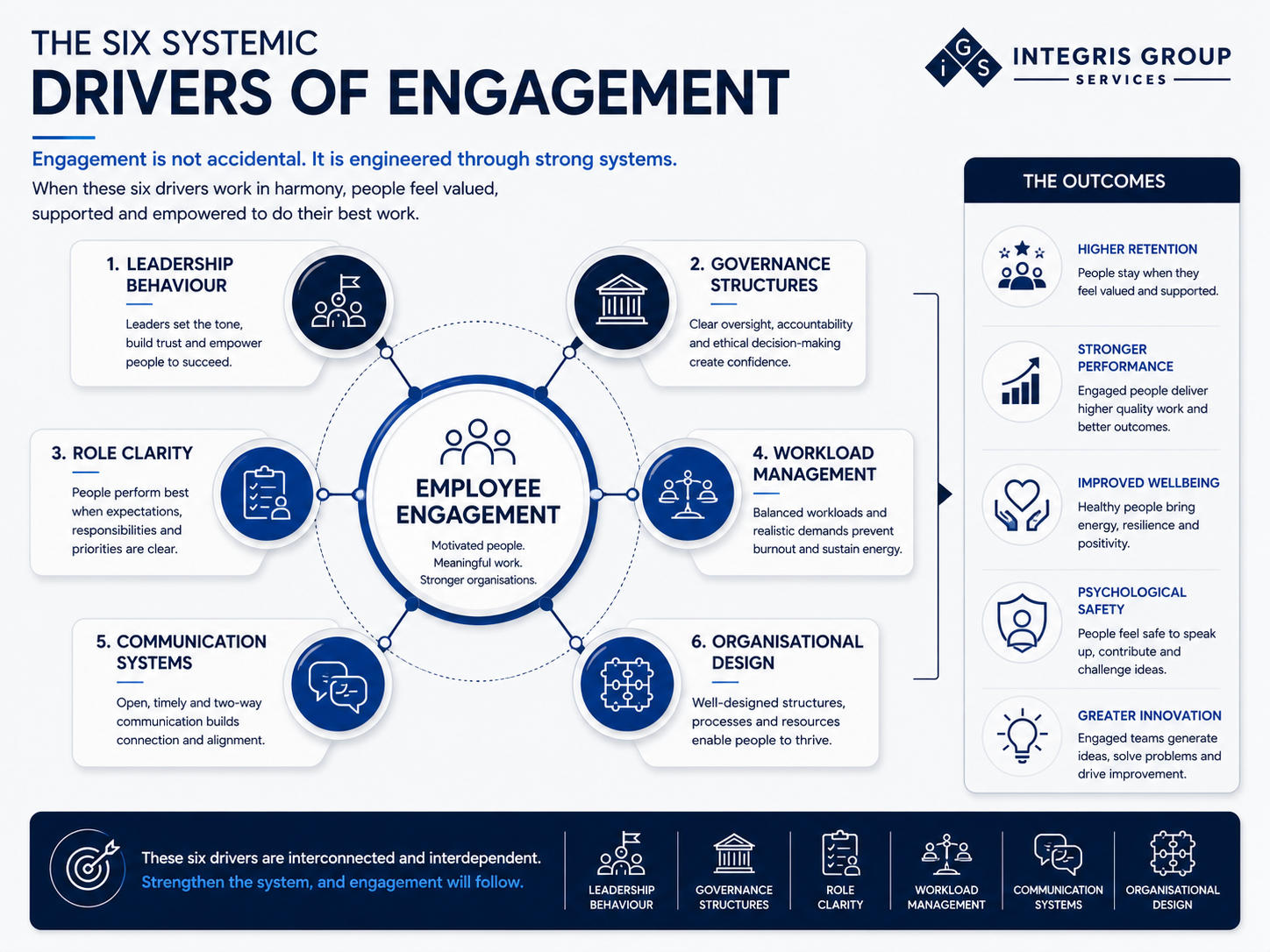
At Integris Group Services, we help organisations move beyond traditional engagement measurement and towards deeper organisational insight. Our approach focuses on identifying the systemic drivers that influence employee experience, including leadership behaviour, governance structures, role clarity, workload management, communication systems, and organisational design.
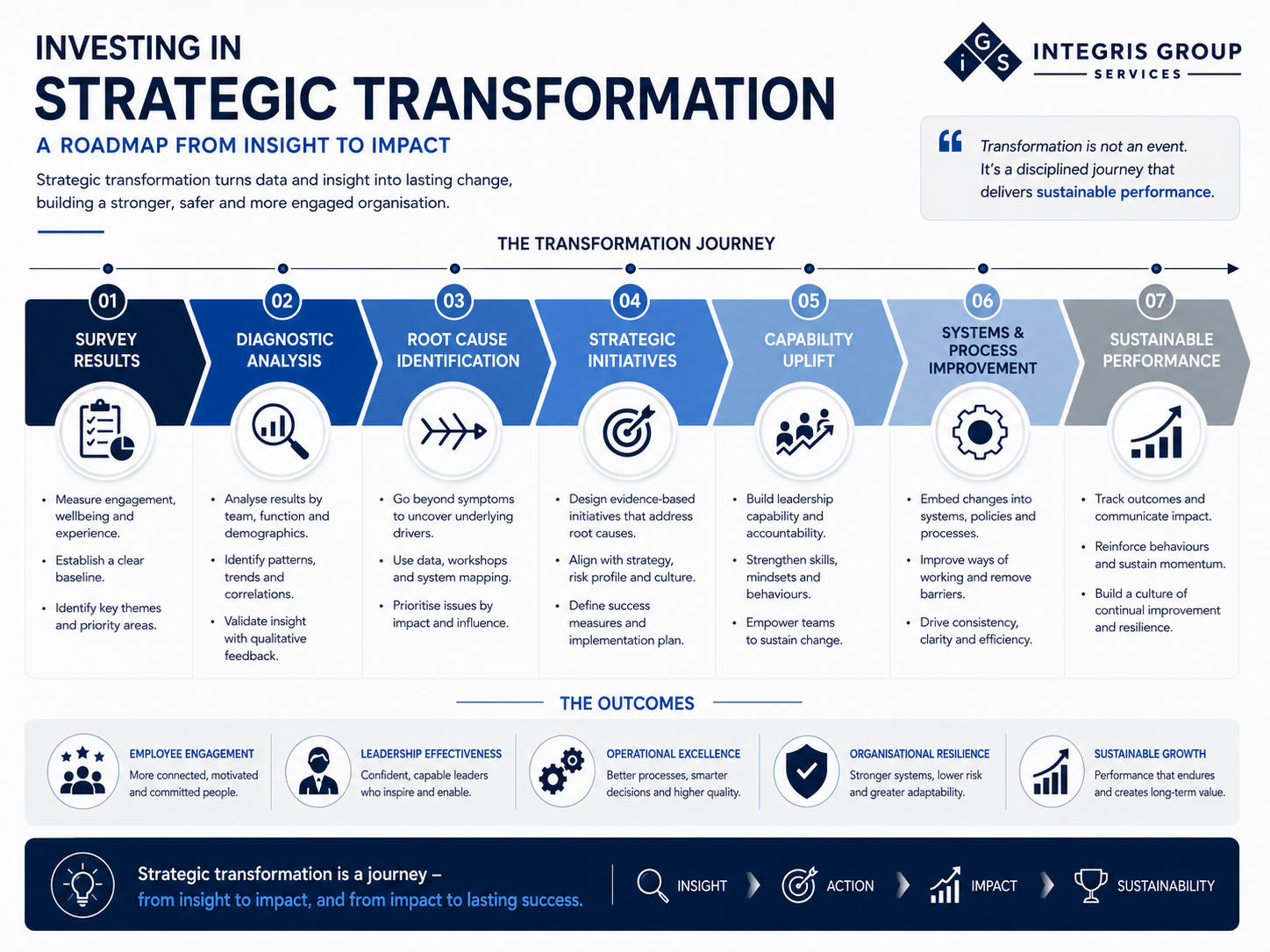
By understanding how these factors interact, organisations can uncover the root causes of disengagement, psychosocial risk, workforce turnover, and performance challenges. Rather than implementing short-term initiatives designed to improve survey scores, we support leaders to make informed decisions that strengthen organisational capability, workforce wellbeing, and operational effectiveness.
This diagnostic approach aligns employee engagement with broader organisational priorities such as governance, risk management, leadership development, and sustainable performance. The result is a more informed, resilient, and engaged workforce supported by systems that work in practice rather than relying on surface-level interventions.
Beyond Employee Engagement: Understanding the Systems That Drive Workforce Performance
Our core competencies

Engagement Scores: Symptoms vs Root Causes
Investing in Strategic Transformation
The Six Systemic Drivers of Engagement
Why Employee Surveys Often Miss the Real Problem
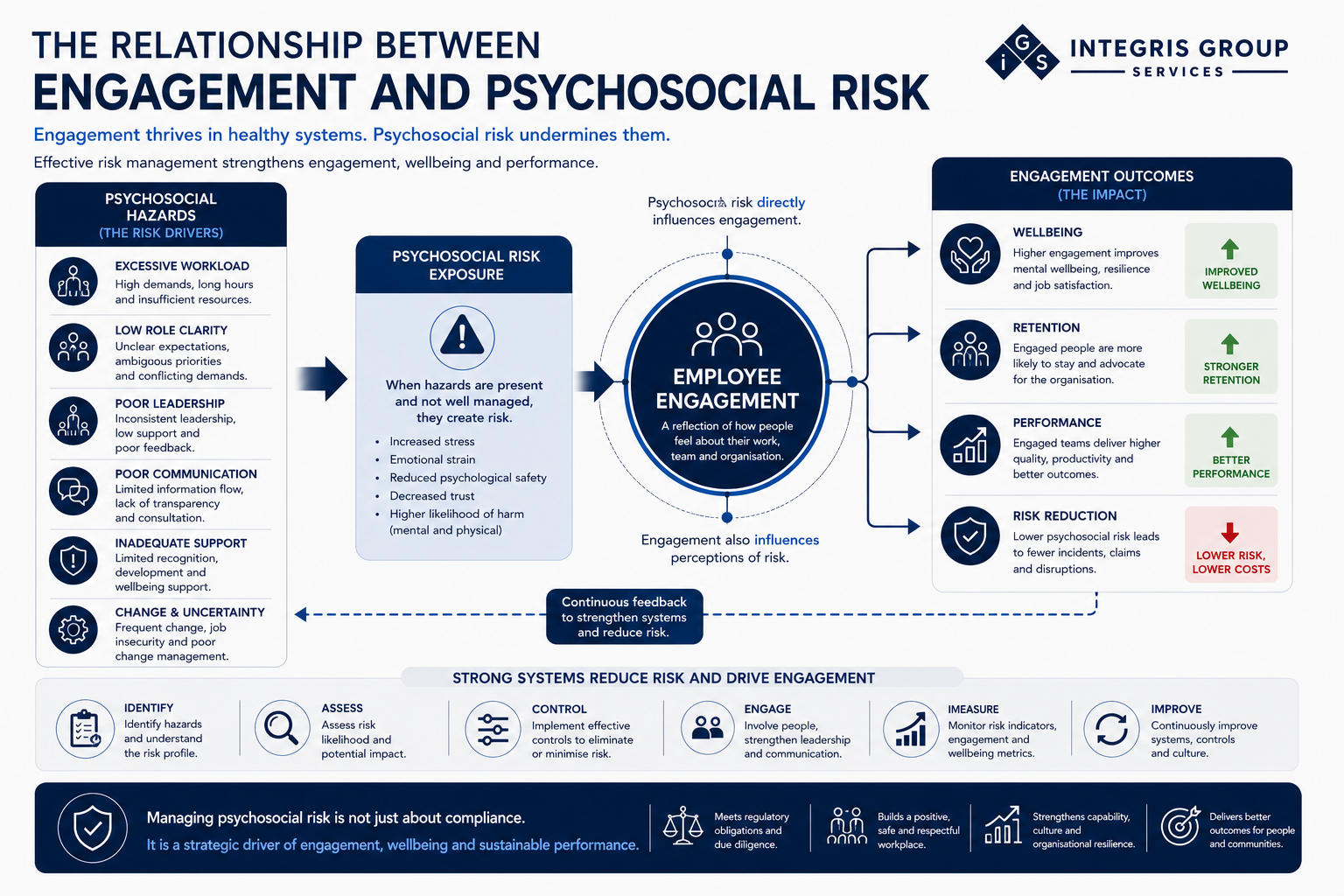
The Relationship Between Engagement and Psychosocial Risk
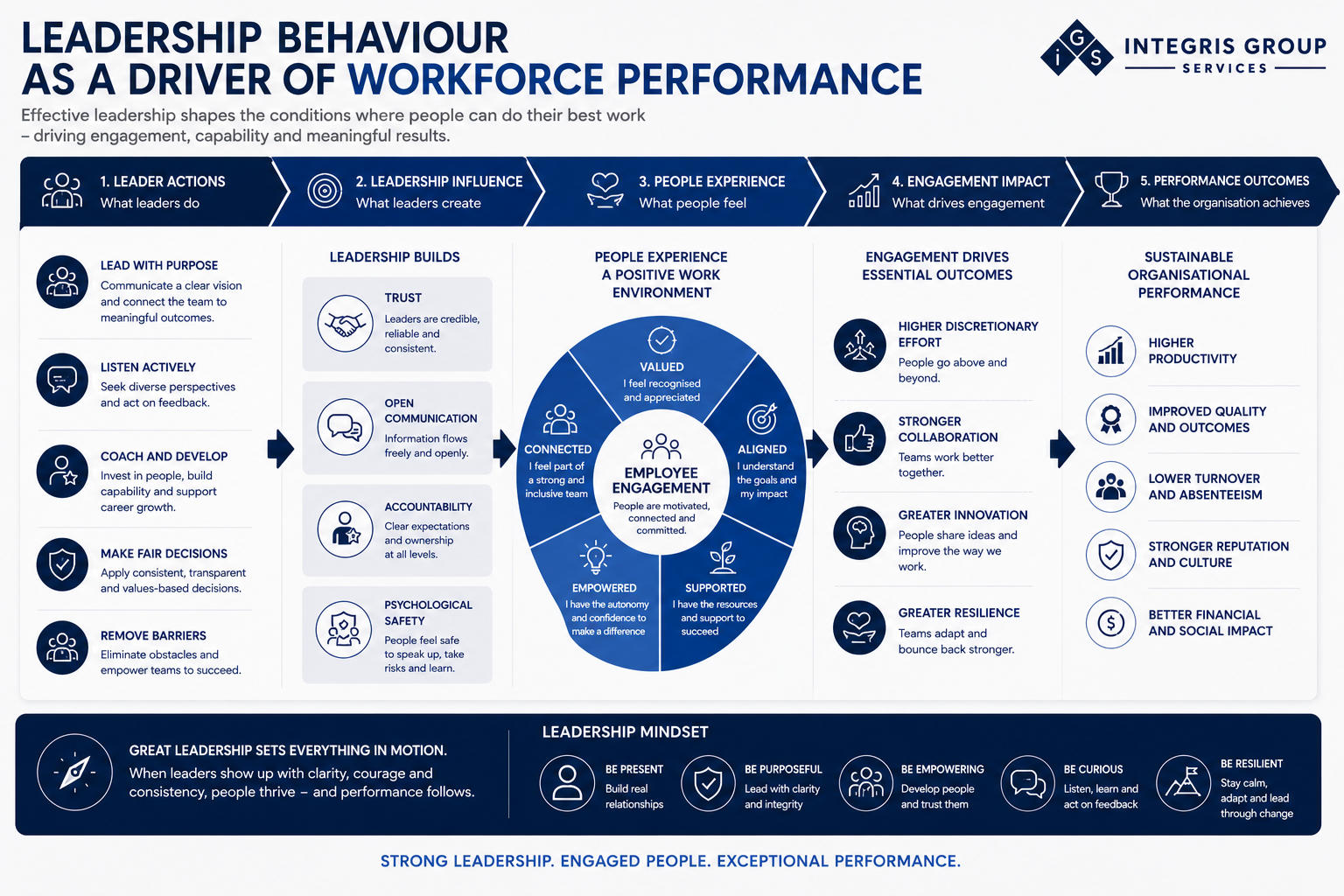
Leadership Behaviour as a Driver of Workforce Performance

How Governance Structures Shape Employee Experience

Building Organisational Insight Through Workforce Diagnostics
Common Questions
Employee engagement surveys can identify how employees feel about their workplace, but they do not always explain why those perceptions exist. Without understanding the underlying organisational drivers, improvement initiatives may focus on symptoms rather than causes.
Employee engagement is often influenced by leadership behaviour, governance structures, role clarity, workload management, communication systems, organisational design, and opportunities for meaningful contribution.
Low engagement scores can sometimes indicate the presence of psychosocial hazards such as excessive workload, poor support, unclear roles, or ineffective organisational change. Understanding the connection between employee engagement and psychosocial risk helps organisations address issues more effectively and strengthen psychological safety in the workplace.
Employee engagement measures workforce sentiment. Organisational diagnostics investigate the underlying systems, leadership practices, governance arrangements, and operational factors that influence those outcomes through approaches such as Strategic and Operational Consulting.
Integris Group Services helps organisations move beyond survey results by identifying the organisational drivers affecting engagement, wellbeing, performance, and retention. Our approach combines workforce insight, governance review, leadership assessment, and organisational diagnostics.
Leadership behaviour influences trust, communication, accountability, workload management, and workplace culture. Consistent and effective leadership is one of the strongest predictors of workforce engagement and organisational performance.
Clear governance structures support accountability, decision-making, role clarity, and communication. When governance is ineffective, employees often experience confusion, frustration, and reduced confidence in organisational leadership.